At five in the morning, the street was almost completely silent.
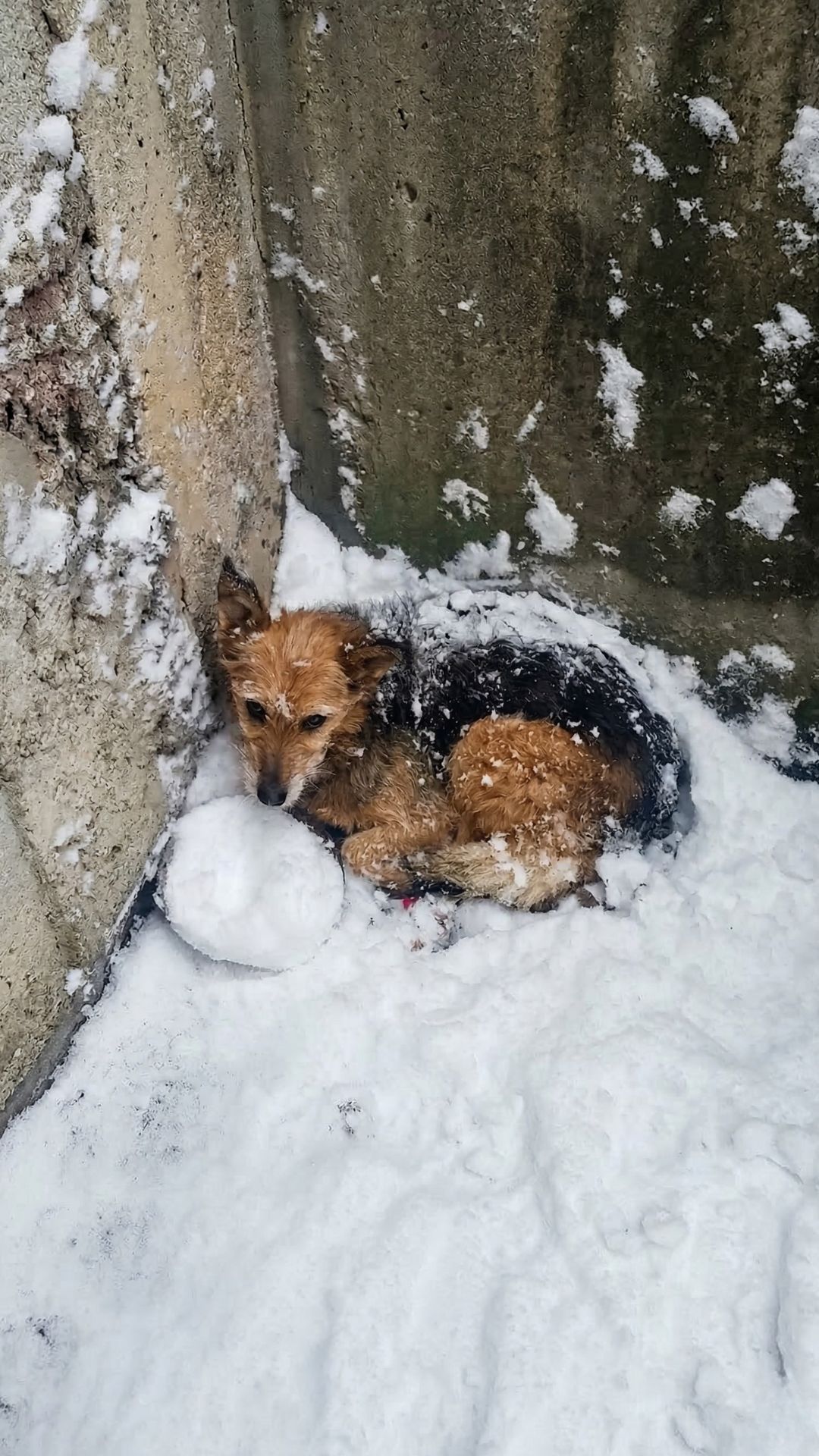
The temperature had fallen to -11°C, and fresh snow covered the pavement, parked cars, and every quiet corner along the road.
Near one of those corners was something that could easily have been mistaken for another small pile of snow.
But underneath it was a dog.
She had been lying there for so long that snow had begun collecting across her body.
Local residents later said she may have remained in that same place for three days.
She was no longer wandering in search of food.
She was barely moving at all.
Then, finally, someone called for help.
Rescuers Almost Mistook Her for Part of the Snow
When the rescue team arrived, they had to look carefully before they could make out the shape of the dog.
She was curled tightly against the ground, her pale body blending into the snow surrounding her.
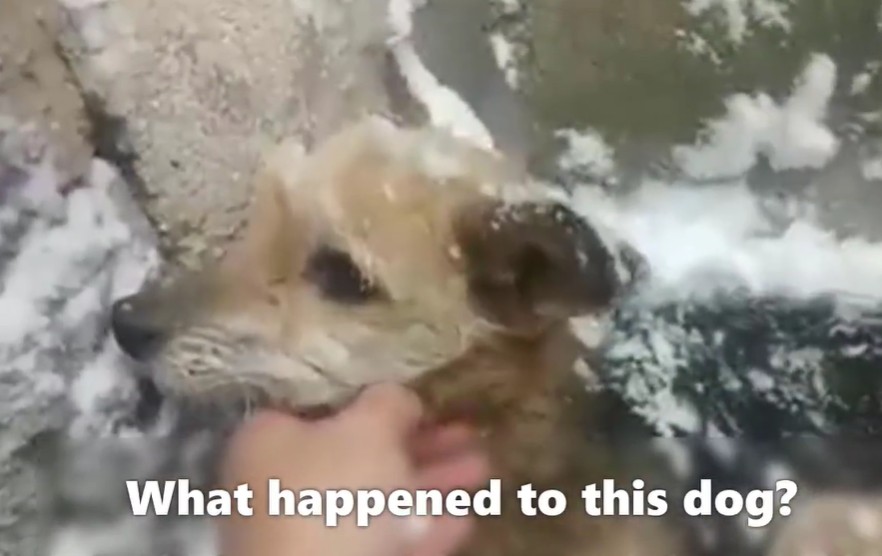
A rescuer brushed the icy covering away.
There was almost no reaction.
She did not attempt to stand.
She did not lift her head toward the people approaching.
Her body simply continued trembling.
The shaking was intense and constant, an obvious sign that the cold had already taken a serious toll.
No one knew exactly how she had ended up on that street or why she had remained there for so long.
There was no collar explaining where she belonged.
No owner appeared.
All the rescuers knew was that leaving her outside any longer could be dangerous.
They lifted her carefully and rushed her toward veterinary care.
Video: Left in -11°C for Days, Snowhite Was Barely Visible Beneath the Snow
Her Body Temperature Had Fallen Dangerously Low
At the clinic, the severity of the situation became much clearer.
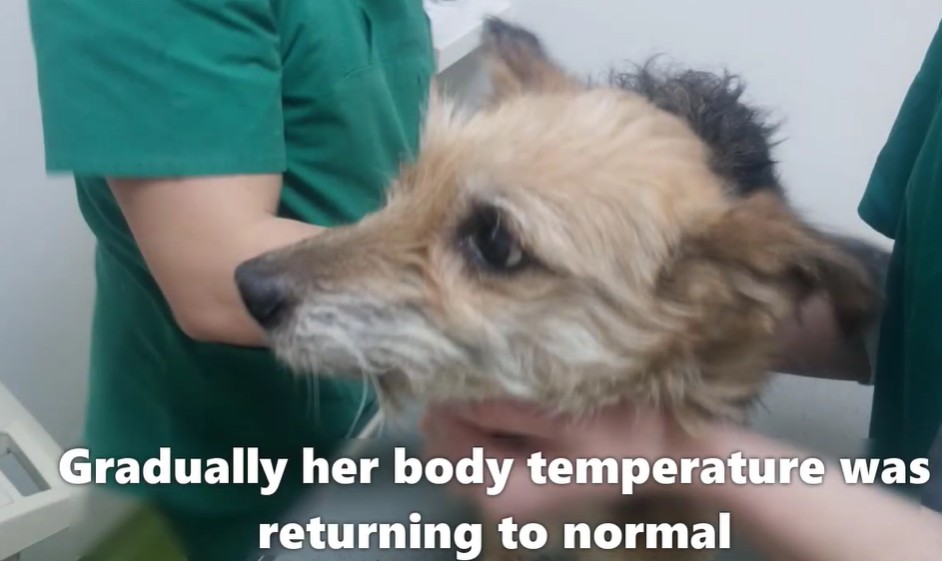
Snowhite’s body temperature measured only 31.9°C, far below the normal range for a healthy dog.
She weighed just 6.9 kilograms.
Her limbs were stiff from remaining curled in the cold, and she had very little energy left for movement.
The veterinary team immediately focused on warming her safely.
The room temperature was increased.
She was wrapped in layers.
Her condition was monitored closely as warmth was gradually restored rather than introduced too aggressively.
In cases of severe cold exposure, even something as simple as warming a patient requires care.
Snowhite had already survived an extraordinary amount of time outside.
Now her body needed a chance to stabilize.
Slowly, the violent trembling began to ease.
Her temperature started climbing.
The immediate danger was beginning to pass.
But becoming physically warm was only the first part of her recovery.
Warmth Did Not Immediately Make Her Feel Safe
The rescuers gave the little dog a name.
Snowhite.
It suited the pale dog who had nearly disappeared into the winter landscape.
Inside the clinic, she was finally protected from the freezing weather.
Still, Snowhite remained extremely cautious around people.
When someone reached toward her, she did not lean into the touch.
Sometimes she turned away.
At other moments, she pressed her head toward the wall and remained there quietly.
The behavior suggested that simply being in a warm room was not enough for her to relax.
So caregivers did not demand affection.
They provided food.
A comfortable place to rest.
Gentle handling when treatment was necessary.
And plenty of time.
No one knew what Snowhite’s life had been like before she was found.
They could only respond to the dog in front of them.
And that dog needed patience.
Five Days Later, She Still Wanted Nothing to Do With the Cold
After about five days, the weather improved.
Sunlight returned, and Snowhite had gained enough strength that caregivers decided to bring her outside briefly.
It could have been a simple milestone.
A little fresh air.
A chance to walk after days spent recovering indoors.
But Snowhite’s reaction was immediate.
She showed little interest in exploring.
She did not stop to investigate the surroundings.
Instead, she seemed focused on returning indoors.
The caregivers did not force her to remain outside.
They followed her pace.
For a dog recently found after days in freezing weather, unfamiliar outdoor spaces may simply have been overwhelming.
Snowhite had spent her first days in rescue learning that the clinic was warm, quiet, and predictable.
So for the time being, that was where she felt most comfortable.
The team allowed her world to stay small.
Safety came first.
Confidence could come later.
Trust Returned Through Ordinary Days
There was no single moment when Snowhite suddenly became a completely different dog.
Her progress appeared gradually.
Regular meals helped restore her weight and energy.
Warm nights gave her body time to recover.
Repeated interactions with the same gentle caregivers made human presence more predictable.
Little changes began appearing.
Her posture became less tense.
She paid more attention to what was happening around her.
She allowed people closer without immediately withdrawing.
Eventually, her tail began to lift more often.
These were simple behaviors.
But for the people who had first seen her lying almost motionless beneath the snow, they represented enormous progress.
Snowhite was no longer spending all of her energy simply staying warm and surviving.
She had enough strength left to become curious about what came next.
One Month Later, Someone Offered Her a Home
Roughly a month after her rescue, Snowhite received the opportunity everyone had hoped for.
A family wanted to bring her home.
For a dog who had recently struggled with unfamiliar surroundings, the transition still needed to be handled gently.
Snowhite entered her new environment cautiously.
Her movements were measured.
She kept her head low at times and took time to study the people and spaces around her.
No one expected instant confidence.
Instead, her new family allowed her to settle in at her own pace.
The important things remained consistent.
Meals arrived.
Her bed stayed in the same place.
The people around her continued coming back.
And the cold street did not return.
With each ordinary day, the new home became less unfamiliar.
Snowhite gradually began behaving like a dog who understood that this place was hers too.
The Dog Beneath the Snow Is Almost Impossible to Recognize Now
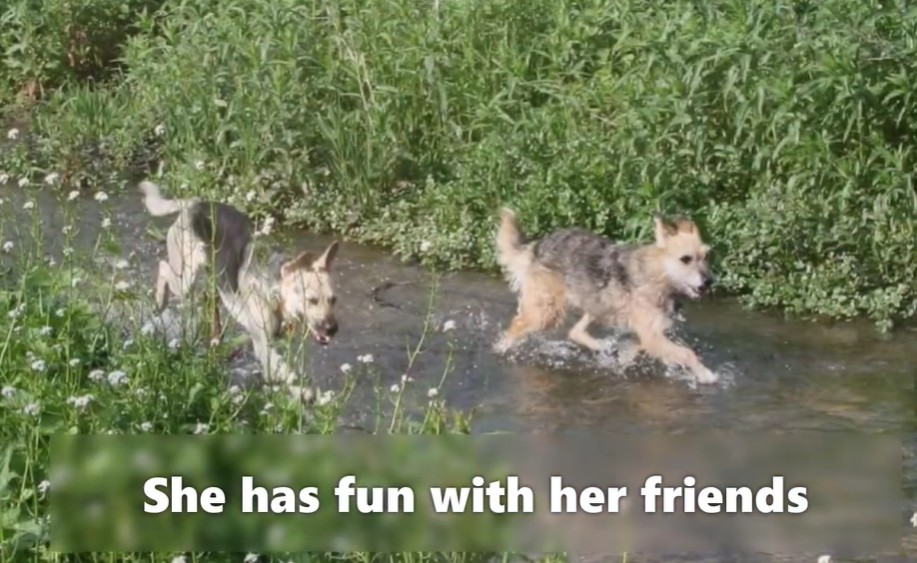
Today, Snowhite’s life bears little resemblance to the morning she was found.
She can run.
She can play.
She sleeps comfortably indoors.
She spends her days with people who notice where she is and whether she needs anything.
The dog who once resisted going outside eventually learned that not every outdoor experience meant another night alone in freezing weather.
She could step into the world and return to a warm home afterward.
That difference changed everything.
Perhaps the most remarkable part of Snowhite’s story is how quietly it began.
There was no dramatic rescue visible to a crowd.
Just an almost-hidden dog on a cold street.
A phone call.
A person willing to look closely enough to realize that the shape beneath the snow was still alive.
Snowhite did not need the entire city to notice her.
She needed someone to notice once.
That single moment carried her from a frozen pavement to veterinary care, from fear to stability, and eventually into a home of her own.
Three days in the cold nearly erased her from view.
But they did not become the rest of her life.


