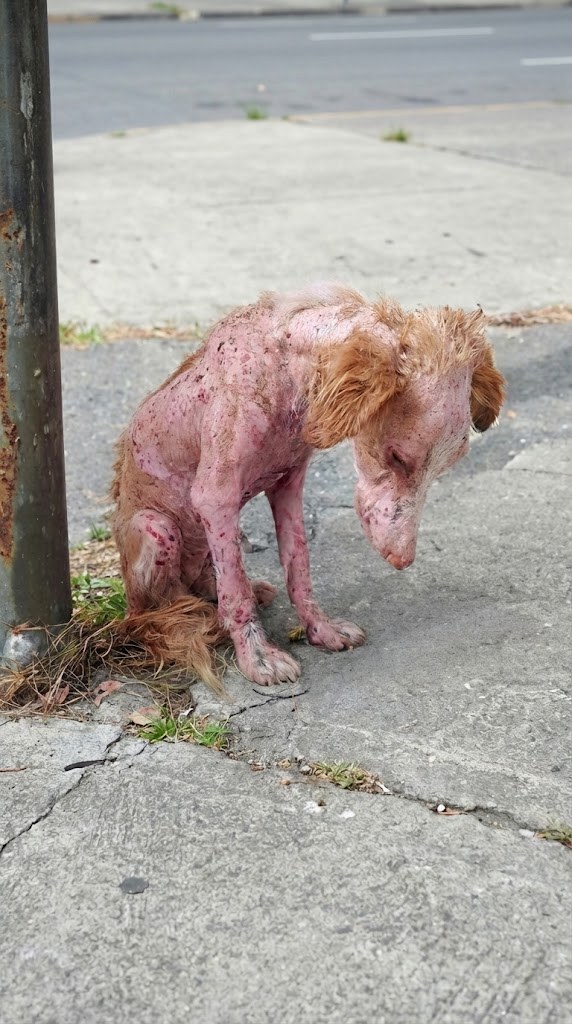
The first time rescuers saw her, she ran.
She was standing beside a rusted dumpster, painfully thin and covered in a damaged, uneven coat. At only 4.7 kilograms—about 10.3 pounds—her body looked far too fragile for an adult dog.
Her ribs showed clearly.
Her skin was in terrible condition.
Even standing seemed to require energy she could hardly spare.
Yet when someone extended a hand toward her, the little dog immediately tried to create distance.
So the rescuers stopped.
They did not chase.
They did not corner her.
They waited.
Then they moved a little closer.
Stopped again.
It took patience before she finally allowed the first careful touch.
That moment got her away from the dumpster.
But at the veterinary clinic, the team learned that bringing her to safety had only solved the first problem.
Something serious was happening inside her body.
At 4.7 Kilograms, She Was Fighting More Than Hunger
Up close, the extent of her condition was easier to see.
Her body had lost a dangerous amount of weight.
Large areas of skin were irritated and damaged.
Her coat was sparse and unhealthy.
The rescuers had hoped that food, parasite treatment, and basic medical care might explain much of what they were seeing.
Testing revealed something more difficult.
She had Leishmania.
The parasitic disease was already affecting a dog whose physical condition had been badly weakened.
According to the rescue account, her case was considered severe.
Her skin had developed significant lesions and infected areas, while her overall condition made aggressive treatment more complicated.
The veterinarian warned the team that the outlook was uncertain.
She was simply too fragile for anyone to assume she would recover easily.
That first night became about monitoring rather than making promises.
Food was offered.
Treatment began cautiously.
And the little dog who had been hiding beside garbage finally had people watching over her instead of walking past.
Video: Orinoco Arrives at the Clinic Weighing Just 4.7 Kilograms
Her Body Was Too Weak to Rush the Treatment
The diagnosis gave the veterinary team an answer.
It did not give them an easy solution.
Orinoco needed medication to control the parasitic disease and the complications affecting her skin.
But treatment had to take her severely depleted condition into account.
Her body first needed support.
Nutrition became a major part of the plan.
So did careful medication and daily monitoring.
The rescue account describes morning injections as part of her treatment routine.
High-calorie meals were introduced to begin replacing what prolonged undernourishment had taken away.
The team watched how she responded.
Then they repeated the process the next day.
There was no dramatic overnight turnaround.
Orinoco remained extremely thin.
Her skin still looked painful.
Her energy remained limited.
But one encouraging behavior appeared early.
She ate.
Not perfectly.
Not always without difficulty.
But she continued showing interest in food.
For caregivers looking for signs that her body could tolerate the long recovery ahead, every completed meal mattered.
Recovery Was Measured One Meal at a Time
The days began settling into a routine.
Medication.
Food.
Rest.
Skin care.
Then another day.
Weight could not return instantly.
Damaged skin could not repair itself after a single treatment.
And a dog who had initially fled from approaching hands could not be expected to trust everyone immediately.
So nobody rushed her.
Orinoco was given a quiet place where she could recover without constantly needing to protect herself.
As her condition stabilized, caregivers began letting her spend gentle periods outside.
She discovered sunny places in the grass.
There were moments when she would simply lie there with her eyes closed, allowing the warmth to settle across her body.
For a dog first found beside a dumpster, that image became one of the earliest signs that her world was changing.
She did not have to search for the next meal.
She did not have to keep moving.
She could rest.
Little by Little, the Dog Beneath the Illness Appeared
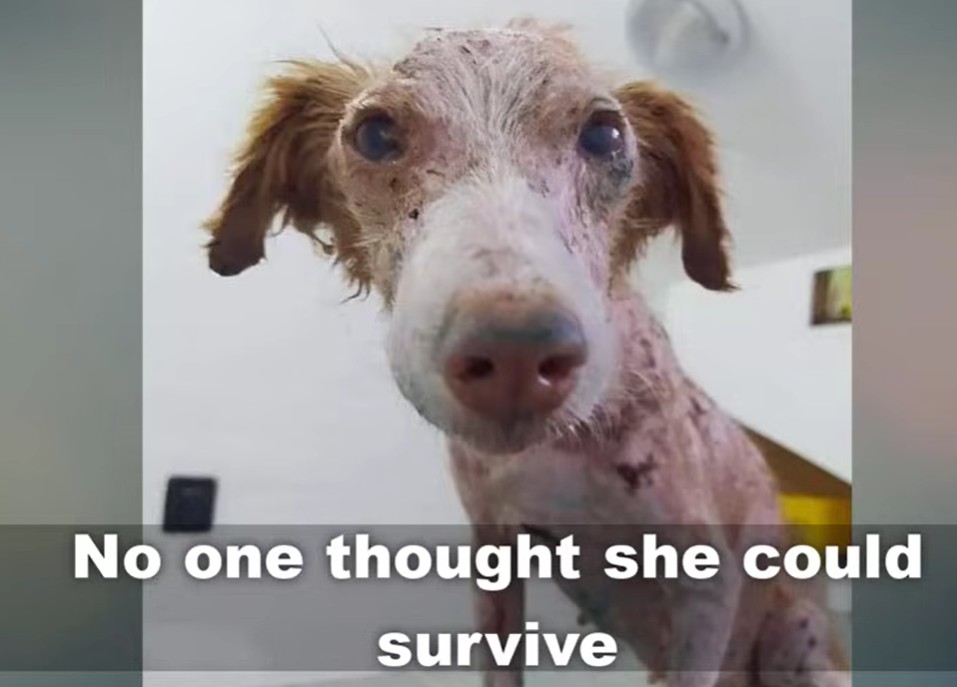
Improvement came gradually enough that someone seeing Orinoco every day might not have noticed every change.
Then photographs taken weeks apart began telling the story.
Her body started filling out.
The sharp outline of her ribs became less pronounced.
Her damaged skin began looking healthier.
Areas that had been nearly bare started showing new coat growth.
She had more energy to move around.
And her behavior toward people became different.
The dog who had immediately retreated from the first approaching hand no longer seemed determined to keep everyone at a distance.
Familiar caregivers could remain near her.
Touch became easier to accept.
She began seeking comfortable places instead of hiding beside whatever object offered cover.
The transformation was not simply visible in her coat.
Her entire daily routine had changed.
There was food every day.
Treatment every day.
And people who were still there the next morning.
Six Months Changed Almost Everything People Could See
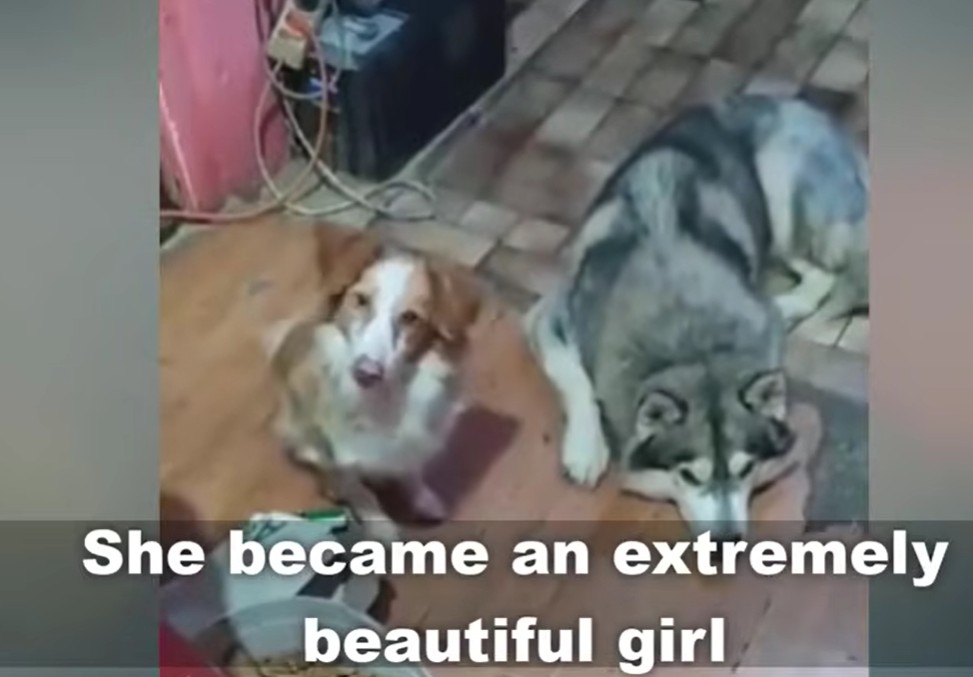
By around six months, the visual difference was extraordinary.
The dog who had weighed only 4.7 kilograms no longer looked like the same fragile animal found beside the dumpster.
Her fur had returned.
Her coat looked fuller and healthier.
Her body had regained weight and strength.
Her expression appeared brighter and more alert.
The severe condition that once dominated every photograph was no longer the first thing people noticed.
Now they saw Orinoco.
Her recovery had taken months because there had been no shortcut.
The disease needed treatment.
Nutrition needed rebuilding.
Skin needed time to repair.
And trust needed repeated evidence that the people around her were safe.
Those months eventually brought another possibility into view.
Orinoco was well enough to begin a new chapter.
A family wanted to adopt her.
Her New Family Kept the Name Orinoco
The adopters knew the story that came with her.
They knew she had required extensive care.
They knew the transformation they were seeing had been built slowly.
And they chose her anyway.
Orinoco kept her name.
The frightened dog first found beside garbage now had a home where she could settle into routines that had nothing to do with emergency veterinary care.
There were familiar footsteps.
Safe places to sleep.
Regular meals.
People she could recognize as her own.
The rescue account describes a dog who became far more relaxed in her new surroundings.
She no longer responded to every ordinary household movement as though she needed to escape.
She could simply exist within the home.
For caregivers who remembered having to approach her almost invisibly near the dumpster, that ordinary comfort represented an enormous change.
Her Past Did Not Disappear — It Stopped Controlling Every Day
According to the account surrounding Orinoco’s rescue, her previous care had become too expensive for the person responsible for her.
Whatever circumstances brought her to that dumpster, the result was visible when rescuers arrived.
A 4.7-kilogram dog.
Severe disease.
Damaged skin.
Fear strong enough to send her running from an offered hand.
None of that could be undone.
But it also did not have to determine what every future day would look like.
Treatment changed her medical condition.
Food rebuilt her body.
Consistency changed her relationship with the people around her.
And adoption gave those changes somewhere to continue.
There was no single moment when Orinoco went from “neglected” to “healed.”
There were hundreds of smaller moments between the two.
Another injection.
Another meal.
Another afternoon resting in sunlight.
Another patch of fur returning.
Another hand she allowed to come close.
The Greatest Transformation Wasn’t Becoming a “Queen”
It is tempting to describe Orinoco’s ending as a rise from neglect to royalty.
The images certainly create that contrast.
At the beginning, she was beside a corroded dumpster.
Later, she had a healthy coat, a home, and people caring for her.
But Orinoco did not need luxury to complete her rescue.
She needed something much more basic.
Proper medical treatment.
Enough food.
A safe place to rest.
And people willing to continue caring for her after the emergency stopped being dramatic.
Those things turned out to be enough.
The dog hiding beside trash eventually had somewhere she no longer needed to hide.
The First Hand Made Her Run — Later, Human Hands Became Part of Home
That may be the clearest way to understand Orinoco’s journey.
At the beginning, rescuers reached toward her and she immediately fled.
Distance felt safer.
Six months later, her life looked completely different.
The Leishmania had been treated and managed.
Her skin had recovered dramatically.
Her fur had grown back.
Her body no longer weighed only 4.7 kilograms.
And she had been welcomed into a family.
The first photograph makes it difficult to imagine that ending.
That is precisely why the months between them matter.
Orinoco did not recover because someone simply wished hard enough for a miracle.
She recovered because people kept doing the less dramatic work.
Medical care.
Nutrition.
Monitoring.
Patience.
Day after day.
The dumpster was where someone finally noticed her.
It did not become where her life ended.
Months later, the fragile dog who once ran from an extended hand could rest in a home where those same kinds of hands meant something entirely different.
Food.
Comfort.
Care.
And a reason not to run anymore.


