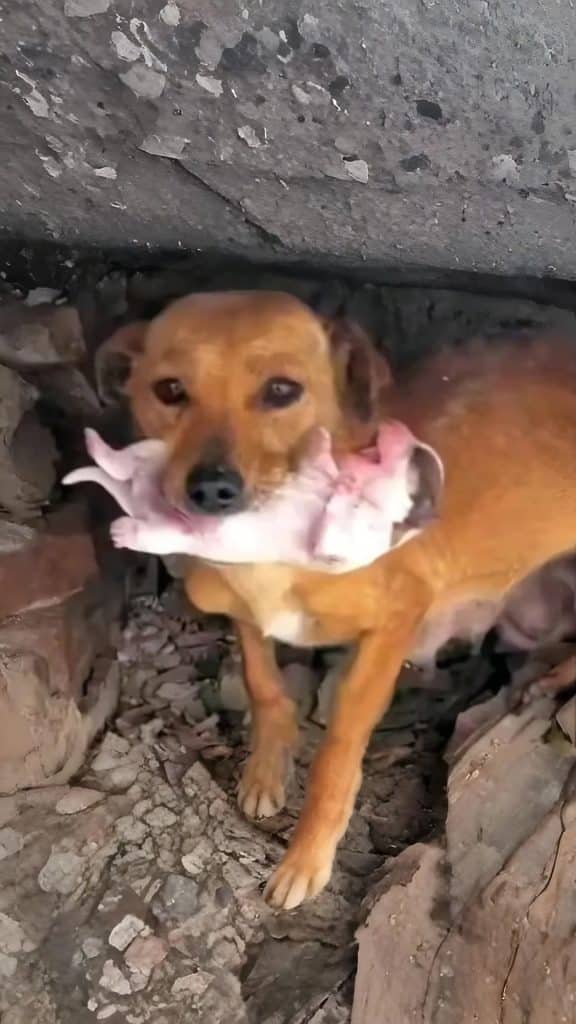
The mother dog had made herself into a shelter.
She lay curled against the cold ground beside an old building, her small puppy pressed tightly against her chest.
Her fur was dirty and stiff from the weather.
Her body looked tired.
But every time the puppy shifted, she adjusted herself around him again.
There was no warm room nearby.
No soft bed.
No protected place where the little family could escape the cold.
The puppy was so small that he almost disappeared beneath his mother’s body.
She could not stop the wind.
She could not change the temperature.
She could only keep him as close as possible and give him whatever warmth remained in her own body.
Then a woman noticed the two small figures beside the building.
She approached slowly.
The mother immediately watched her.
She was exhausted.
But she was not going to stop protecting her baby simply because a stranger had arrived.
The Mother Watched Every Step Toward Her Puppy
The rescuer could see the tension in the dog’s body as she came closer.
The mother did not run.
She did not leave the puppy behind.
Instead, she stayed curled beside him and followed every movement with her eyes.
Her condition suggested that she needed help too.
She looked tired from living outside in the cold, and her coat offered little protection from the conditions around her.
Still, her attention remained fixed on the puppy.
The rescuer understood that approaching too quickly could frighten her.
A protective mother might not understand the difference between someone coming to help and someone coming to take her baby away.
So the woman stopped at a respectful distance.
She lowered her voice.
She avoided sudden movements.
Then she waited.
Nothing about the situation could be rushed.
Before she could help the puppy, she needed the mother to believe that her presence was safe.
Video: Mother Dog Shields Her Tiny Puppy From The Cold As A Rescuer Slowly Approaches
Food Was Not Enough To Make Her Leave His Side
The rescuer tried offering food.
She placed it nearby and gave the mother room to approach.
The dog noticed it.
She was clearly tired and likely hungry.
But she did not immediately move.
Her puppy remained pressed against her.
Leaving him, even for a few moments, appeared to feel too risky.
The woman did not push the bowl closer.
She did not try to lure the mother away.
Instead, she allowed her to make the choice.
For some time, the dog simply watched.
The food was there.
So was the stranger.
And between them lay the puppy she was unwilling to abandon.
The rescuer realized that earning trust would require something other than hunger.
So she returned to her car.
When she came back, she carried a soft blanket.
She placed it gently on the ground near the little family.
Then she stepped away again.
The mother looked at it.
She sniffed the air.
Nothing happened at first.
Then she began to move.
She Nudged Her Puppy Onto The Blanket
The mother lifted her head and examined the blanket.
Slowly, she shifted her body.
Then, using her nose, she gently moved the puppy toward the soft fabric.
For the rescuer, the gesture changed the entire moment.
The mother still looked cautious.
She was not suddenly relaxed around the stranger.
But she had accepted something the woman had offered.
More importantly, she allowed that something to touch the life she had been protecting.
The puppy now rested on a surface warmer and softer than the frozen ground.
For the first time, the rescuer could see him more clearly.
He was extremely small.
His movements were limited.
His breathing appeared faint.
The situation was more serious than it had seemed from a distance.
The mother had kept him close for as long as she could.
But now the puppy needed more warmth and care than her exhausted body alone could provide.
The rescuer moved carefully.
This time, the mother allowed her to come closer.
Trust had not become complete.
But it had become enough.
The Puppy Barely Moved Beneath The Blanket
Up close, the puppy looked fragile.
The cold had taken much of his energy.
He remained wrapped in the blanket while the rescuer prepared to move both dogs away from the exposed area.
She gently secured the mother with a leash.
The dog did not resist.
Only a short time earlier, she had watched every movement with uncertainty.
Now she seemed willing to follow.
The puppy was kept wrapped carefully as they were brought toward the car.
Inside, warm air surrounded them.
The contrast was immediate.
No wind.
No cold ground.
No need for the mother to keep using her own body as the only source of warmth.
The rescuer placed the puppy near the heater while keeping him protected in the blanket.
His mother stayed close.
She watched him constantly.
Her body remained alert even inside the car.
She was no longer outside.
But she was not ready to stop keeping watch.
Then the puppy moved.
Only slightly.
A tiny stir beneath the blanket.
For the people helping him, it was enough to feel hopeful.
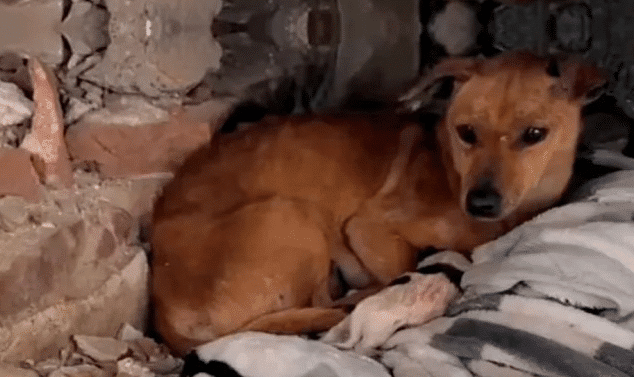
Warmth Gave Them Their First Moment Of Relief
The rescuer first brought the mother and puppy somewhere warm where they could rest briefly.
Food and fresh water were provided.
This time, the mother ate.
She no longer had to choose between leaving her puppy exposed and tending to her own hunger.
He was nearby.
He was wrapped warmly.
And the same person who had approached them outside was continuing to care for him.
That consistency seemed to matter.
The mother’s posture gradually softened.
She still looked toward the puppy often.
But she could finally pause long enough to eat and regain some of her own strength.
The puppy remained weak.
Warmth had helped, but he still needed proper medical attention.
So the respite was temporary.
The rescuer prepared both dogs for another journey.
This time, they were headed to a veterinary clinic.
The mother went with her puppy.
There would be no unnecessary separation.
Whatever treatment came next, she would remain close enough to know that he had not disappeared.
The Veterinary Team Focused On Keeping Him Stable
At the clinic, the puppy received careful attention.
His small size and weakened condition meant everything had to be handled gently.
The team focused on keeping him warm and monitoring how his body responded.
There was no instant change.
Recovery began with small signs.
A steadier breath.
A little more movement.
A stronger response to touch.
The mother received care too.
She was given food, rest, and a clean place where she could lie beside her puppy without having to fight the weather at the same time.
At first, she continued watching every hand that approached him.
That instinct had helped keep him alive outside.
No one expected it to disappear simply because the environment had changed.
The caregivers moved calmly around her.
They allowed her to remain involved.
Over time, the mother began to understand that every person entering the space was not there to take something from her.
They were there to help.
The Mother Slowly Stopped Watching Every Movement
One of the clearest signs of change appeared in the mother’s body language.
At first, she remained tense.
Her head lifted whenever someone approached the puppy.
Her eyes followed hands moving near him.
Rest came only in short moments.
Then those moments began lasting longer.
She started lying more comfortably on the clean bedding.
She ate without immediately interrupting herself to check the surroundings.
When caregivers approached, she no longer reacted with the same uncertainty every time.
Nothing about that trust happened suddenly.
It grew from repeated experiences.
Food arriving.
A blanket remaining beneath her.
People handling her puppy gently.
The puppy being returned close to her after every check.
The same calm voices.
The same safe room.
Again and again, the mother received evidence that she no longer had to manage every danger alone.
Eventually, she began allowing herself something she had probably needed for a long time.
Rest.
The Puppy Began Showing More Strength
As the days passed, the little puppy showed gradual improvement.
His body responded to warmth and care.
He became more alert.
His movements grew stronger.
The faint signs that had worried the rescuer on the first day slowly began changing.
His mother remained beside him through the process.
But now their environment supported her instead of working against her.
She did not need to shield him from freezing ground.
She did not need to curl herself around him every second just to keep the wind away.
There were blankets for that.
Warmth for that.
People checking on him.
That allowed the mother’s role to change.
She could simply stay beside her baby.
She could feed.
Sleep.
Recover.
And allow the people around her to carry some of the responsibility she had been holding alone.
For both dogs, healing was not one dramatic event.
It was the accumulation of safer days.
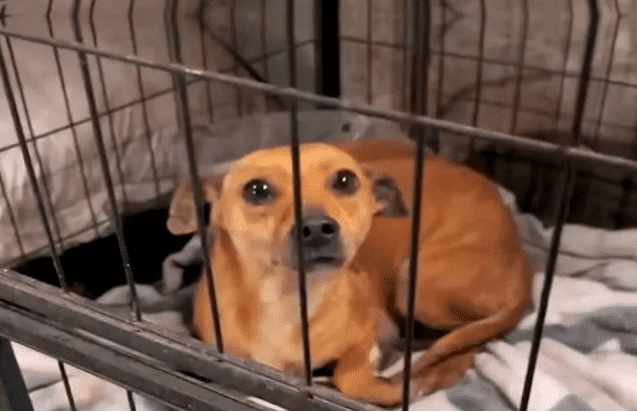
Their World Became Much Smaller And Much Safer
Before rescue, their world had been defined by exposure.
The cold ground.
The side of an old building.
The constant need to stay alert.
Afterward, life became quieter.
A protected room.
Soft bedding.
Food that arrived regularly.
Fresh water.
People who approached gently.
For the mother, those changes meant she no longer had to solve every problem herself.
For the puppy, they meant his tiny body could use its energy for growing stronger instead of simply trying to stay warm.
The mother gradually accepted the new routine.
She allowed herself to sleep more deeply.
She let caregivers approach.
She no longer treated every unfamiliar movement as a threat to her baby.
That did not lessen her bond with the puppy.
If anything, it gave that bond somewhere safer to exist.
She could still remain close.
Still watch him.
Still comfort him.
But now she was doing those things inside a place built to help them both.
She Had Protected Him Until Someone Else Could Help
The most memorable part of the rescue was not a dramatic chase or a complicated operation.
It was the sight of one exhausted mother refusing to move away from her puppy.
She had very little to work with.
Her own body.
Her own warmth.
Her own determination to stay beside him.
That was enough to keep him going until someone noticed.
Then the nature of the rescue changed.
The mother no longer had to do everything alone.
A rescuer brought a blanket.
Then warmth.
Then transportation.
Then veterinary care.
Each step added something the mother could not provide by herself.
And as those layers of safety appeared, she gradually accepted them.
Her trust was not immediate.
It did not need to be.
She only needed enough confidence to let someone move closer.
Then enough to allow her puppy onto the blanket.
Then enough to follow them into the car.
Those small decisions opened the way to everything that followed.
A Blanket Became The Beginning Of Their New Life
When the rescuer first saw the mother and puppy, there was no dramatic sign announcing that they needed help.
Just two small animals pressed together against the cold.
One protecting.
One depending entirely on that protection.
The rescue began quietly.
A woman stopped.
She approached slowly.
She offered food.
When food was not enough, she brought a blanket.
Then she waited again.
That blanket became the first thing the mother accepted.
Soon after, her puppy was inside a warm car.
Then both dogs were receiving care.
The mother could eat.
The puppy could rest.
And their lives no longer depended only on how much cold one exhausted dog could withstand.
The mother had done everything she could before help arrived.
She kept the puppy against her.
She protected him with her body.
And when another kind of protection finally appeared, she found enough trust to accept it.
Sometimes rescue begins with courage.
Sometimes with medical care.
And sometimes it begins with something as simple as placing a blanket on the ground and giving a frightened mother enough time to decide that it is safe.
For this little family, that decision opened the door to warmth, rest, healing, and a future beyond the cold.


