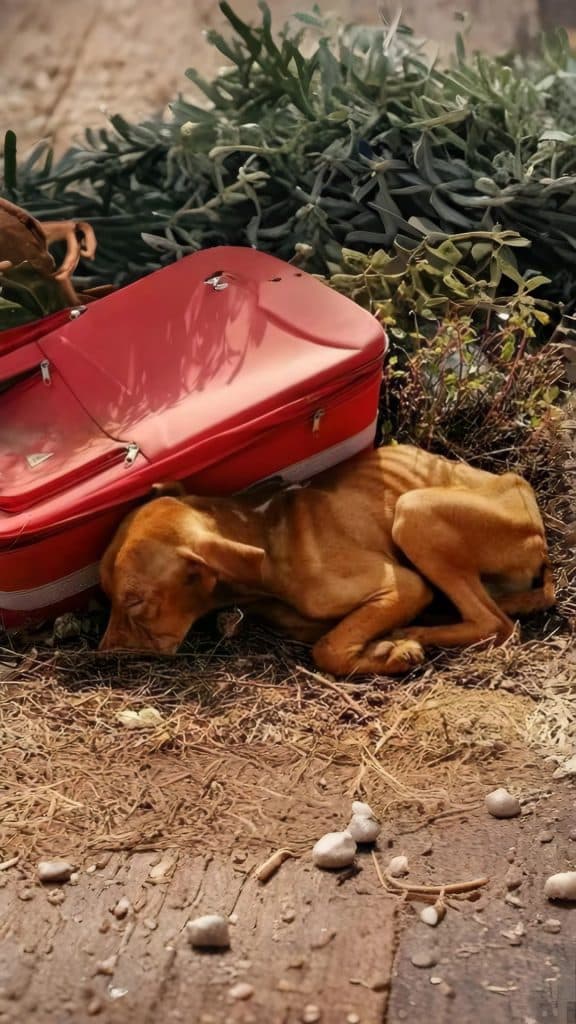
The old suitcase sat beside a quiet roadside in Italy, worn and seemingly forgotten. To anyone passing by, it might have looked like another abandoned piece of luggage.
But one passerby stopped to take a closer look.
Inside was a tiny puppy, curled up and barely able to move. His small body trembled, and his exhausted condition made it clear that he needed help.
He had no way to find food, seek shelter, or escape the situation on his own.
The stranger immediately contacted a local rescue group, the Trani Cane League, setting in motion a journey that would involve emergency veterinary treatment, uncertain days of recovery, and the slow return of a frightened puppy’s trust.
His name would become Kei.
And although no one could promise that the little dog would recover, the moment someone stopped beside that suitcase gave him something he had been missing.
A chance.
The Suitcase That Should Never Have Been Left There
The roadside was quiet when the passerby noticed the suitcase.
It was old and worn, sitting alone in a place where discarded objects might easily go unnoticed.
At first, there was little to suggest what was inside.
But the passerby approached and opened it.
There, curled into a small space, was a puppy.
He was frightened and exhausted, with barely enough strength to move.
The discovery was deeply concerning.
Kei was far too young and vulnerable to be left alone in such circumstances. He had no reliable access to food or water and no way to reach safety without assistance.
His small body trembled as the stranger looked at him.
There was no way to know exactly how long he had been there or what had happened before the suitcase was abandoned.
The passerby could only see the puppy’s condition.
And that was enough to understand that help was needed immediately.
Rather than leaving him behind, the person contacted the Trani Cane League, a local organization dedicated to rescuing animals in need.
The volunteers responded and came to help.
They approached the little dog carefully, mindful of his fragile condition and the fear he appeared to be experiencing.
Kei was gently lifted from the suitcase.
The rescuers wrapped him warmly and began preparing to bring him somewhere safe.
For the tiny puppy, the immediate danger of being left alone beside the road was finally over.
But his exhausted body still needed urgent attention.
And the people who had come to save him understood that the most difficult part of his journey might still lie ahead.
VIDEO: A Fragile Puppy Was Discovered Beside an Abandoned Suitcase on an Italian Road
The Rescuers Knew He Needed More Than a Warm Blanket
When the volunteers first reached Kei, they could see that he was in poor physical condition.
His small body was weak.
His movements were limited.
And he appeared frightened by the unfamiliar surroundings and people approaching him.
The team understood that removing him from the suitcase was only the first step.
He needed a veterinary examination to determine why he was so weak and what treatment might help him recover.
The volunteers handled him gently as they transported him to the clinic.
They provided warmth and spoke softly, trying to avoid placing additional stress on an animal who was already exhausted.
There was no reason to expect Kei to become comfortable immediately.
He had been discovered in a frightening situation, and his physical condition left him vulnerable.
The rescuers could not know exactly what he understood about the people helping him.
But they could make sure that his immediate needs were met.
He was no longer alone.
He was no longer trapped in the place where he had been found.
And he was finally on his way to receive professional medical attention.
At the clinic, the veterinary team began examining him carefully.
They needed to understand the extent of his weakness and identify any medical problems affecting his recovery.
What they discovered confirmed that Kei’s condition was more complicated than it had first appeared.
The little puppy was facing several health concerns.
And the road toward recovery would require patience, treatment, and continued monitoring.
The Veterinary Examination Revealed Serious Health Problems
At the clinic, Kei received a thorough examination.
The results showed that he was suffering from anemia, digestive problems, and other complications affecting his weakened body.
For such a small puppy, these conditions were particularly concerning.
Anemia can leave an animal with reduced energy and weakness, while digestive problems may interfere with the ability to obtain proper nourishment.
Kei was already exhausted.
His caregivers needed to address his medical problems while providing the support necessary to help his fragile body recover.
The veterinary team began treatment.
Warmth was important.
So was appropriate nutrition.
And his condition required careful observation to determine how he was responding.
During the first days, Kei remained extremely weak.
Eating was difficult.
Even simple movements appeared exhausting.
He spent much of his time resting while the veterinary team continued providing care.
There was no immediate transformation.
The puppy who had been discovered beside the roadside was still struggling with serious health problems.
His caregivers understood that recovery could not be rushed.
They needed to give his body time to respond to treatment.
Every meal mattered.
Every period of rest mattered.
And every change in his condition needed to be considered carefully.
The volunteers also recognized that Kei seemed nervous around unfamiliar people.
His medical treatment was essential, but helping him become comfortable in his new environment would require a different kind of attention.
They could not simply expect him to forget the frightening circumstances in which he had been discovered.
He needed time.
And the caregivers were prepared to give it to him.
The Little Puppy Who Was Afraid of Sudden Movements
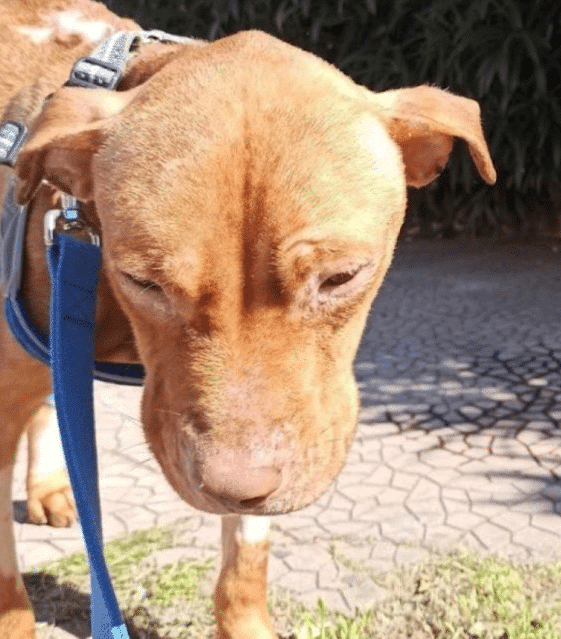
During Kei’s earliest days in care, his nervous behavior was easy to notice.
Sudden movements caused him to become uncomfortable.
Unfamiliar sounds made him pull back.
And new people could make him hesitant.
For the volunteers, these reactions were important signals.
Kei was still adjusting to an environment that was completely different from the place where he had been discovered.
He was also dealing with physical weakness and medical problems that could make unfamiliar experiences more difficult.
The caregivers responded with patience.
They approached slowly.
They spoke in calm voices.
And they allowed Kei time to observe them before attempting closer interactions.
There was no pressure for him to become affectionate immediately.
If he appeared uncomfortable, they gave him space.
If he remained still, they allowed him to rest.
The goal was to provide consistent care while helping him become familiar with the people around him.
Day after day, the volunteers repeated the same gentle routine.
They provided nourishment.
They monitored his condition.
They spent quiet moments near him.
And they allowed him to choose when he was comfortable enough to approach.
At first, progress was subtle.
Kei might look toward a caregiver for a little longer.
He might remain more relaxed when someone entered the room.
Or he might show greater interest in what was happening around him.
These changes were small, but they were encouraging.
The puppy who had arrived frightened and exhausted was beginning to adjust.
His physical recovery remained a priority, but his behavior was also showing signs of improvement.
And soon, one tiny movement would reveal just how much more comfortable he was becoming.
One Small Tail Wag Became an Unforgettable Moment
Kei’s recovery unfolded gradually.
His caregivers continued providing medical treatment, nourishment, and a quiet environment where he could rest.
As time passed, encouraging changes began appearing.
His eyes looked brighter.
His body appeared more relaxed.
And he started responding to familiar people with greater interest.
The little puppy who had once pulled back from unfamiliar movements was beginning to become more comfortable in his surroundings.
Then came a moment that everyone caring for him would remember.
Kei wagged his tail.
Just a little.
It was a simple gesture, but for the volunteers who had watched his difficult beginning, it was deeply encouraging.
They remembered the exhausted puppy discovered near the suitcase.
The frightened animal who had barely been able to move.
And the early days when medical treatment and careful observation had been the center of his life.
Now, Kei was responding to a familiar person with a small, friendly movement.
The tail wag did not mean that his medical problems had disappeared.
His anemia and digestive difficulties still required appropriate care, and his body needed time to rebuild strength.
But his behavior was changing.
He was becoming more receptive to the people around him.
He could experience moments of comfort during his recovery.
And he was beginning to show a personality that had been difficult to recognize when he first arrived.
The volunteers continued their patient approach.
They did not treat one tail wag as proof that every fear had vanished.
Instead, they allowed Kei to continue adjusting at his own pace.
And as the days passed, his confidence gradually grew.
A Safe Routine Helped Him Rediscover His Confidence
As Kei continued receiving treatment, his daily life became more predictable.
He had somewhere warm to rest.
He received appropriate nourishment.
And the people caring for him continued approaching gently and monitoring his condition.
These routines provided a stable environment while his body recovered.
They also gave him opportunities to become familiar with the volunteers.
At first, Kei had been nervous about sudden movements and new sounds.
Now, he was beginning to recognize the people who regularly cared for him.
He became more comfortable when they approached.
His posture appeared increasingly relaxed.
And his interest in his surroundings began growing.
For a puppy who had spent his earliest known moments inside a suitcase, the changes were significant.
He no longer had to remain in an exposed roadside environment.
His needs were being addressed.
And he had people who were paying attention to his progress.
The volunteers continued providing gentle interaction without overwhelming him.
They understood that confidence develops through repeated experiences rather than a single moment of affection.
Kei was allowed to rest when he needed to.
He could approach people when he felt comfortable.
And he could gradually explore the world around him without being rushed.
His physical condition also continued improving as treatment progressed.
The puppy who had arrived with very little energy was slowly becoming stronger.
His increasing comfort allowed more of his personality to emerge.
He began showing curiosity about his surroundings and responding more positively to familiar caregivers.
The recovery was not yet complete.
But the little dog was moving forward.
And the suitcase where he had been discovered was becoming a smaller part of his everyday story.
Week After Week, Kei Began Changing
Kei’s transformation took time.
His anemia, digestive problems, and overall weakness required ongoing attention.
The veterinary team continued providing appropriate treatment, while the volunteers made sure he had a consistent routine of nourishment and rest.
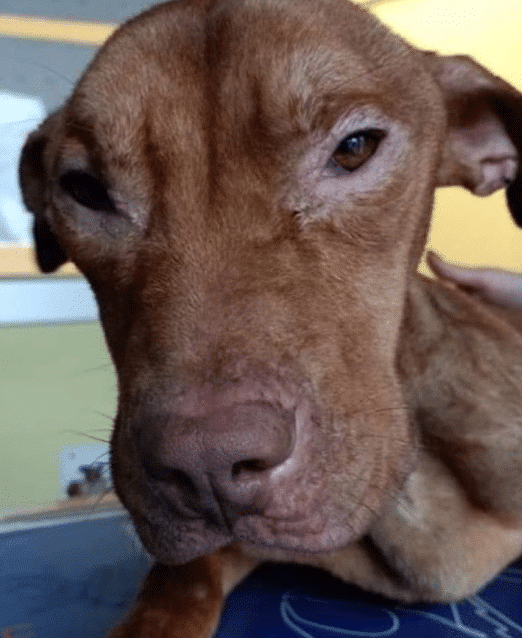
As the weeks passed, his condition gradually improved.
He became stronger.
His eyes appeared brighter.
And he grew more comfortable interacting with the people around him.
The change was especially noticeable when compared with the puppy’s earliest days.
When he was discovered, he had been curled inside a suitcase, frightened and barely able to move.
Now, he had opportunities to become familiar with his environment.
He could experience the comfort of soft blankets.
The presence of gentle caregivers.
And the reassurance of a routine in which his basic needs were met consistently.
His behavior reflected that adjustment.
He became less hesitant around familiar people.
He started responding more readily to their attention.
And his small gestures of confidence became increasingly apparent.
The volunteers could see that his progress involved more than medical treatment alone.
Kei was also learning to function comfortably in his new surroundings.
His recovery did not mean that every difficult experience from his past had disappeared.
Nor did it mean that every medical concern had been permanently resolved.
But it showed that continued care was making a meaningful difference.
The little puppy had become more active and responsive.
And the people looking after him were finally seeing the gentle companion who had been hidden beneath his earlier exhaustion.
There was still a future to prepare for.
Kei needed continued attention and understanding as his recovery progressed.
But he was no longer facing those challenges without help.
He had people committed to giving him the best opportunity to become healthy and comfortable.
The Puppy Who Once Had Nowhere to Go Finally Had People Beside Him
Kei’s story did not end when he was lifted from the suitcase.
That moment brought him out of immediate danger, but his recovery required much more.
He needed veterinary treatment for anemia and digestive problems.
He needed appropriate nourishment to support his weakened body.
And he needed a safe environment where he could rest and gradually become comfortable around people.
The volunteers provided that care.
They monitored his condition and approached him with patience.
They understood that a frightened puppy might not immediately welcome unfamiliar hands or voices, even when those people were trying to help.
So they gave him time.
Their gentle approach allowed Kei to gradually become more receptive to human interaction.
He began looking toward familiar caregivers with greater interest.
His body language became more relaxed.
And eventually, he offered the little tail wag that had meant so much to everyone watching his progress.
Week after week, his transformation continued.
His physical condition improved.
His strength increased.
And his behavior became more confident.
The original account does not confirm whether Kei has been adopted into a permanent home or whether every medical problem has completely resolved.
What it does establish is that he was rescued, received veterinary treatment, and began making encouraging progress under the care of the Trani Cane League and its volunteers.
His future beyond that stage remains undocumented.
But the difference in his circumstances is unmistakable.
Kei is no longer a helpless puppy left inside a suitcase beside the road.
He has people looking after his health.
A safe place where he can rest.
And the opportunity to continue recovering without facing every challenge alone.
For a small animal who had been discovered in such a vulnerable condition, those changes represent an entirely different beginning.
One Stranger Opened the Suitcase and Gave Kei a Second Chance
Kei’s journey began beside a quiet road in Italy.
An old suitcase had been left behind, and a passerby decided to look inside.
What they discovered was a tiny puppy, frightened and exhausted, with barely enough strength to move.
The person immediately recognized that he needed help and contacted the Trani Cane League.
Volunteers arrived and carefully brought Kei to safety.
At the veterinary clinic, examinations revealed that he was suffering from anemia, digestive problems, and other complications affecting his weakened body.
His recovery would not be simple.
He needed medical treatment, proper nutrition, warmth, and careful monitoring.
But physical illness was not the only challenge.
Kei was also nervous around unfamiliar people.
Sudden movements frightened him, and new sounds made him retreat.
The volunteers understood that helping him become comfortable would require patience.
They continued providing gentle care and allowed him to adjust at his own pace.
Gradually, the changes began appearing.
His eyes became brighter.
His body relaxed.
And one day, he wagged his tail.
It was a small movement, but it revealed how different his circumstances had become.
The puppy who had once been terrified inside a suitcase was beginning to respond positively to the people around him.
As the weeks passed, his physical condition and confidence continued improving.
His caregivers remained committed to supporting him, recognizing that healing takes time and that his recovery was still unfolding.
Kei’s story is a reminder that rescuing a vulnerable animal involves much more than the first act of compassion.
The passerby who stopped made it possible for someone to discover him.
The rescue team brought him to safety.
The veterinary staff provided essential medical treatment.
And the volunteers continued caring for him through the gradual process of recovery.
Each contribution mattered.
There was no instant transformation.
No guarantee that every problem would disappear.
But there was consistent care, appropriate treatment, and the patience to let a frightened little puppy adjust.
Kei had been left in a place where he could not help himself.
Someone noticed.
Someone called for assistance.
And a group of people continued providing the care he needed long after the suitcase was opened.
Today, his journey is still one of recovery and possibility.
He is becoming stronger, growing more comfortable around familiar people, and learning to explore a world that is no longer limited to the small space where he was discovered.
The old suitcase will always be part of how his story began.
But it no longer determines what happens next.
Once, Kei was a frightened little puppy with nowhere to go. Now, he has people who are helping him discover just how much life can change when someone chooses to care.


