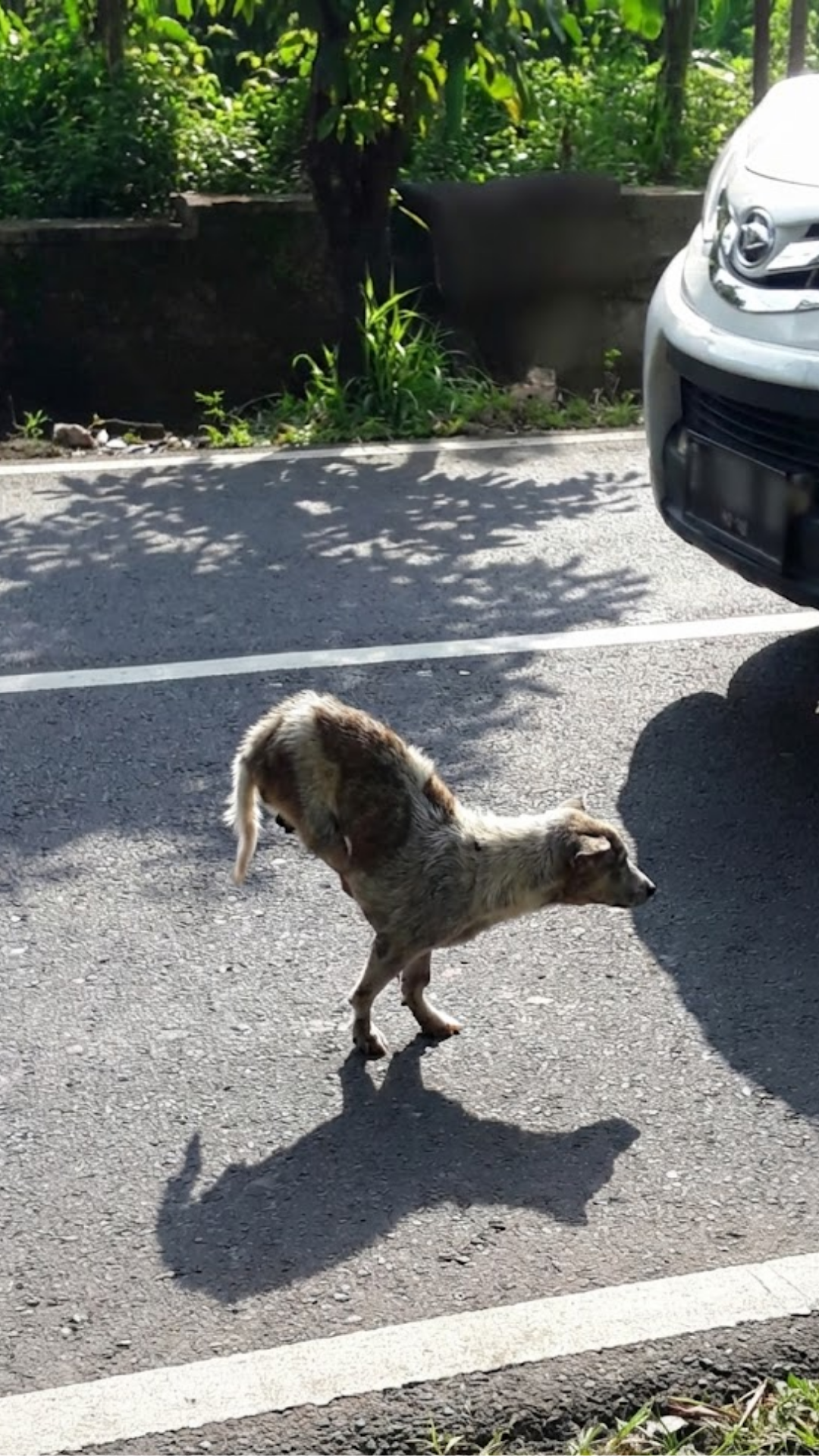
At first, people noticed the way he walked.
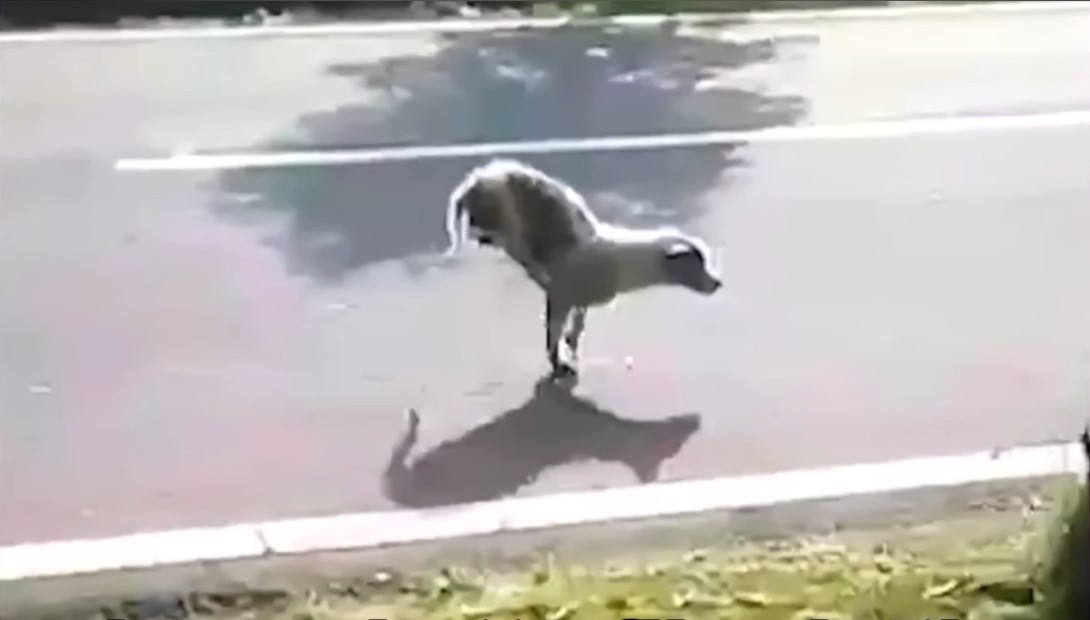
His back legs were twisted.
Every step looked awkward.
And no matter how tired he seemed, the stray dog rarely stayed in one place for long.
He kept moving along dusty roads and through crowded areas, head lowered and body tense.
To most people, he was simply another injured stray.
But rescuers eventually realized there was something more behind the constant movement.
Taro was not wandering without purpose.
He had learned that stopping could make him feel vulnerable.
His Legs Had Been Different Since Birth
According to the rescue account, Taro’s hind legs had been deformed from birth.
The condition affected the way he stood and walked.
His muscles were underdeveloped, and his movement looked noticeably different from that of other dogs.
Running normally was not something his body could easily do.
Still, Taro adapted.
He learned how to move forward using the body he had.
Slowly.
Unevenly.
But persistently.
Life on the street made those physical limitations harder.
He was undernourished.
His bones were described as fragile.
His immune system was weakened.
And every day still required him to search for food and avoid whatever frightened him.
The hardest part was not simply how he moved.
It was how he reacted to the world around him.
Sudden sounds made him flinch.
He avoided eye contact.
And whenever people came too close, his entire body seemed to prepare for something unpleasant.
VIDEO: Taro Never Stopped Walking—Then a Rescuer Began to Understand Why He Was Afraid to Stay Still
Standing Still Had Become Something He Avoided
People who had seen Taro before rescue did not always understand his behavior.
From a distance, he seemed to wander constantly.
But the source account says he had also experienced rough treatment from people who mocked or pushed him away because of the way he walked.
Whether every incident happened exactly as later described cannot be known.
What rescuers could observe was a dog who appeared deeply uncomfortable remaining exposed around unfamiliar people.
So Taro kept moving.
If he stayed in motion, he could create distance.
If he stopped, he appeared more vulnerable.
Over time, that pattern became part of how he survived.
The twisted legs made movement difficult.
Fear made rest difficult.
And the street offered very few places where he could safely lower his guard.
By the time someone finally chose to help him, Taro seemed exhausted by both.
The Veterinary Exam Explained Why Movement Was So Hard
Once rescuers were able to take Taro in, he was examined by a veterinarian.
The findings helped explain what people had been seeing.
According to the rescue story, Taro had a congenital deformity affecting his back legs.
His muscles were poorly developed.
He was severely malnourished.
His bones were fragile.
And his weakened condition suggested that his body had been operating with very little reserve.
There was no simple procedure that would suddenly make his legs completely normal.
His recovery would have to work with the structure he already had.
That meant nutrition.
Muscle support.
Gentle rehabilitation.
And realistic expectations.
The goal was not to make Taro move like another dog.
It was to help him move more comfortably as himself.
Healing Started Before He Was Ready to Trust Touch
Physical therapy required human contact.
That was not easy for Taro.
At first, he flinched when people reached toward him.
His caregivers did not push through the reaction.
They slowed down.
Massage was introduced gently to support weak muscles.
Simple exercises encouraged controlled movement without overwhelming him.
Meals became consistent so his body could begin rebuilding strength.
And every interaction followed the same principle.
Do not rush him.
Taro was allowed to watch.
Allowed to retreat.
Allowed to learn that a hand approaching him did not always lead to something frightening.
The physical and emotional parts of recovery moved together.
Stronger muscles helped him stand more comfortably.
Safer experiences helped him tolerate the care those muscles needed.
Then His Tail Moved
The first obvious change was small.
Taro’s tail twitched.
For a dog who had spent so much time tense around people, the movement stood out immediately.
Then it happened again.
His caregivers began seeing less constant fear in his posture.
He tolerated touch for longer.
He allowed massage without immediately pulling away.
Eventually, he began approaching people rather than waiting for them to close the distance.
None of that happened overnight.
His defenses softened gradually.
One safe interaction at a time.
One meal.
One touch.
One day in which nothing bad followed.
His Legs Stayed Crooked, but His Life Became Bigger
Taro’s hind legs did not become perfectly straight.
His gait remained unusual.
But rehabilitation helped him use his body more confidently.
He could walk.
Play.
Move through a home.
And eventually climb into someone’s lap on his own.
Those changes mattered because Taro’s recovery was never about making him physically perfect.
It was about giving him more choices.
He no longer had to spend every moment moving simply because stopping felt unsafe.
He could rest.
Choose where to go.
Approach people.
Move away when he wanted space.
His physical limitations remained part of him.
They no longer had to define the size of his world.
A Foster Home Gave Him the Chance to Stop Running
When Taro was ready for foster care, his rescuers did not know how he would respond to another unfamiliar environment.
The first moments mattered.
Would he immediately search for somewhere to hide?
Would he pace?
Would the old fear return?
Instead, Taro entered quietly.
He looked around.
Then, according to the rescue account, he rested his head against his foster mother’s foot.
It was a small gesture.
But it suggested that Taro was beginning to understand the difference between being trapped somewhere and being welcomed somewhere.
Soon, a permanent family followed.
He gained soft places to sleep.
Toys.
Two canine companions.
And people who understood that his legs might always look different.
Taro Finally Learned That He Didn’t Have to Keep Moving
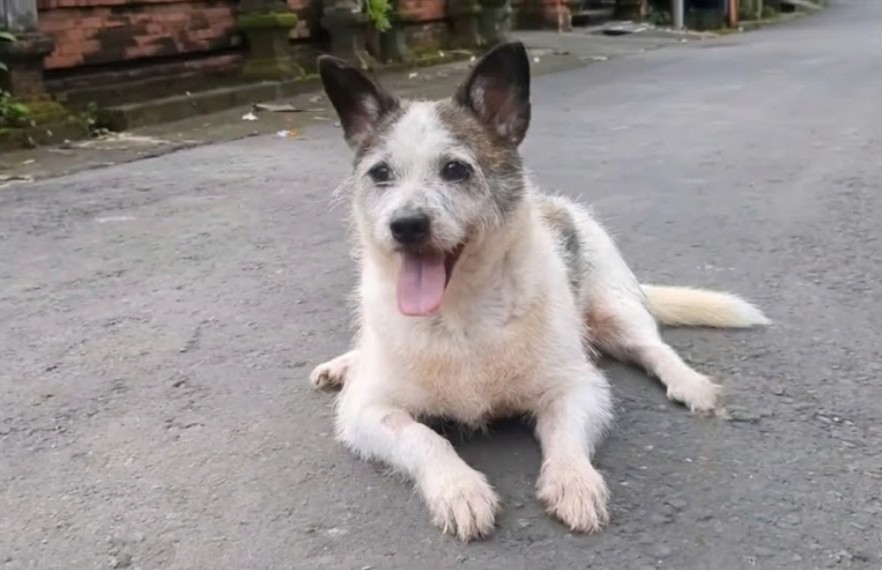
Today, Taro still runs differently from other dogs.
His gait is uneven.
His hind legs remain shaped by the condition he was born with.
But now he runs across grass because he wants to.
He plays with other dogs.
Follows butterflies.
Sleeps beside people he trusts.
And approaches strangers with far more confidence than the frightened dog who once kept his head down on the street.
The most important change was not that Taro’s body became normal.
It did not.
The change was that his surroundings became safe enough for him to stop compensating for everything alone.
Once, constant movement appeared to be part of survival.
Now Taro can stop.
Rest.
Look around.
And stay.
For a dog who once seemed afraid to remain anywhere for too long, that may be the clearest sign of how far he has come.


