The young dog was lying near an empty store in Fort Wayne, Indiana, when an animal control officer arrived.
He did not stand when footsteps approached.
He did not attempt to run.
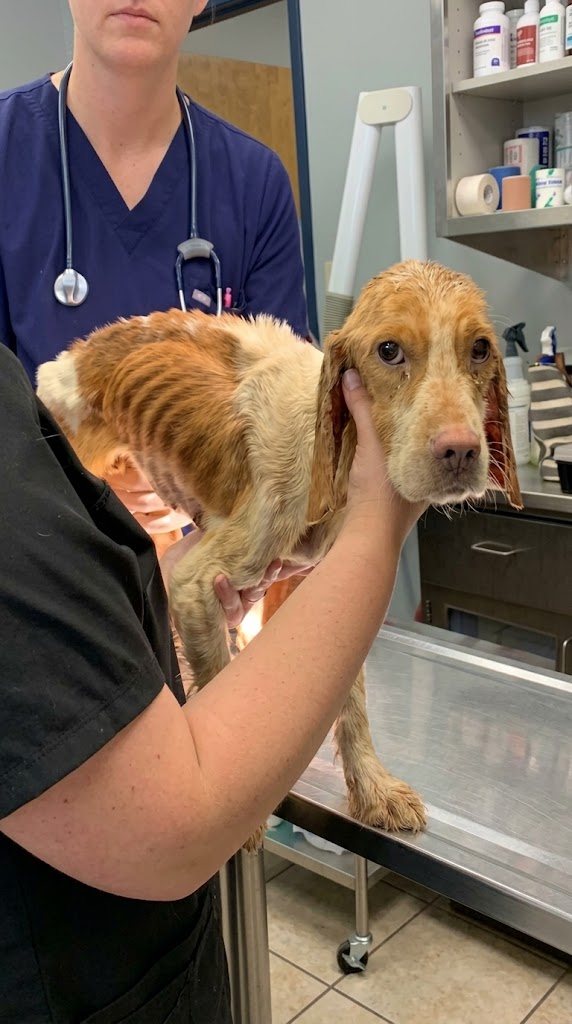
At only about ten months old, the Beagle mix was so severely underweight that his body could no longer support ordinary movement. His temperature was dangerously low, and even lifting his head appeared difficult.
The officer carefully picked him up and rushed him toward the people who might still be able to save him.
A Puppy Too Weak to Rise From the Pavement
The call led an officer from Fort Wayne Animal Care and Control to the area near a vacant Target building.
At first, the small figure beside the building could easily have been overlooked.
The puppy remained almost completely still against the pavement. His body was extremely thin, with ribs, hips, and spine clearly visible beneath his coat.
When the officer moved closer, the urgency became clear.
The dog was alive, but barely responsive.
He could not stand on his own.
His muscles appeared too weak to hold his body upright, and his low temperature suggested that he was struggling to maintain even the most basic physical functions.
The officer did not know how long the puppy had been there or what had happened before he was found.
Those questions would have to wait.
He needed emergency care immediately.
Video: Ten-Month-Old Puppy Tries to Sit Up After Being Found Unable to Stand
Warmth Had to Come Before Everything Else
The puppy was transported to emergency veterinary care, where the medical team began assessing his condition.
Severe malnutrition affects far more than a dog’s appearance.
When a body has gone without adequate nutrition for an extended period, muscles weaken, organ function may become unstable, and the ability to regulate temperature can decline.
The puppy was placed on a heated surface to raise his body temperature gradually.
Every part of the process required caution.
Warming him too quickly could place additional stress on his already fragile system. Feeding him a full meal immediately could also create dangerous complications.
The team monitored his vital signs and bloodwork while introducing support in controlled stages.
At first, there was no dramatic change.
He remained lying down.
His movements were limited.
Caregivers watched for small signs that his body was responding: steadier breathing, improved temperature, greater awareness of nearby voices, or the ability to swallow a small amount of food.
In a case this critical, progress could not be measured in leaps.
It had to be measured hour by hour.
His Condition Raised Questions About Where He Had Been
Shelter officials noticed details that made the puppy’s history especially concerning.
Although he had been found outside, his coat reportedly did not show the dirt and debris they might expect from a dog who had been wandering outdoors for a long time.
That observation led staff to consider whether he had recently been kept in a confined indoor space.
His extreme weakness also suggested that he may have had very limited opportunity to move before being discovered.
The shelter could not know the full circumstances from his appearance alone.
Only an investigation could establish where he had been, who had cared for him, and how his condition had become so severe.
What the team could see was the result.
A young dog had reached a point where his body could no longer support him.
He had not become dangerously thin in a single day.
His condition appeared to reflect an extended period without the nutrition and care a growing dog requires.
Authorities began looking into the case while the medical team focused on keeping him stable.
The investigation mattered, but it could not be allowed to interrupt his treatment.
For the puppy, the immediate world had become very small.
Warmth.
Measured food.
Medical monitoring.
And people watching closely for any sign that he was beginning to recover.
Feeding Him Required Patience and Precision
One of the greatest dangers in treating severe starvation is the assumption that the animal simply needs as much food as possible.
A body that has been deprived for a long time may not be able to process a normal meal safely.
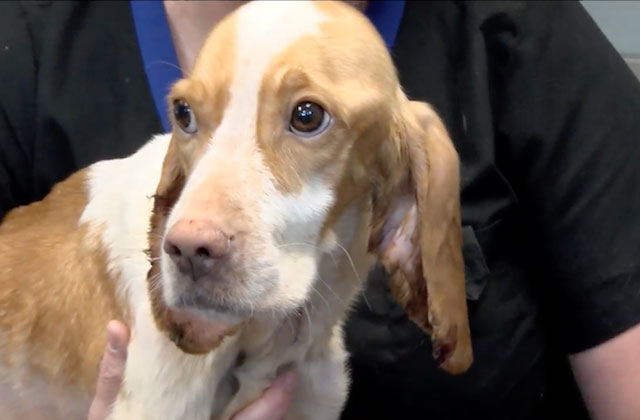
The puppy’s caregivers introduced nutrition in very small portions.
Each feeding had a purpose.
Provide enough energy to support recovery without overwhelming his weakened system.
The team continued checking his bloodwork and physical responses as the amount was adjusted.
He began accepting food from gentle hands.
At first, the portions were tiny.
But every successful feeding gave his body something it had been missing: fuel to maintain temperature, repair tissue, and slowly rebuild muscle.
Caregivers remained realistic about the risks.
One meal did not mean he was safe.
A slightly warmer body did not guarantee that every organ was functioning normally.
Recovery from this degree of malnutrition can be unpredictable, and complications may appear even after early improvement.
Still, the puppy continued responding.
His eyes began following movement around the room.
He became more aware when someone approached.
He showed enough interest in food to continue the careful feeding schedule.
The changes were subtle, but they were moving in the right direction.
The Day He Lifted Himself Into a Sitting Position
After days of treatment, the puppy attempted something he had been unable to do when he was found.
He tried to sit up.
His body was still weak.
The movement required effort, and he could not remain upright for long. But for the first time, he used his own strength to lift his chest away from the bedding.
The staff noticed immediately.
Sitting is an ordinary action for a healthy young dog. In this room, it represented a major step.
It showed that his muscles were beginning to respond.
It showed that the nutrition and medical support were giving him enough energy to attempt movement.
Most importantly, it allowed caregivers to observe a change that could not be measured only through numbers on a chart.
The puppy was participating in his recovery.
No one treated the moment as proof that he was ready to leave medical care.
He still needed close monitoring.
He still could not safely move through a normal shelter environment.
He remained vulnerable to infection, physical stress, and setbacks.
But the dog who had lain motionless beside the empty store had now lifted himself upright.
For the people caring for him, that small action made the possibility of further recovery feel more real.
More Than $7,600 Arrived From the Community
As news of the puppy spread through Fort Wayne, members of the community began asking how they could help.
Donations soon exceeded $7,600.
The money helped support the medical treatment, food, monitoring, and continued care required during his recovery.
The response also showed how deeply the case had affected people who had never met him.
They saw a young dog whose condition appeared preventable.
They saw shelter workers trying to rebuild his strength one carefully managed day at a time.
And they wanted to contribute to the work ahead.
Financial support could not make his body recover instantly.
But it gave the shelter more room to focus on what he needed without rushing decisions because of cost.
The organization made it clear that adoption was not yet the priority.
The puppy first needed stability.
Moving him too soon or exposing him to an unfamiliar environment could interfere with his treatment. Before anyone discussed a permanent home, he needed to eat consistently, maintain a healthy temperature, regain strength, and receive further veterinary evaluation.
For now, his world would remain with the professionals already caring for him.
There would be time to consider adoption later.
His body had to be given the chance to heal first.
Help Is Safer When People Ask Before a Crisis
The shelter also used the case to remind local families that assistance may be available before an animal reaches such a dangerous condition.
People can struggle to care for pets for many reasons.
A job may be lost.
Housing circumstances may change.
Veterinary costs may become overwhelming.
Food may become difficult to afford.
A family may feel embarrassed or afraid of being judged.
But waiting until an animal can no longer stand makes every possible solution more difficult.
Animal shelters, rescue groups, veterinary clinics, and community organizations may be able to provide or suggest resources such as:
Pet food assistance.
Low-cost medical services.
Temporary foster care.
Behavioral guidance.
Responsible rehoming support.
Scheduled surrender appointments.
Not every organization will have immediate space or funding. Shelters often operate under significant pressure, and some programs may have waiting lists.
Even so, contacting them early creates more options.
A phone call can help someone locate a food bank before a pet begins losing weight.
A veterinary clinic may know of payment assistance or lower-cost treatment.
A rescue group may help share a responsible rehoming request before abandonment becomes a possibility.
Asking for help does not guarantee a simple answer.
It does give the animal a safer chance.
A Warm Bed Replaced the Pavement
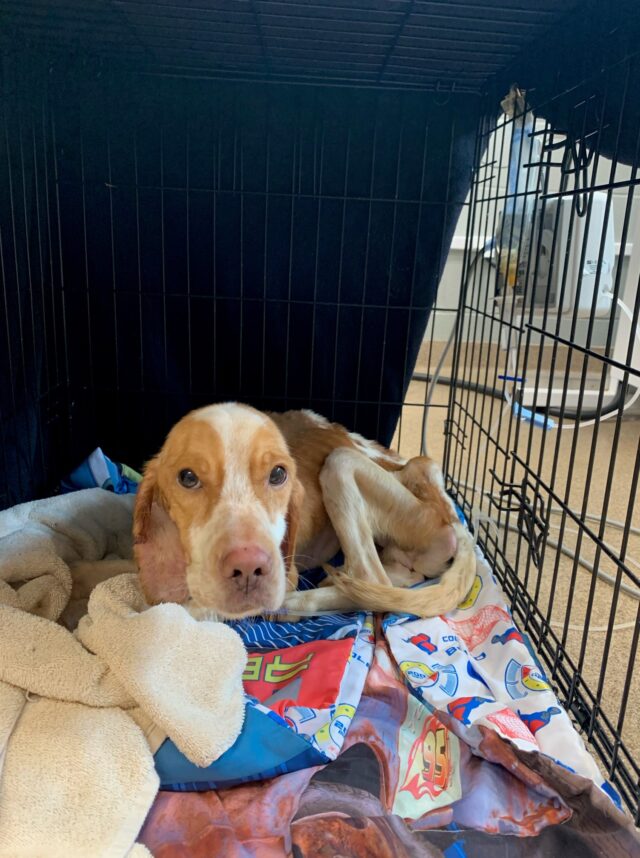
Back at the shelter, the puppy continued resting in a temperature-controlled space.
The hard pavement beside the vacant building had been replaced by soft bedding.
Instead of being left motionless and unseen, he was surrounded by people recording every meal, checking every physical change, and adjusting his care when necessary.
His recovery remained uncertain.
Severe neglect cannot be reversed in a few days, and the medical team could not know how quickly his body would regain normal function.
But he was no longer facing that uncertainty alone.
He had accepted food.
His temperature had begun responding to treatment.
He had lifted himself into a sitting position.
Each achievement was modest compared with what a healthy puppy should be able to do.
For him, each one was significant.
The story was no longer only about the condition in which he had been found.
It was becoming a record of what happened after someone noticed him.
An officer approached instead of assuming the still figure was beyond help.
Veterinary workers introduced warmth and nourishment carefully.
Shelter staff stayed beside him through the most fragile hours.
The community provided resources for the longer recovery ahead.
The puppy had not yet reached the point where he could run, play, or begin looking for a family.
Those chapters would have to wait.
For now, sitting upright was enough.
Breathing more steadily was enough.
Resting safely in a warm room was enough.
Near an empty store, he had been almost invisible.
Now an entire community knew he was there—and was giving him the time he needed to become strong enough to stand again.


