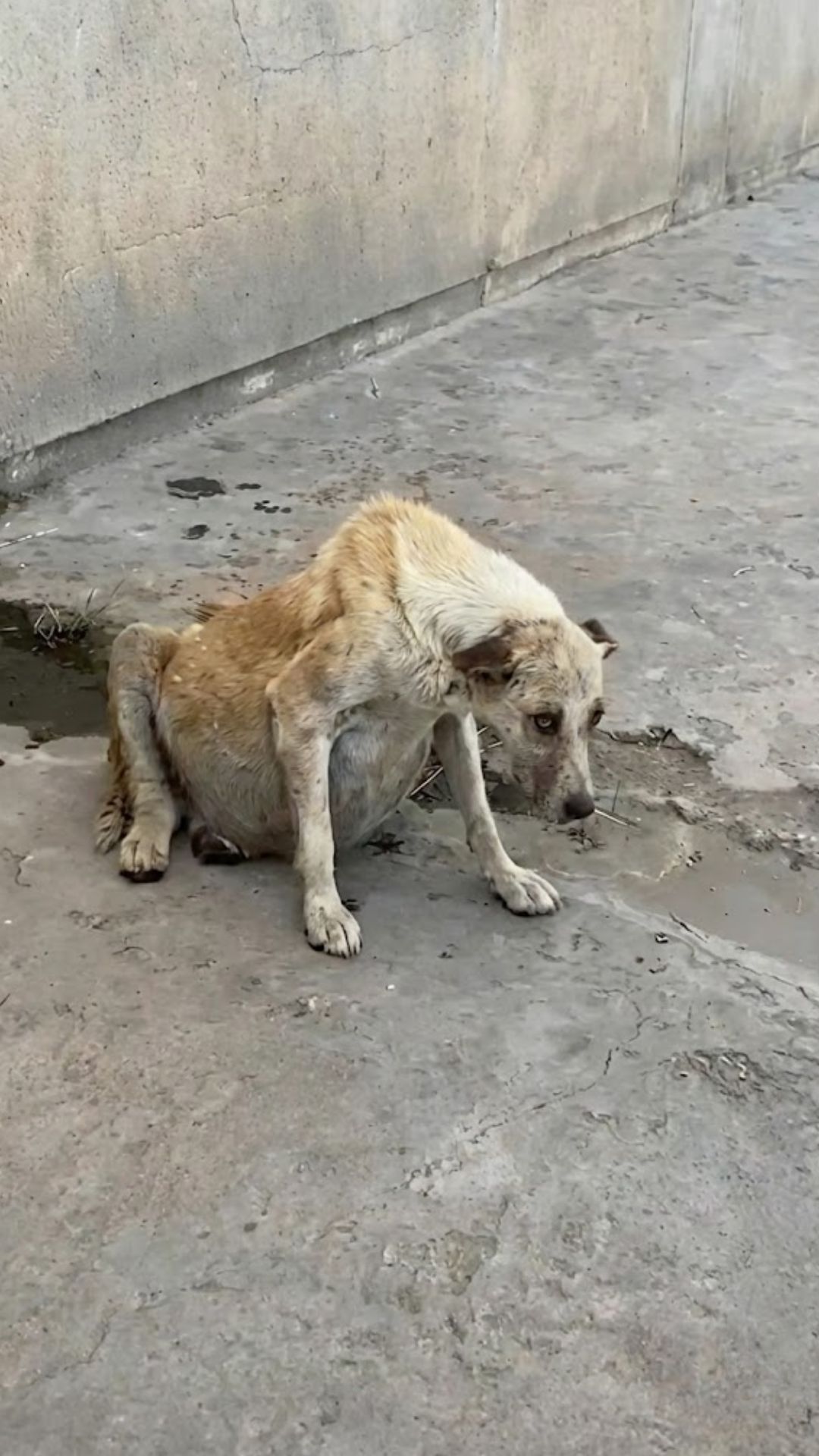
Under the relentless summer heat, a young stray dog moved slowly through the streets with a belly so enormous that people could hardly ignore him.
Some stopped to stare.
Others pointed.
A few even laughed, apparently assuming the swollen dog was a pregnant female struggling to walk.
But he wasn’t pregnant.
He wasn’t even female.
He was a young male dog carrying something far more dangerous than anyone watching from the roadside seemed to realize.
His abdomen had filled with fluid.
Every day, the swelling placed more pressure on a body that was already struggling.
Walking became difficult.
Resting became uncomfortable.
Even breathing was growing harder.
Yet for months, he continued moving through the streets alone.
Until one person finally stopped looking at his unusual appearance—
and started wondering whether he needed help.
The Dog Everyone Noticed but No One Seemed to Understand
By the time a rescuer saw him, the dog’s condition was impossible to overlook.
His abdomen hung unusually low beneath him, completely out of proportion with the rest of his thin body.
He moved carefully.
Slowly.
Each step appeared to require concentration.
But when the rescuer attempted to approach, the dog did not understand that help had finally arrived.
He tried to get away.
His movements were awkward because of the enormous weight he was carrying, yet fear kept pushing him forward.
The rescuer followed without rushing him.
There was little reason to believe that chasing him would accomplish anything except frightening him further.
Eventually, he was brought safely under control and transported to a veterinary clinic.
For perhaps the first time in months, he was no longer wandering beneath the summer sun.
But reaching the clinic did not immediately make him feel safe.
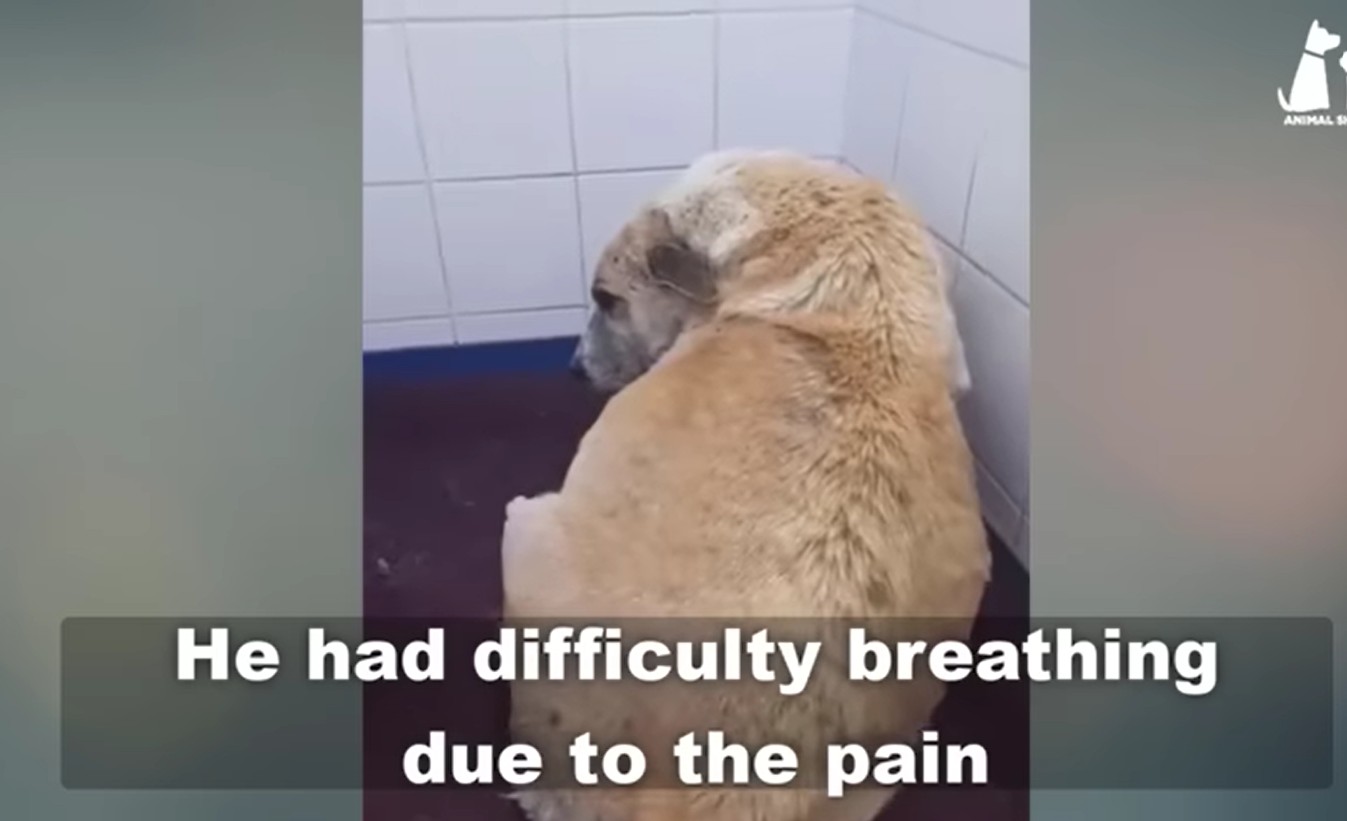
Once inside the examination room, the dog moved toward the farthest corner he could find.
He lowered his head.
His body remained tense.
Instead of approaching the people around him, he tried to create as much distance as possible.
The team gave him time.
Whatever his life had been before that day, his behavior made one thing clear:
human contact was not something he welcomed easily.
The veterinarians would need to understand both the frightened dog in front of them and the enormous swelling that had brought him there.
VIDEO: People Mocked His Giant Belly—Then Rescuers Learned He Was Fighting for His Life
His Giant Belly Was Hiding a Serious Medical Problem
At first glance, the dog’s abdomen might have looked almost impossible to explain.
It was so enlarged that from a distance, people had apparently mistaken him for a heavily pregnant female.
The veterinary examination revealed the truth.
There was severe fluid accumulation inside his abdomen.
The swelling was not ordinary weight gain.
And it certainly wasn’t pregnancy.
According to the veterinary findings described by his rescuers, both his heart and liver were struggling, while the enormous amount of abdominal fluid was creating additional pressure on his already weakened body.
That pressure had also made breathing increasingly difficult.
Suddenly, the way he had been moving on the street made sense.
He wasn’t walking slowly because he was lazy.
His body was carrying an extraordinary burden.
Every step required him to move around an abdomen filled with fluid while his organs were already under strain.
The veterinary team was surprised that he had managed to continue surviving in such a condition.
But discovering the problem was only the beginning.
There was another challenge.
The fluid could not simply be removed all at once.
His body was too fragile.
A sudden change in pressure could create additional risks for organs that were already struggling.
The doctors needed to proceed cautiously.
First, they would stabilize him.
Then they would allow his body to recover little by little.
It would require patience.
And there was no guarantee that progress would come quickly.
His Treatment Could Not Be Rushed
For a dog carrying such an enormous amount of fluid, the obvious solution might seem simple:
remove it.
But his case required far more care than that.
The veterinary team needed to support his weakened system while addressing the underlying problems affecting his heart and liver.
Daily medical support became part of his new routine.
He received IV therapy.
His condition was monitored.
Treatment was adjusted carefully as his body responded.
Rather than forcing a dramatic change overnight, the goal was to reduce the burden gradually while giving his system enough time to adapt.
The dog who had spent months walking alone was suddenly surrounded by people watching every small detail.
How he breathed.
Whether he ate.
How he rested.
Whether the swelling changed.
Whether he seemed stronger than the day before.
Progress was measured in small signs.
And at first, his emotional adjustment seemed almost as difficult as his physical recovery.
Even when no one was hurting him, he remained wary.
He stayed tense when people approached.
He often kept his body low and his distance whenever possible.
Food was offered.
Still, he hesitated.
The rescuers did not know exactly what experiences had taught him to behave this way.
They could only respond to the dog standing in front of them.
So they did not force interaction.
They let routine begin doing what words could not.
Food appeared again.
Clean water remained available.
The same caregivers returned.
The clinic stayed quiet.
And another day passed without anyone chasing him away.
Then another.
On the Fifth Day, His Tail Moved
Nothing dramatic happened during the first few days.
There was no sudden transformation.
The dog did not wake up one morning completely trusting everyone around him.
Instead, change arrived almost invisibly.
On the fifth day, someone noticed his tail.
It moved.
Only slightly.
A tiny, uncertain wag.
For most dogs, such a movement might have passed without comment.
For this dog, it mattered.
Until then, nearly everything about his posture had communicated caution.
His head stayed low.
He kept his distance.
He watched people carefully.
Now, for just a moment, there was another response.
The caregivers continued using food to help him become more comfortable with approaching on his own.
Rather than forcing a bowl directly beneath his face, they placed warm food a short distance away.
Then they gave him space.
The decision to move forward belonged to him.
At first, he watched.
Then he took a step.
His enormous abdomen still made movement difficult, so even crossing a short distance required effort.
He approached the bowl carefully.
He looked toward the people nearby.
Then back toward the food.
Eventually, hunger overcame hesitation.
He ate.
And once he realized that no one was going to take the food away, his appetite became unmistakable.
He ate eagerly.
For his rescuers, the moment carried two kinds of hope.
His body still wanted nourishment.
And he was beginning to engage with the people trying to help him.
Neither meant the difficult part was over.
But both meant there was something to build upon.
The Bowl Became Part of His New Routine
Food gradually became more than nutrition.
It became part of a predictable rhythm.
The dog learned that meals arrived regularly.
He did not need to wander under the summer sun searching for scraps.
He did not need to compete for every bite.
He did not need to approach people only to be driven away.
There was a bowl waiting.
And when he finished it, another meal would eventually come.
That consistency began changing his behavior.
He became less hesitant about stepping forward.
His attention shifted toward caregivers rather than away from them.
His body still carried the enormous swelling, but little pieces of his personality were starting to emerge beneath the fear.
The rescuers eventually gave the young dog a name.
They called him Milly.
A name did not change his medical condition.
But it marked something important.
He was no longer simply “the dog with the giant belly.”
He was Milly.
A patient.
A rescue dog.
An individual whose progress was being noticed day by day.
And there was finally progress to notice.
As the treatment continued, the swelling gradually began to decrease.
The change wasn’t immediate.
It happened slowly enough that those caring for him watched for it from one day to the next.
His abdomen became less distended.
Movement became easier.
His breathing appeared calmer.
For the first time in a long while, Milly’s body seemed to be carrying less of the burden that had defined his life on the street.

By Day 25, Milly Looked Like a Different Dog
Twenty-five days after treatment began, the difference could no longer be described as subtle.
The enormous abdomen that had once nearly touched the ground had reduced significantly.
Milly could move more comfortably.
The weight that had made every step look exhausting was disappearing.
His breathing was no longer as labored as it had been when he arrived.
And with the physical relief came another noticeable transformation.
Milly was no longer spending every moment pressed into the farthest possible corner.
He had learned the routines of the people caring for him.
He recognized food.
He recognized familiar voices.
He understood that the people approaching him were often bringing something good.
The frightened stray was beginning to act like a dog with a future.
Photographs taken during the recovery showed just how dramatic the physical change had become.
At the beginning, nearly everyone’s attention went immediately to Milly’s abdomen.
It dominated his small frame.
By the twenty-fifth day, his actual body was becoming visible again.
His legs no longer seemed to disappear beneath an enormous belly.
His posture improved.
Movement appeared more natural.
There was still healing ahead.
Treatment could not undo months of illness overnight.
But Milly had crossed an important point.
His body was responding.
And instead of simply trying to survive another day, he was beginning to experience days that contained something else.
Comfort.
Food.
Familiarity.
Attention.
Safety.
As the Fluid Disappeared, Milly Began Filling Out With Healthy Weight
Eventually, the dangerous abdominal fluid was gone.
The belly that had caused strangers to stare and laugh was no longer there.
Without it, Milly looked almost unrecognizable.
His body was still relatively lean, but now the weight he began gaining was healthy weight.
His condition improved as veterinary care continued.
According to the rescue account, his heart became stronger.
He no longer had to carry the enormous volume of fluid that had once made simply walking across a street exhausting.
And now that movement was easier, another side of Milly could finally emerge.
He became gentler and more comfortable around his caregivers.
The dog who once tried desperately to avoid people could now remain near them without the same visible tension.
He ate eagerly.
He responded to attention.
His tail no longer offered only a single uncertain movement.
The changes were not the result of one dramatic rescue moment.
They came from nearly a month of repeated care.
IV treatment.
Veterinary monitoring.
Meals.
Rest.
Medication and support.
The same people returning each day.
Milly’s transformation also revealed something his enormous belly had hidden.
He was young.
Underneath the swelling and exhaustion was a dog who should never have needed to move through life as though every step were a struggle.
Now, he finally had the opportunity to experience something closer to the life a young dog should have.
He Was Once Known for His Belly—Now People Saw Milly
Before his rescue, strangers apparently noticed Milly because something about him looked unusual.
His belly drew attention.
People pointed.
Some laughed.
Few seemed to understand what they were actually seeing.
But Milly’s appearance had never been the real story.
The real story was what was happening inside his body.
A weakened heart.
A struggling liver.
Severe fluid buildup.
Difficulty breathing.
A young dog trying to keep moving while his physical condition steadily became harder to manage.
Had one rescuer not stopped and looked beyond the unusual swelling, Milly’s story might have ended very differently.
Instead, someone recognized that an animal moving painfully through the street needed help rather than ridicule.
That choice brought him to the clinic.
The clinic gave him treatment.
Treatment gave his body time.
And time revealed the gentle dog who had been hidden beneath the fear and swelling all along.
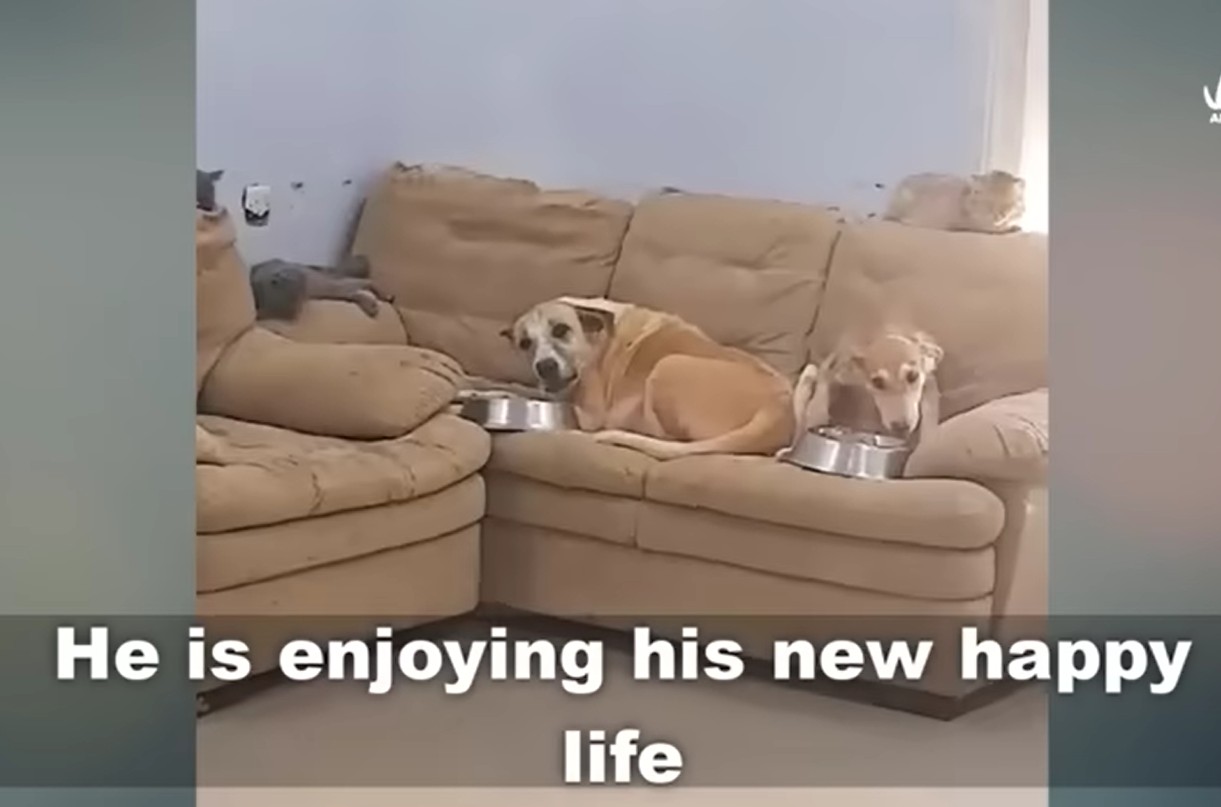
Today, it is difficult to connect the healthier Milly with the dog photographed during his first days of rescue.
His abdomen has returned to a normal shape.
His body is gaining the kind of weight it actually needs.
He can move without dragging an enormous burden beneath him.
And his attention is no longer focused entirely on avoiding the people nearby.
He has learned that some hands bring food.
Some voices mean safety.
And some people approach because they intend to help.
Milly’s Story Began With Laughter but Did Not End There
It would have been easy to see Milly on the street and remember only his unusual appearance.
That was apparently what many people did.
But rescue begins when someone looks beyond what seems strange or inconvenient and asks a different question:
What is happening to this animal?
Milly’s swollen abdomen wasn’t something humorous.
It was a visible warning that his body needed medical attention.
His slow movements weren’t laziness.
His hesitation around people wasn’t stubbornness.
They were signs that something was wrong.
Fortunately, someone eventually recognized that.
Milly was taken off the street.
Veterinarians identified the dangerous fluid accumulation.
His weakened body was supported instead of rushed.
Caregivers allowed him to approach food and people at his own pace.
Five days later, his tail moved.
Twenty-five days later, his body looked dramatically different.
And eventually, the enormous swelling disappeared completely.
Milly’s journey did not require him to suddenly forget everything that had happened before rescue.
He only needed enough safe days to discover that his future could be different from his past.
One bowl.
One cautious step.
One tiny tail wag.
One day of treatment followed by another.
Those small moments became his transformation.
Once, people noticed Milly because of the enormous belly he could barely carry.
Today, that belly is gone.
What remains is the dog who was there all along—
young, gentle, and finally strong enough to enjoy the life that almost slipped away from him.


