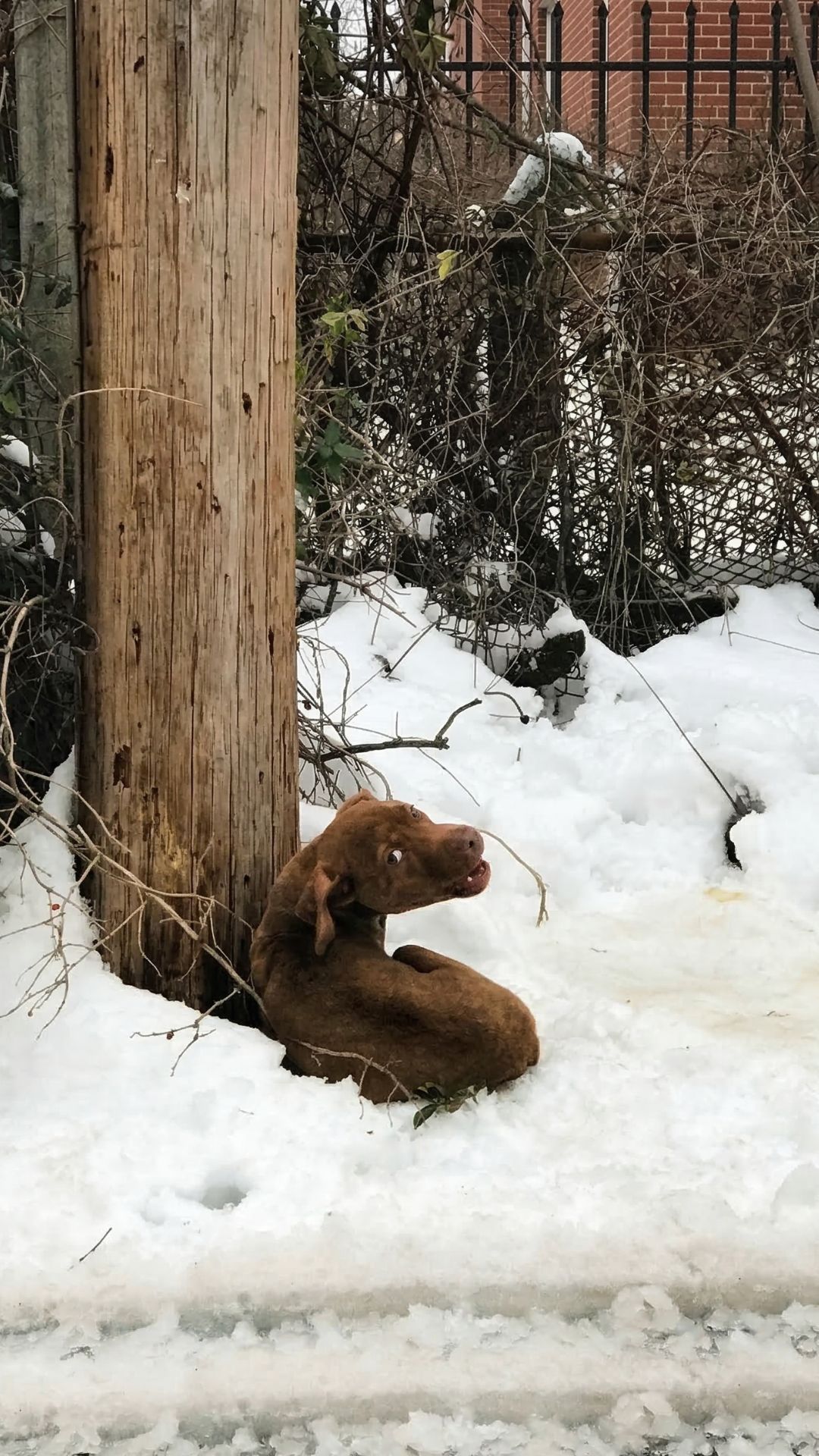
The alley was cold enough to make most people hurry past.
Snow covered the ground.
Wind moved through the narrow space between buildings.
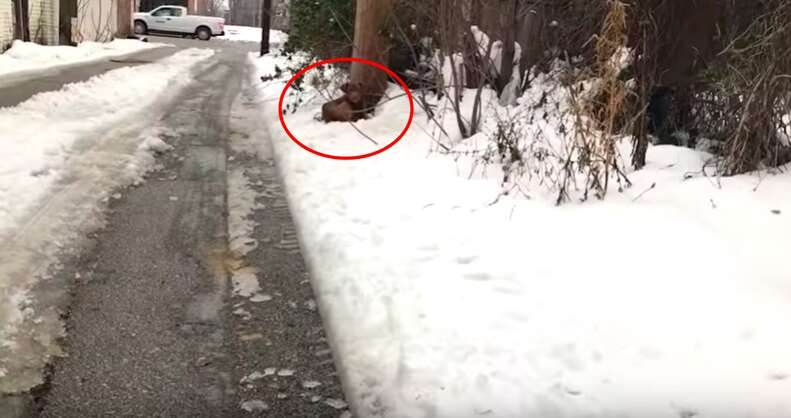
And beside a metal pole, a tiny dog had curled himself into the smallest shape he could manage.
From a distance, he barely looked like an animal at all.
He was still.
He was trembling.
And for long stretches of time, he seemed almost lost against the frozen ground.
There was no blanket beneath him.
No sheltered corner nearby.
Only snow.
Then someone walking a dog happened to look closer.
That second glance changed everything.
He Was Lying Directly on the Frozen Ground
The little dog had chosen the only place available to him.
A patch of snow beside the alley.
He had curled tightly into himself, likely trying to conserve warmth.
His small body shook as the cold settled around him.
There was no visible collar.
No tag.
No person nearby searching for him.
And when the passerby moved closer, it became clear that the dog was not simply resting.
He was distressed.
He vocalized loudly as the stranger approached.
But he did not have the strength to run far.
The man stopped.
Then he called for help.
Video: Weezer Was Found Shivering on a Bed of Snow — Then Rescuers Came Down the Alley
Stray Rescue of St. Louis Reached Him in the Cold
Rescuers from Stray Rescue of St. Louis arrived at the scene.
The small dog was still near the same spot.
He appeared frightened by the unfamiliar people moving toward him.
His body trembled.
His vocalizations continued.
But he was too weak and cold to simply escape.
The rescuers approached carefully.
They did not know how he would react to being touched.
A dog in pain or fear can become defensive even when help is being offered.
So the team moved slowly.
Then they wrapped him in warm blankets.
For the first time since he had been noticed in the alley, something was finally between his body and the frozen ground.
At the Trauma Center, They Gave Him a Name
The dog was transported to the rescue’s trauma center.
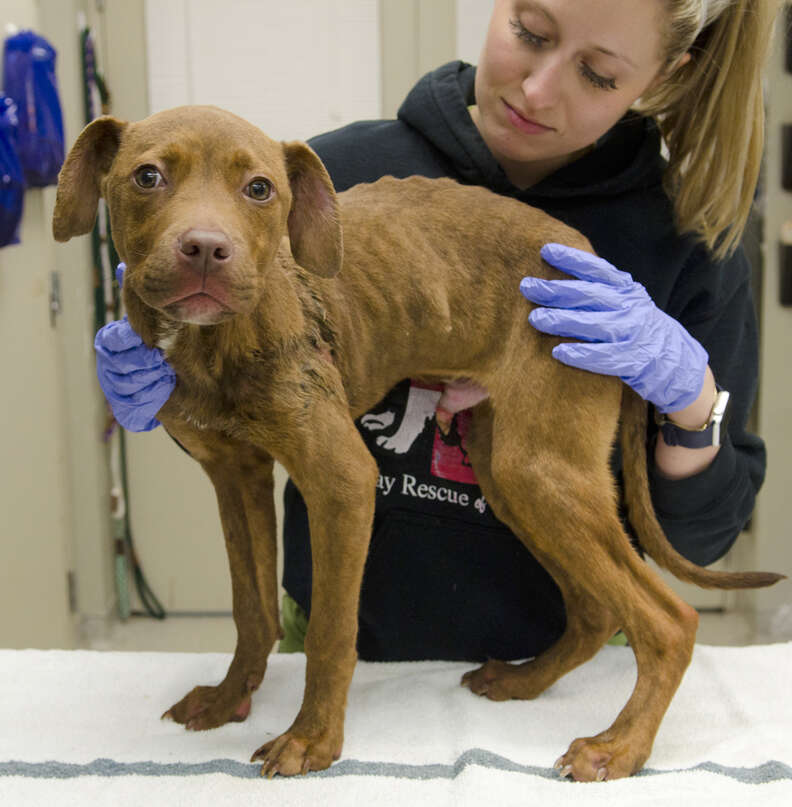
There, the team began warming him and examining his condition.
They named him Weezer.
There was no microchip.
No identifying tag.
Nothing immediately connecting him to an owner.
But his body revealed something important.
Beneath one of his front legs was a deep wound.
According to the rescue account, the injury appeared consistent with prolonged pressure or rubbing from something like a rope or harness.
The exact circumstances that caused it were unknown.
What mattered now was treating it.
Weezer had survived the cold long enough to be found.
Now his body needed time to recover from everything else.
The Warm Clinic Changed His Behavior
Inside the rescue center, Weezer no longer had to fight the weather.
The temperature was warm.
People handled him gently.
His wound could be cleaned and monitored.
And he had somewhere soft to rest.
Gradually, his behavior began to change.
The loud distress he had shown outside became less intense.
He tolerated close contact.
When a veterinarian leaned in gently, Weezer did not immediately pull away.
That did not mean every fear had disappeared.
But it showed that he was beginning to settle.
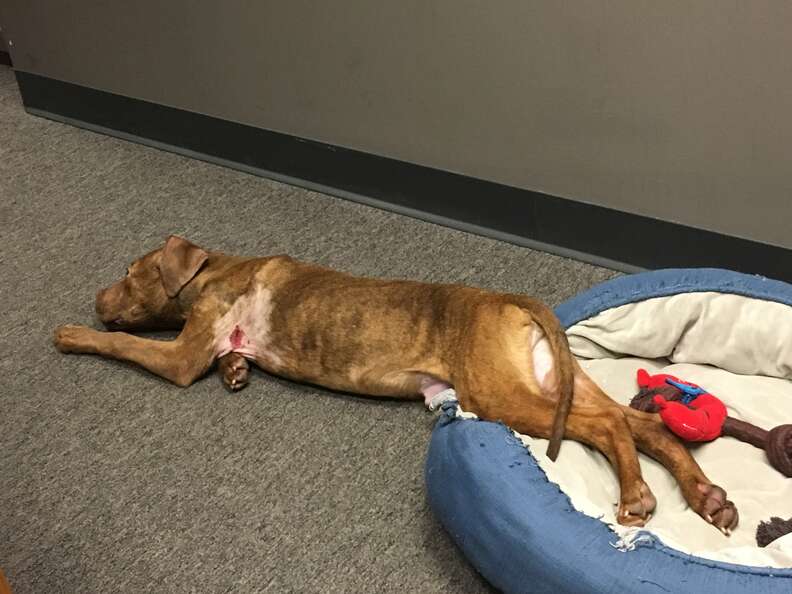
Then the team placed him in a soft bed.
For a dog who had just been found lying directly on snow, the contrast was striking.
A Soft Bed Became His First Real Place to Rest
Weezer curled into the blankets.
No wind reached him.
No frozen pavement pressed beneath his body.
There was nothing he needed to escape.
He could simply rest.
The scene was quiet.
No dramatic treatment.
No emergency rush.
Just a small dog finally able to close his eyes somewhere warm.
For rescuers, that moment mattered because it showed what the first phase of his recovery really needed.
Not excitement.
Not pressure.
Rest.
Warmth.
Food.
Medical care.
And enough time for his body to settle.
Foster Care Gave Him a Different Kind of Routine
Once Weezer was stable enough to leave the trauma center, he moved into a foster home.
That brought another major change.
Instead of an alley, he had a house.
Instead of snow, he had blankets and furniture.
Instead of strangers arriving all at once, he had familiar people returning every day.
His foster caregiver allowed him to adjust gradually.
There was no requirement that he immediately become outgoing.
He could rest.
Observe.
Approach when he felt comfortable.
Over time, Weezer began doing more than simply recovering.
He began participating in everyday life.
The Dog From the Snow Started Seeking Out Comfort
As the days passed, Weezer became increasingly comfortable in his foster environment.
He curled up on the couch.
He burrowed into blankets.
He spent time near his foster caregiver.
Eventually, he even began accompanying her to the office.
There, he had opportunities to meet more people in a controlled environment.
The tiny dog who had once reacted fearfully in the alley was now experiencing human contact under very different circumstances.
There was warmth.
Routine.
Predictability.
And space to retreat when needed.
His physical wound could heal with treatment.
Trust required repetition.
Another safe day.
Another quiet night.
Another person approaching gently.
Soon, Weezer Would Be Ready for a Permanent Home
By the later part of his rescue story, Weezer’s life looked almost nothing like it had on the day he was found.
He was no longer sleeping outdoors.
He was no longer shivering beside a metal pole.
He had a foster home.
He had regular care.
And he was moving toward adoption.
The original account does not document his final permanent placement yet.
So his story remains open.
What is clear is how much had already changed.
One passerby noticed a small shape in the snow.
He stopped.
He called for help.
Rescuers came.
Weezer was carried out of the cold.
And from there, his life became a sequence of ordinary things he had badly needed.
Warmth.
Treatment.
Rest.
A couch.
A blanket.
A person nearby.
The Snow Bed Was Left Behind
The alley in St. Louis eventually returned to being just another cold city street.
The snow remained for a while.
The metal pole remained.
But Weezer did not.
He had been taken somewhere warm.
His wound was being treated.
His body was recovering.
And the dog once curled tightly against the frozen ground was now spending his days inside.
That transformation did not begin with something complicated.
It began because one person noticed that the small shape in the snow was not debris.
It was a dog.
Alive.
Cold.
And still reachable.
Sometimes rescue starts with training.
Sometimes with equipment.
Sometimes with a medical team waiting at a clinic.
And sometimes it starts with something much simpler.
Someone looks down.
Someone stops walking.
And someone decides not to leave a small life exactly where they found it.


