
The 1980s gave the world countless unforgettable faces, but only a few managed to build a story that extended beyond their most celebrated years. Terri Welles was among those who experienced the extraordinary rise of magazine culture, the glamour of Hollywood, and eventually the challenges of establishing an independent identity in a changing media landscape.
Known for her striking appearance, natural confidence, and memorable presence, Welles became one of the recognizable personalities of early 1980s popular culture. Yet her journey was never limited to photographs or public appearances. It also included acting, business ventures, and a legal battle that helped define how public figures could describe their own careers online.
From her beginnings in Southern California to her emergence as a nationally recognized model, Welles experienced the opportunities and pressures of fame firsthand. Her later decisions revealed another side of her story: the determination to maintain a connection with the career she had built while adapting to a world increasingly shaped by technology.
Her life offers a fascinating glimpse into an era when celebrity was changing and the meaning of personal identity was becoming more complicated than ever.

A California Beginning: The Early Life of Terri Welles
Born Terri Knepper on November 21, 1956, in Santa Monica, California, Terri Welles grew up in a region closely associated with entertainment, fashion, and the distinctive lifestyle of the American West Coast.
Southern California during the 1960s and 1970s was undergoing a cultural transformation. Television, cinema, advertising, and youth-oriented fashion were shaping the national imagination. The California lifestyle, with its emphasis on sunshine, freedom, and individuality, had become an influential part of American popular culture.
Although relatively little has been publicly documented about Welles’ childhood, her origins placed her close to one of the country’s most important entertainment centers.
Before she became a familiar name in modeling, however, her professional life followed a different path.
Welles worked as a flight attendant for United Airlines, a position that required professionalism, composure, and the ability to interact confidently with people from different backgrounds.
At the time, commercial aviation carried an unmistakable sense of glamour. Flight attendants were frequently featured in advertising and popular media, and the profession was associated with travel, elegance, and sophistication.
For Welles, this occupation would eventually connect her with an unexpected opportunity that changed the direction of her career.
The Unexpected Opportunity That Changed Everything
The transition from aviation to modeling did not begin with a conventional Hollywood audition.
While working as a flight attendant, Welles entered the orbit of Playboy magazine, one of the most influential publications in American entertainment and popular culture during that period.
Her appearance on the magazine’s May 1980 cover introduced her to a much wider audience. Fittingly, the photograph featured her dressed as a flight attendant, connecting her existing profession with her emerging public image.
It was an unusual beginning for someone who would soon become one of the magazine’s most recognizable personalities.
The appearance represented more than a single modeling assignment. Magazine covers in that era possessed considerable cultural influence, often reaching millions of readers and opening doors to additional opportunities in entertainment.
For Welles, the timing was particularly significant.
American popular culture was entering a decade characterized by bold visual identities, increasingly sophisticated advertising, and a growing fascination with celebrity personalities.
She arrived at the center of that transformation with an appearance that audiences would soon associate with the early 1980s.

The Breakthrough Years: From Rising Model to 1981 Recognition
Welles’ career reached an important milestone when she was selected as Playboy’s Playmate of the Month for December 1980.
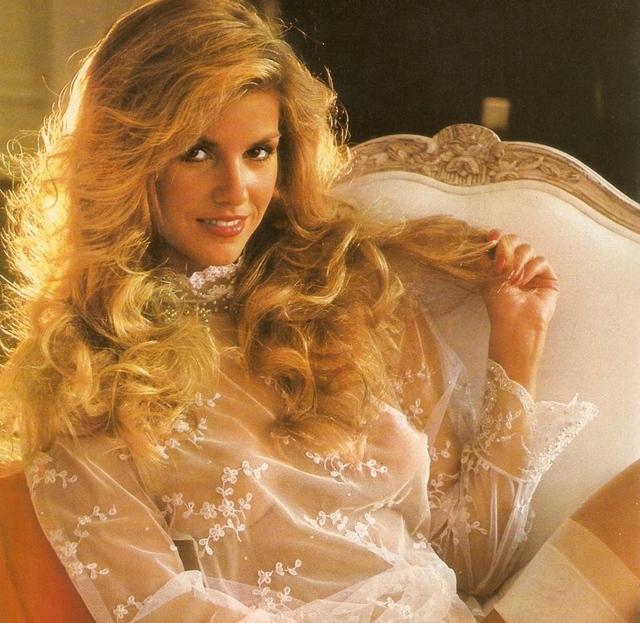
Her pictorial, photographed by Richard Fegley, became part of the visual record of an era celebrated for its distinctive fashion and photographic style.
The following year brought an even greater achievement.
In 1981, Welles received the publication’s Playmate of the Year title, an honor that elevated her profile beyond a single magazine appearance.
The recognition placed her among the prominent models associated with the publication’s history.
During this period, celebrity culture operated very differently from today’s digital environment. There were no social media accounts offering instant connections with millions of followers. Public recognition depended heavily on magazines, television, film, and appearances arranged through established media organizations.
A successful model could become widely recognizable, but maintaining that recognition required navigating an industry where opportunities and public attention could change quickly.
Welles’ rise demonstrated how one breakthrough could transform an ordinary professional life into a highly visible career.
At the same time, it introduced challenges that would become increasingly important as she began exploring opportunities beyond modeling.

Beyond Photography: Terri Welles Steps Into Hollywood
As her public profile expanded, Welles also pursued work in film.
One of her notable screen appearances came in the 1981 science-fiction thriller Looker, directed by Michael Crichton.
The film explored the unsettling relationship between physical appearance, commercial advertising, and emerging technology. Its story centered on a disturbing mystery involving models and a system capable of manipulating idealized human images.
Welles appeared as Lisa Convey, joining a cast that included Albert Finney, James Coburn, and Susan Dey.
In retrospect, the film’s themes feel remarkably relevant.
Long before digital influencers, artificial intelligence, and computer-generated personalities became everyday subjects, Looker examined the possibility that technology could reshape the way society understood beauty and human identity.
For someone whose professional career was built partly around photography and visual representation, the film occupied an interesting place in Welles’ career.
Her participation also demonstrated a willingness to explore entertainment beyond the still image.
Acting demanded a different relationship with the audience. Instead of communicating through a single carefully composed photograph, performers had to establish a character through movement, dialogue, and interactions with others.
Although Welles did not develop the extensive filmography of a major Hollywood leading actress, her appearances remain part of her broader entertainment career.
They also provide a reminder that the personalities associated with magazine culture often possessed professional ambitions extending beyond the roles for which they were best known.
The Challenge of Building an Identity Beyond Fame
Fame can create extraordinary opportunities, but it can also establish expectations that become difficult to escape.
For models who reached prominence during the 1980s, the challenge was especially complicated.
The public often remembered a particular photograph, magazine cover, or moment in time, while the individuals behind those images continued to grow and change.
Welles’ career illustrates that tension.
Her breakthrough established a recognizable public identity, yet her professional life continued beyond the moment that first brought her national attention.
This distinction became especially important as the media industry began moving toward the internet.
A generation of entertainers who had once depended on magazine publishers, television networks, and film studios suddenly encountered a new way to communicate with audiences.
The possibilities were significant.
An established personality could operate a website, distribute content, and maintain a relationship with longtime fans without relying entirely on traditional media companies.
For Welles, this technological transition would create an opportunity to revisit her modeling legacy on her own terms.
It would also lead to one of the most consequential episodes of her later public career.

A New Chapter: Becoming an Entrepreneur in the Internet Age
In June 1997, Welles launched her own website, entering the growing world of online commerce at a time when the internet was still developing into a mainstream business environment.
The venture offered photographs from her modeling career and allowed her to connect with an audience that remembered her earlier work.
Today, personal websites, subscription platforms, and direct-to-consumer businesses are familiar features of the creator economy.
In 1997, however, many of these ideas were still relatively new.
Traditional entertainment companies largely controlled the distribution of celebrity photographs and related content. Independent online ventures offered recognizable personalities a different approach.
Welles’ website represented an early example of how an entertainer could use the internet to establish a business around an existing public identity.
Rather than depending exclusively on new modeling or acting assignments, she could draw upon the recognition she had already earned.
The business reflected a fundamental principle of personal branding: professional history can remain valuable long after its original moment in the spotlight.
But the venture also raised an important question.
How could a public figure accurately describe a past achievement when the words associated with that achievement were protected trademarks?
For Welles, the answer would eventually be decided in federal court.
The Legal Battle That Became Part of Internet History
In 1998, Playboy Enterprises brought legal action against Welles over the use of trademarked terms on her website.
The dispute centered on her references to her former association with the magazine, including her status as its 1981 Playmate of the Year.
Playboy Enterprises argued that certain uses of its trademarks violated its rights.
Welles maintained that describing her genuine career history was a legitimate way to identify herself to visitors.
The disagreement raised a broader legal issue with implications extending far beyond one model or entertainment company.
Could an individual truthfully identify a former professional affiliation without obtaining permission to use the organization’s trademarked name?
The case eventually reached the United States Court of Appeals for the Ninth Circuit.
In its 2002 decision, the court concluded that most of the challenged references were permissible examples of what is known as nominative fair use.
In simple terms, the principle allows someone to use a trademark when reasonably necessary to identify the trademark holder’s product, service, or organization, provided the use does not improperly imply sponsorship or endorsement.
The court determined that Welles could use relevant trademarked language to identify her historical association with Playboy.
It also distinguished those permissible references from a repeated abbreviation used as a background design on her website, sending that particular issue back for further consideration.
The ruling became an important example in discussions about trademark law and online self-identification.
For Welles, the case demonstrated that a career achievement could have lasting legal and commercial significance even decades after the original recognition.
For the developing internet economy, it helped clarify how people could refer to their professional histories while respecting trademark protections.
The Changing Meaning of Personal Branding
Looking back, one of the most interesting aspects of Welles’ career is how naturally it connects two distinct media eras.
Her initial recognition came through printed photographs, magazine covers, and conventional celebrity publicity.
Her later business activities took place in a digital environment that offered individuals greater control over how they presented themselves.
This transition reflected a larger cultural movement.
Throughout much of the twentieth century, entertainment companies played a dominant role in creating and distributing celebrity images. Publishers and studios determined which photographs audiences saw and how public personalities were introduced.
The internet began changing that arrangement.
Individuals gained the ability to establish their own websites, present their work, and communicate directly with supporters.
Welles was not the only entertainer to recognize these possibilities, but her experience became particularly notable because of the legal questions surrounding her online business.
Her story also illustrates an important distinction between being famous and owning the means to communicate with an audience.
Recognition can introduce people to a public figure. Independence depends on the ability to make decisions about future opportunities and professional direction.
The development of online media made that distinction increasingly visible.
For Welles, it transformed an established modeling career into a new chapter involving entrepreneurship, intellectual property, and personal identity.
Life Beyond the Public Spotlight
Welles eventually closed her website on October 31, 2006, bringing that particular business venture to an end.
By then, the entertainment industry had changed dramatically from the environment in which she first became famous.
The magazine-driven culture of the early 1980s had given way to a world of expanding cable television, celebrity websites, and emerging social networks.
Public attention had become faster, more fragmented, and increasingly dependent on digital platforms.
Welles maintained a comparatively low public profile in the years that followed, and reliable information about her recent private life remains limited.
That separation between public recognition and personal privacy is worth respecting.
Not every person who experiences fame chooses to remain continuously visible, and a career does not lose its significance simply because its most recognizable moments belong to an earlier decade.
Welles’ documented achievements remain part of the historical record: her success in modeling, her appearances in film, her early online business, and her involvement in a legal decision that continues to be discussed in intellectual-property law.
Together, these moments offer a more complete picture than any single photograph could provide.
Why Terri Welles’ Story Still Matters
The enduring interest in Welles is partly rooted in nostalgia.
For audiences who remember the early 1980s, her photographs evoke an era of distinctive fashion, print media, and recognizable entertainment personalities.
Yet nostalgia is only one aspect of her story.
Her career also reveals how dramatically the relationship between celebrities and their audiences has changed.
In the space of less than two decades, Welles experienced both the prominence of traditional magazine culture and the arrival of independent online publishing.
Those two worlds operated according to very different rules.
One depended heavily on established institutions to generate recognition. The other offered individuals opportunities to use that recognition in new ways.
Her transition between them demonstrates how a public career can evolve alongside changes in technology.
The legal dispute surrounding her website adds another dimension. What began as an attempt to operate an independent business contributed to a wider conversation about truthful identification, trademark ownership, and the rights of individuals to describe their professional experience.
That is an unusual legacy for someone first known primarily through modeling.
It reminds us that careers can have consequences extending well beyond their original industries.
Final Thoughts: More Than a Familiar Face From the 1980s
Terri Welles’ journey began in Southern California, moved into the national spotlight through modeling, and eventually entered the unfamiliar territory of early internet entrepreneurship.
Her most famous photographs remain closely associated with the visual culture of the 1980s, but her wider career tells a more complicated and interesting story.
She experienced a remarkable rise in public recognition, explored opportunities in film, and later created an independent online business that became involved in an influential legal dispute.
Each chapter reflected a different stage in the evolution of American media.
Perhaps the most meaningful lesson from her career is that public identity does not have to remain fixed at the moment when fame first arrives.
A photograph may capture an individual at a particular point in time, but it cannot contain the full story of everything that comes afterward.
For Terri Welles, the years beyond her initial breakthrough included change, experimentation, and questions about who controls the meaning of a public career.
Her story therefore belongs not only to the history of 1980s modeling, but also to the broader history of how entertainers began navigating an increasingly digital world.
And that may be the most lasting aspect of her legacy: the reminder that a person’s most recognizable image is rarely the whole picture.