
For millions of television viewers, Brooke Burns was the radiant blonde lifeguard who captured hearts on Baywatch. Her smile, confidence, and natural screen presence seemed to promise a glamorous Hollywood future. But behind the familiar face was a woman whose life would be shaped by two devastating injuries, unexpected career changes, and a terrifying encounter with death. In November 2005, a simple dive into her backyard swimming pool left Burns with a broken neck and the possibility of permanent paralysis. What followed was not merely a physical recovery, but a profound reassessment of everything she valued. Her journey reveals a story far more compelling than the Hollywood image that first made her famous.
A Childhood Built Around a Dream That Would Never Come True
Long before cameras and television audiences entered her life, Brooke Elizabeth Burns was a young girl with an extraordinary passion for ballet.
Born on March 16, 1978, in Dallas, Texas, she discovered dancing at an early age. Ballet quickly became more than an extracurricular activity. It was a demanding discipline that occupied much of her childhood and offered a possible path toward a professional career.
Training required patience, physical strength, and hours of repetition. Behind every graceful movement were countless attempts to achieve a seemingly effortless result.
Her dedication eventually took her far from Texas. When Burns was 12, her family moved to Romania, where she had the opportunity to study with the Romanian Opera Ballet.
It was an unusual experience for a young American dancer, exposing her to a different culture and an intensely disciplined artistic environment.
For a time, her future appeared to be taking shape. She had the commitment, training, and determination to pursue ballet seriously.
Yet the very career she had worked toward would disappear before she reached adulthood.
At 15, Burns suffered a serious knee injury in a skiing accident. The damage brought her professional ballet ambitions to an abrupt end.
For a teenager who had spent much of her life training, the loss was more than a change of plans. It meant saying goodbye to an identity she had spent years building.
But the disappointment also opened a door she had never expected.
When One Door Closed, Another Opened Across Europe
With professional dancing no longer a realistic path, Burns began exploring modeling.
It was a dramatic change, but she carried important qualities from ballet into her new career: poise, awareness of movement, comfort performing under pressure, and an ability to communicate through expression.
By her mid-teens, she was working as a model and gaining valuable experience in European fashion centers.
Her work took her to cities including Paris, Milan, and Munich, introducing her to a world very different from the ballet studios where she had grown up.
Modeling gave Burns an opportunity to develop her confidence and independence. It also brought her into contact with photographers, casting professionals, and creative teams who helped her understand how a strong presence could translate on camera.
There was no guarantee that modeling would lead to lasting success, much less a career in Hollywood.
Nevertheless, it allowed her to discover a different form of performance.
The young dancer who once imagined expressing herself onstage was beginning to find another way to connect with an audience.
And before long, the opportunities extended beyond still photographs.
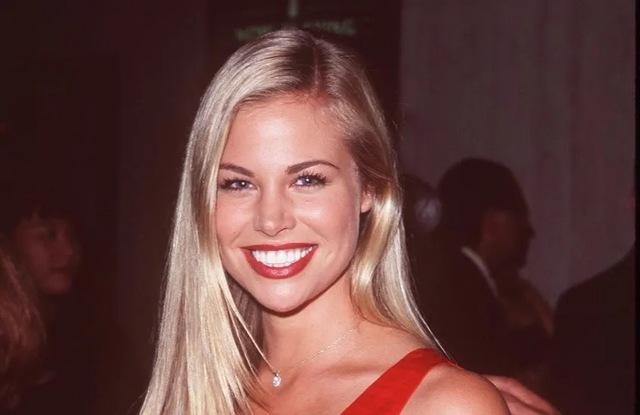
The Baywatch Breakthrough That Made Brooke Burns a Recognizable Face
By the late 1990s, Baywatch had become one of television’s most internationally recognizable programs.
Its combination of action, beachside drama, and larger-than-life personalities attracted audiences around the world. Joining such an established series offered a young performer extraordinary exposure, but it also meant stepping into a production associated with some of television’s most familiar faces.
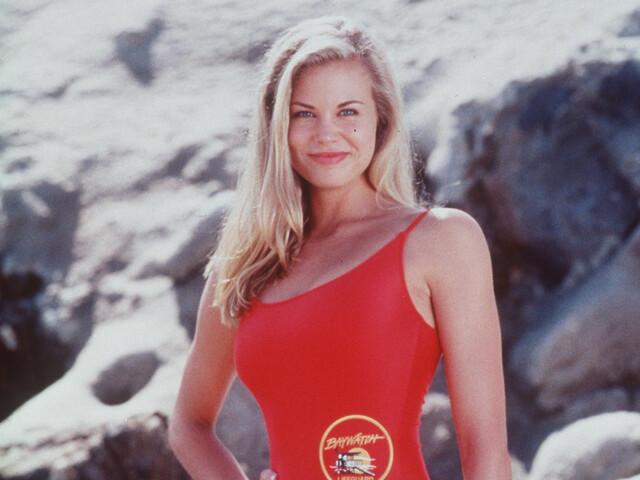
Burns joined Baywatch in 1998, playing lifeguard Jessie Owens, and continued with the series during its Baywatch: Hawaii era.
Her athletic background proved especially useful in a show centered on ocean rescues, physical activity, and demanding outdoor scenes.
Years of ballet training had given her an instinctive understanding of movement and posture, qualities that translated naturally into an action-oriented television role.
Jessie Owens became one of the characters associated with the show’s later seasons, helping Burns establish an international audience.
But the exposure created a new challenge.
Baywatch could make an actress famous almost overnight, yet fame associated with appearance did not necessarily guarantee a varied career.
Burns would have to prove that she could move beyond the role that initially brought her widespread recognition.
Her next chapter would show just how adaptable she could be.
Beyond the Red Swimsuit: Discovering New Opportunities in Hollywood
After Baywatch, Burns continued expanding her acting career through television and film.
Her credits included North Shore, Pepper Dennis, and appearances in series such as Ally McBeal, CSI: Miami, and Melrose Place.
She also appeared in the romantic comedy Shallow Hal, demonstrating a willingness to explore projects outside the action-drama format that had introduced her to many viewers.
One of the more significant shifts in her career came in 2002, when she began hosting NBC’s competition series Dog Eat Dog.
The program required a different kind of performance. Instead of interpreting a scripted character, Burns had to respond to contestants, maintain the energy of a live-style competition, and guide audiences through unpredictable challenges.
It was an important demonstration of her versatility.
Hosting demanded warmth and spontaneity, but also authority and careful timing. A presenter had to make contestants feel comfortable while keeping the show moving.
Burns discovered that these qualities suited her.
The role introduced audiences to a side of her personality that scripted television had not fully revealed.
By the mid-2000s, she had established herself as both an actress and a television host.
Professionally, her future looked promising.
Then, on an ordinary evening at home, her life changed in seconds.
The Night in November 2005 That Nearly Changed Everything
On November 10, 2005, Brooke Burns was at her Los Angeles home when she decided to dive into her backyard swimming pool.
Swimming was familiar to her. She was comfortable in the water and had used the pool many times before.
But that evening, visibility was limited, and she misjudged the depth.
As she entered the water, her head struck the bottom.
The impact fractured her neck, creating an immediate medical emergency.
For someone whose career and identity had always been closely connected to physical movement, the possibility of paralysis was terrifying.
Fortunately, a friend who had worked as a firefighter and paramedic was present.
Recognizing the seriousness of the situation, he entered the pool and carefully supported Burns while avoiding unnecessary movement of her injured neck. He kept her afloat until emergency responders arrived.
His training and quick response were critical.
Burns later credited him with saving her life and helping prevent further damage.
At the hospital, doctors discovered the severity of her injury. She required major surgery to stabilize her cervical spine, followed by a difficult period of rehabilitation.
The accident was especially frightening because the difference between her eventual recovery and permanent disability had been extraordinarily small.
There was no glamorous television set, no prepared script, and no opportunity to repeat the scene.
This time, the woman who had portrayed a lifeguard was the person desperately in need of rescue.

A Painful Recovery and a New Understanding of Life
The months following the accident demanded a different kind of courage from Burns.
Her earlier knee injury had forced her to surrender a dream. The swimming pool accident confronted her with something even more fundamental: the possibility of losing her mobility and independence.
Recovery involved surgery, physical healing, and the emotional challenge of processing what had happened.
Although Burns was fortunate to avoid permanent paralysis, the experience left a lasting impression.
She had survived an accident that could have produced a dramatically different outcome.
In interviews, she later reflected on how quickly ordinary life could change and how her priorities shifted after the injury.
Activities that once seemed routine took on greater significance.
The ability to move freely, spend time with loved ones, and participate in daily life became things she no longer viewed as guaranteed.
Her return to work was another important milestone.
By 2006, Burns was working on the television series Pepper Dennis, showing that the accident had not brought her professional ambitions to an end.
Still, the deeper transformation was not simply that she could work again.
Her experience had given her a personal understanding of vulnerability and recovery that would influence how she approached opportunities beyond entertainment.

Turning a Near-Fatal Experience Into a Message of Prevention
For Burns, surviving the accident also created a responsibility she felt compelled to acknowledge.
She understood that not everyone who experienced a serious spinal injury would have the same outcome.
Some survivors faced permanent changes in mobility, years of rehabilitation, or the need to rebuild their daily routines around new physical limitations.
Rather than keeping her experience entirely private, Burns began using her public visibility to support spinal injury awareness and prevention.
She became involved with organizations and initiatives connected to spinal cord injury education, including ThinkFirst and the North American Spine Society.
Her message emphasized a simple but potentially lifesaving idea: familiarity with water does not eliminate danger.
Pools, lakes, and other swimming environments can present serious risks when people misjudge depth or dive without checking conditions.
Burns also supported the nonprofit Life Rolls On, which helps individuals affected by paralysis and other disabilities participate in adaptive recreational activities.
The organization offered a different perspective on rehabilitation, emphasizing confidence, community, and the possibility of meaningful experiences after life-changing injuries.
Through fundraising and awareness efforts, Burns helped draw attention to people whose recovery journeys continued long after the initial emergency.
Her advocacy was rooted in a personal understanding of how suddenly an ordinary moment could become a medical crisis.
The experience did not erase the trauma of her accident, but it gave her a way to turn part of that experience toward helping others.

The Chase, Master Minds, and a Career Reinvented Through Television
While audiences initially discovered Burns through acting, her later work as a game show host became one of the most distinctive parts of her career.
After hosting Dog Eat Dog in the early 2000s, she continued developing her presenting skills through projects such as You Deserve It.
In 2013, she became the host of Game Show Network’s American version of The Chase.
The trivia competition placed contestants against formidable quiz experts in a fast-moving battle of knowledge, memory, and strategy.
The format demanded a presenter who could maintain an intense pace while keeping the rules understandable and the contestants engaged.
Burns brought a combination of composure, humor, and genuine enthusiasm to the role.
She had to manage rapid-fire questions, respond to unexpected developments, and balance competitive tension with entertainment.
Her work earned her a Daytime Emmy nomination for Outstanding Game Show Host in 2016.
The recognition was especially meaningful because it reflected an ability that had little to do with the physical image associated with her early fame.
She had established herself as a capable television personality in an entirely different genre.
Burns continued this success with Master Minds, another Game Show Network trivia competition featuring contestants facing accomplished experts.
In 2025, she added another hosting project to her career when Game Show Network revived the classic game show Tic Tac Dough.
The continued opportunities demonstrated that her career was not limited to a single famous television role or one era of entertainment.
She had found a professional identity that could evolve alongside her interests and experience.
Finding Another Home on Screen Through Hallmark
Alongside game show hosting, Burns maintained a connection with scripted entertainment.
She appeared in the Hallmark holiday film The Most Wonderful Time of the Year, playing Jennifer Cullen in a romantic story centered on family, unexpected connections, and the Christmas season.
She later starred as detective Maggie Price in the Gourmet Detective mystery film series.
The role offered a different kind of screen presence from the action-oriented character audiences remembered from Baywatch.
Instead of beach rescues and physically demanding scenes, Burns portrayed an investigator navigating mysteries alongside a culinary expert.
The films allowed her to explore a character whose strengths included observation, determination, and professional judgment.
These projects also reflected the changing possibilities available to performers who build careers across different formats.
Television success no longer depended solely on maintaining the image that first attracted an audience.
For Burns, acting and hosting became complementary parts of a career shaped by variety rather than a single defining role.
Family, Faith, and the Life Beyond the Spotlight
Away from television, Burns has spoken about the importance of family and faith in shaping her perspective.
She is the mother of two daughters, Madison and Declan.
Her eldest daughter, Madison, was born during Burns’ marriage to actor Julian McMahon.
In 2013, Burns married filmmaker Gavin O’Connor, and the couple later welcomed their daughter Declan in 2017.
Her personal life has included both difficult transitions and meaningful new beginnings, experiences that have informed the way she speaks about relationships, gratitude, and purpose.
The swimming pool accident also placed family at the center of some of her most frightening thoughts.
In recalling the injury, Burns has described the fear that she might never again be able to hold her daughter in the same way.
It was a reminder that the most important consequences of a medical emergency often extend far beyond careers and professional achievements.
Public recognition can be rewarding, but it cannot replace the personal relationships that give daily life meaning.
As Burns’ career evolved, she increasingly discussed the importance of living intentionally and valuing the people closest to her.
Her story illustrates a side of celebrity life that audiences do not always see: a person trying to balance professional ambition with the responsibilities and emotions of family life.

Twenty Years Later, the Accident Still Shapes Her Perspective
In November 2025, Burns reflected publicly on the twentieth anniversary of her swimming pool accident.
Two decades had passed since the night that nearly left her paralyzed, yet the memory remained deeply personal.
She spoke about living with both profound gratitude for her recovery and complicated feelings about surviving an injury that leaves many others with permanent disabilities.
Her reflections offered an important reminder that recovery is not always a neat story with a single happy ending.
A person may heal physically while continuing to process the emotional significance of what happened.
For Burns, survival brought renewed appreciation for life, but it also left her aware of those whose experiences followed a different path.
That awareness helps explain why spinal injury prevention and support have remained meaningful parts of her public story.
The anniversary was not simply an opportunity to celebrate her recovery.
It was a chance to acknowledge how deeply one moment had influenced the following twenty years.

The Lasting Legacy of Brooke Burns: More Than a Hollywood Comeback
It would be easy to describe Brooke Burns’ journey as a familiar Hollywood story about a beautiful young woman who became famous, suffered a setback, and eventually returned to success.
But that version leaves out what makes her experience especially compelling.
Her life has involved several major transitions, each requiring her to reconsider what came next.
A knee injury ended her ballet ambitions before adulthood. Modeling introduced her to opportunities she had not originally pursued. Baywatch brought international recognition, while television hosting helped her establish an identity beyond the role that first made her famous.
Then came the 2005 accident, an experience that threatened something far more precious than professional success.
Through recovery, family life, and advocacy, Burns developed a deeper understanding of how fragile ordinary life can be.
Her subsequent work in entertainment showed that reinvention does not necessarily require abandoning the past. Sometimes it means drawing on everything that came before and finding a new way forward.
Today, Brooke Burns’ story is not defined solely by the glamorous photographs, familiar television roles, or competition shows that made her recognizable.
It is also defined by a young dancer who found another path, an actress who learned to evolve, a mother who confronted the possibility of losing her mobility, and a survivor who chose to speak openly about the experience.
Her greatest achievement may not be any single television role, award nomination, or Hollywood milestone. It may be the ability to keep finding meaning and purpose after life repeatedly changed the plans she once imagined.
That is what makes Brooke Burns’ journey memorable: not the absence of adversity, but the many ways she has continued moving forward.