Vanilla’s front legs did not develop the way a puppy’s normally do. From the day she was born, they could not carry her, and that single fact shaped almost everything that followed.
While other puppies learned to stand, wobble and then race around, Vanilla worked out her own way of getting from one spot to the next. It was slow, tiring and anything but graceful. Still, she kept going.
Her story is about a small dog’s persistence, a decision not to give up too soon, and a recovery that unfolded over months rather than days.
Life Close to the Ground
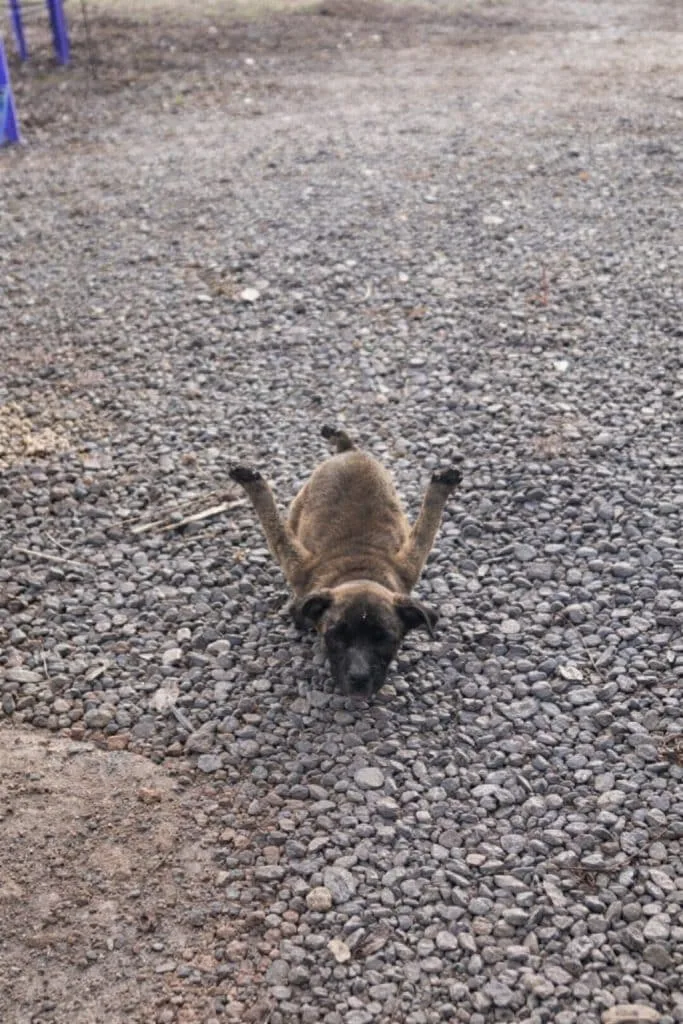
Vanilla lived on the streets, which is difficult for any dog. For her, it was harder still. Her front legs could not support her body, so she pulled herself along over rough ground using her hind legs and her belly.
That meant every basic need took extra effort. Finding food was work. Finding a place to rest was work. Even crossing a short stretch of ground was work.
People noticed her, but many never looked past her appearance. Some avoided her, some stared, and others acted as though she did not belong. Through all of it, Vanilla stayed gentle. There was no anger in her, only persistence.
Video: Vanilla’s Story, From Hard Ground to a New Kind of Freedom
The Woman Who Did Not Walk Past
For a long time, nobody seems to have recognized how much strength that small body held. Then a woman spotted Vanilla and understood right away that the little dog needed help.
She watched Vanilla crawl forward and saw how tired she was. Rather than continuing on her way, she contacted rescuers.
The team arrived expecting a wary dog, perhaps one that had learned to keep her distance from people. Vanilla did the opposite. Her tail began to wag. Given how little compassion her days outdoors had offered, her willingness to greet the people who came for her with trust stood out, and the rescue team has not forgotten that moment.
What the Veterinary Team Found
At the veterinary clinic, specialists evaluated Vanilla’s condition. The results confirmed that the deformity in her front legs was severe and had been present since birth.
The first plan centered on supportive care. The team hoped that time, good nutrition and rehabilitation might gradually improve how well she could move.
Weeks went by, though, and progress came very slowly. That slowness began to worry the people caring for her, and it opened the door to a much harder subject.
A Painful Option on the Table
Amputation entered the discussion. It was raised because it might offer Vanilla a better quality of life if rehabilitation did not work, not as something to rush into.
It was not an easy conversation. Vanilla’s caregiver was not ready to give up, and before agreeing to such a life-changing step, she decided to seek a second opinion.
What happened next showed how much that pause mattered.
A Plan Built Around What Still Worked
An orthopedic rehabilitation specialist examined Vanilla and suggested a different approach. Instead of focusing on what her body could not do, the goal would be to strengthen what could still work.
The shift in thinking was important. Her legs were no longer treated as the only measure of her future. Her whole body became something that could grow stronger, step by step.
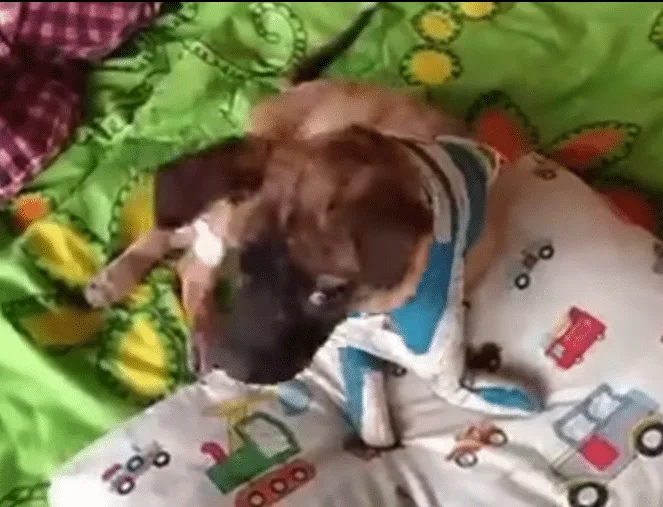
A customized therapy plan followed. Soft bedding protected her fragile skin. Nutritious meals supported the rebuilding of muscle. Gentle exercises encouraged balance and strength in her hind legs. None of it produced dramatic results right away.
Small Gains That Added Up
The early changes were small and easy to miss: a little more stability, a few extra seconds spent standing, a slight improvement in posture. Progress often starts with moments that look insignificant, and Vanilla kept working through them.
Those gains came from daily care rather than a single treatment: comfortable bedding, steady meals and patient exercise, repeated week after week.
Over about three months, her confidence grew. Her muscles became stronger, her balance improved and her movements steadied. Then came the moment her caregivers could not stop talking about. Vanilla stood upright. It was not a brief or accidental lift. She stood with purpose, and then she took a step, and another.
Within just a few months, the dog who had once dragged herself across the ground was moving on her hind legs with remarkable control.

A Man, a Custom Wheelchair and Room to Run
Vanilla’s story did not end in the rehabilitation room. A man who had followed her recovery was deeply inspired by her resilience and decided to adopt her.
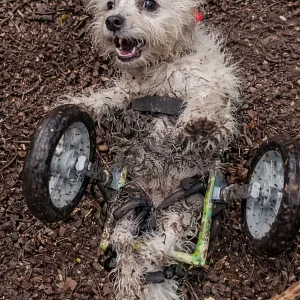
He also wanted to make daily life easier for her, so he provided a custom-made wheelchair designed for her needs. The change was immediate the first time she tried it. She moved faster, went farther and carried herself with more confidence.
Therapy had given her stronger hind legs, and the wheelchair added speed and reach. Then she ran. Open spaces that once felt out of reach were suddenly part of her day, and the limits she had known for so long seemed much smaller.
Where Vanilla Is Today
Today Vanilla’s life looks very different. She spends her days exploring new places, playing and enjoying the freedom she worked so hard to gain.
Her disability is still part of who she is. It is simply no longer the whole story.
What she needed was never special treatment, only a chance: a chance to heal, to adapt and to be loved. A woman who stopped, a rescue team who responded, a caregiver who asked for another opinion, a specialist who offered a new plan and a man who opened his home all helped give her that chance.
A dog who once struggled to move now races toward her days with joy. Her path shows that a body’s limits do not always decide the future, and that sometimes determination, supported by people willing to care, does.