Behind an ordinary fence in Highland, California, a Pit Bull named Gator was growing thinner day by day, and hardly anyone noticed.
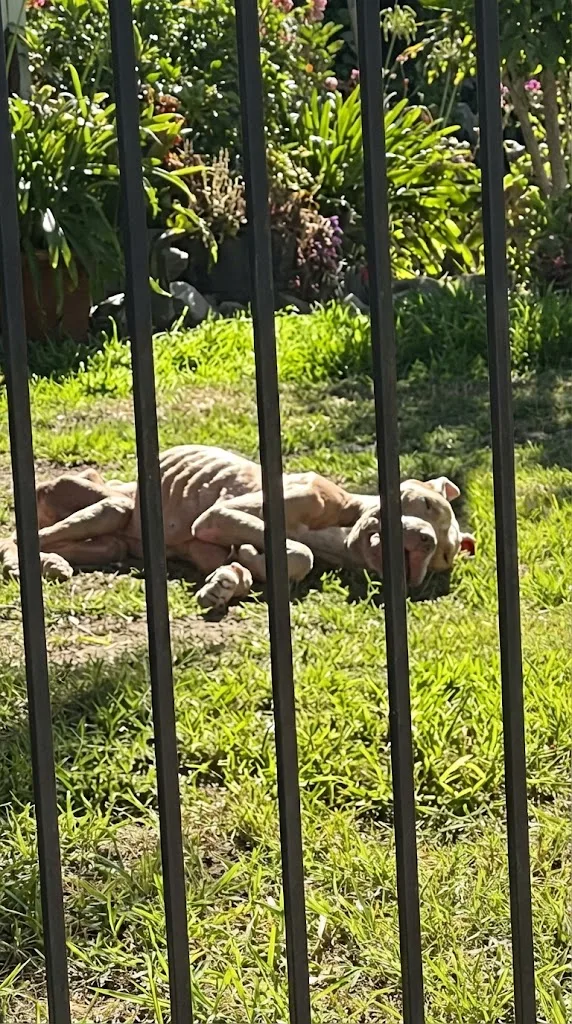
By the time his photo spread online, he looked like little more than bones resting on bare dirt. Viewers were stunned. His owner, according to the rescue account, offered a very different version of events: Gator was an aggressive dog, and he was eating just fine.
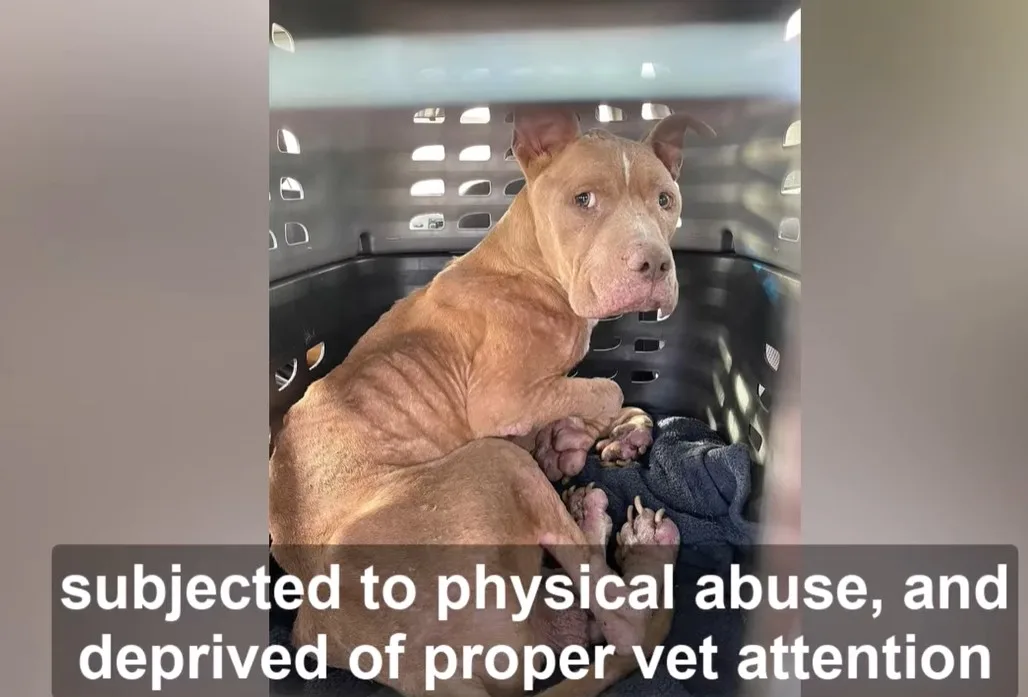
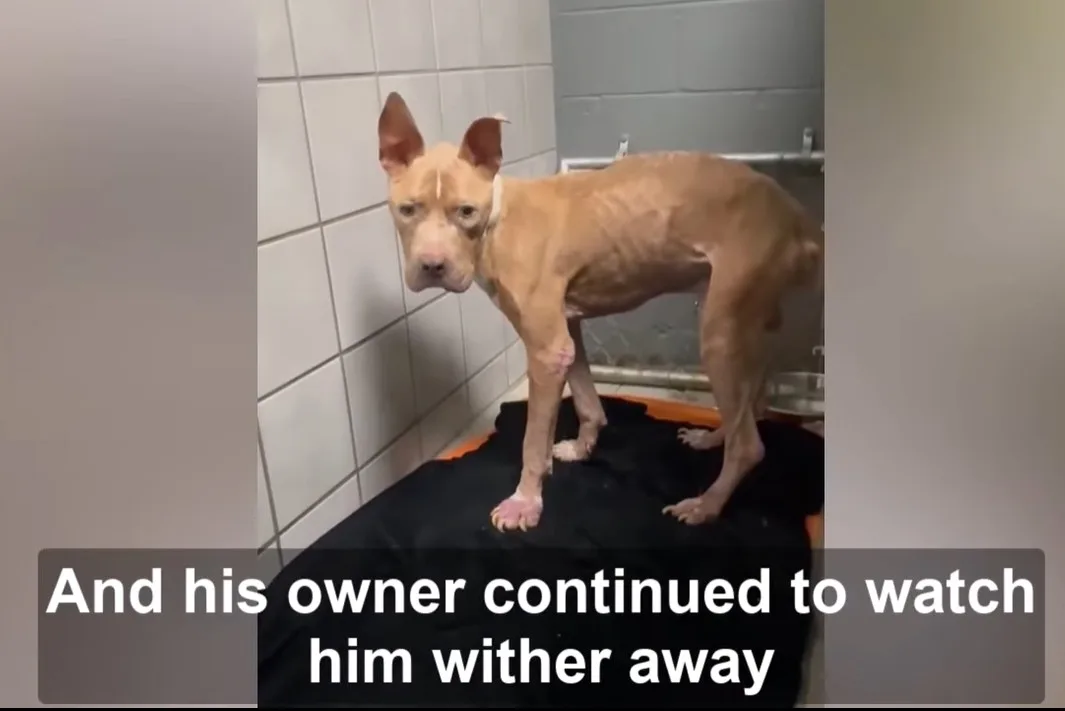
The images did not support that claim. His ribs pressed visibly against his skin. He was kept on a chain, and the neglect went on day after day while someone close by watched and took no action.
What the Camera Showed That the Owner’s Account Did Not
The word “skinny” does not come close to describing Gator’s condition. He lay stretched out on the ground, and the outline of his frame was impossible to miss. He appeared to have very little strength left.
That gap between the owner’s explanation and the visible evidence is what pushed his case forward. A dog described as eating well does not normally look like this, and no excuse could change what the photos and footage plainly displayed.
The video below introduces Gator after his rescue and offers a first look at the start of his new life.
Video: Meet Gator After His Rescue, a First Glimpse of His New Life
Rescuers Expected a Dangerous Dog and Found a Fading One
Rescuers arrived having been warned about an aggressive animal. What they met was a dog who could not even lift his head.
Gator did not behave like a threat. He seemed exhausted and starved, and it was clear that time was short.
The owner at first refused to surrender him, insisting that Gator had some kind of mystery illness. The rescue account says the condition of his body made that explanation hard to accept. With the backing of authority, rescuers removed him from the yard instead of waiting for the owner’s permission.
He was taken straight to a veterinary clinic, leaving behind the chain and the dirt where he had been kept.
A Medical Report Measured in Numbers and Infections
At the clinic, the veterinary findings were sobering. Gator scored 1 out of 9 on the Body Condition Scale, which the rescue account describes as essentially the lowest level of starvation before death.
The examination turned up other problems as well. His paws were raw and swollen, and his ears were packed with infection. His body was so fragile that even ordinary movement looked painful.
None of this was a “mystery illness.” It was the physical record of what he had endured, and the veterinary team began the slow work of addressing it.
Warm Hands, a Gentle Bath, and a Dog Who Trembled
The clinic staff wrapped Gator in what they called a “cocoon of love.” It meant warmth, careful handling, and a bath that did not hurt, all of which were new to him according to the account.
He shook through it. The rescue account says the trembling came not from cold but from unfamiliarity with kindness, suggesting that experience had taught him to expect fear from people rather than comfort.
Whatever was going through his mind, the moment showed how far he had to travel. Medical treatment could address his body, but learning to feel safe around human hands would take longer.
Two Weeks In, a Stubborn Skin Problem
Recovery did not move in a straight line. About two weeks into his hospital stay, Gator’s spirit began to stir, but his body was still fighting hard.
His paws stayed inflamed despite multiple treatments. Cultures revealed chronic, resistant dermatitis, and that diagnosis meant he needed to see a specialist. The damage, it turned out, was not limited to the bones visible beneath his skin. It reached into his skin and system as well.
Through all of it, staff described a dog who kept trying. The animal once labeled too aggressive to be unchained proved to be one of the gentlest patients in the clinic. He leaned into every caring hand, and, according to the account, the darkness in his eyes slowly began to lift.
Sixty Days Later, the Clinic Said He Was Ready
It took two full months, sixty days, of intensive care, dermatology visits, and ongoing medical treatment before the clinic could say what everyone had been hoping to hear: “He is ready.”
When that day arrived, Gator went directly into a foster home. He left behind the chain, the dirt, and Highland itself.
The rescue account describes him as a survivor with a real spark for life, a spark that makes the circumstances he came from even harder to accept.
What Gator’s Story Leaves Behind
Rescuers say Gator’s case reflects something they see far too often. A label like “aggressive” can become a convenient cover story, an easy way to explain away a dog’s condition without answering for it.
In Gator’s case, the label did not survive a close look. What people found beneath it was a starving, exhausted dog who responded to gentleness once it was offered.
Today, according to the account, Gator is stable, safe, and loved. He is eating, not because of a miracle, but because people chose to step in and care for him.
His road forward is still long, and his skin condition is part of that journey. But he is now walking it in a foster home, with the support he was denied in that backyard.