Thamos spent his days moving through sidewalks, alleys and busy streets. Plenty of people passed him. Almost none stayed.
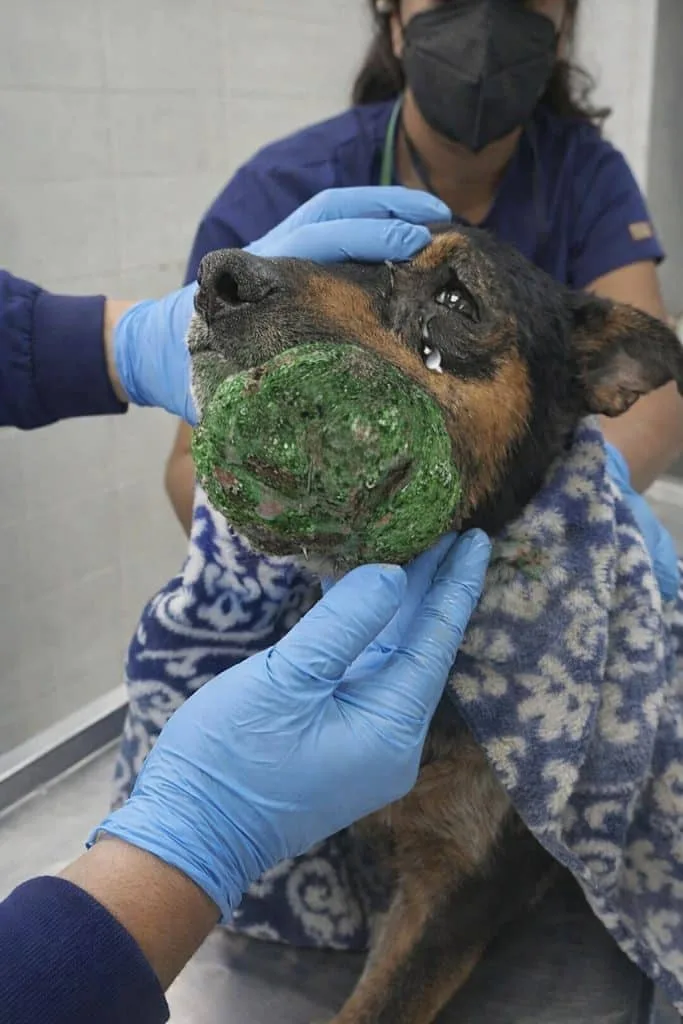
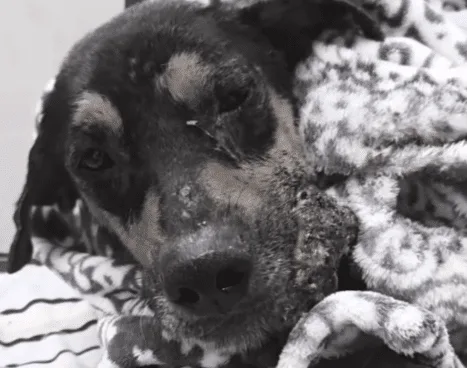
A large growth covered much of his face, and for many who saw him, it was the only thing they registered. Their eyes moved away quickly, long before anyone noticed the gentle dog behind it.
His story turns on a different kind of attention: the kind that lingers long enough to look closely, offer food and make a plan.
The Dog People Looked Past
For a long stretch, Thamos lived on the margins of public places, drifting from one street to the next while the days ran together.
He kept out of sight whenever he could. Drainage ditches, narrow corners and forgotten patches of ground gave him somewhere to rest where nobody would bother him. Only hunger drew him back into view, and even then he hurried, snatching scraps of food before disappearing again.
The growth made each day harder. It changed how he looked, and it also affected how comfortably he could move. Yet the heavier weight may have been the isolation. People tended to notice his condition before they noticed him.
Then rescuers found him, and their reaction was different. They did not stop at his appearance. They saw a dog who had endured far more than any animal should, and they moved without rushing him: food first, then safety, then the quiet reassurance that he no longer had to survive alone.
Video: Watch How Rescuers Gave Thamos A Real Chance
Nobody Hurried Him
Inside the shelter, no one expected Thamos to trust anyone right away. Everything moved slowly.
Meals arrived on a schedule. His bed stayed warm and dry. The people around him approached with calm voices and patient hands, leaving him room to adjust at his own pace. Nothing about this stage was dramatic, and that was the point.
After so long in ditches and hidden corners, those basics marked a sharp change. Still, everyone understood that comfort alone would not solve the biggest problem. The mass on his face was still there.
A Surgery Beyond The Shelter’s Budget
That mass called for specialized surgery, and the cost of the procedure was well beyond what the shelter could easily manage. For a while, the road ahead stayed uncertain.
Then Thamos’s story traveled past the shelter walls, and compassionate strangers responded. Some donated a little. Others gave more. The account does not say what the total came to or how many people took part, but it makes clear that their combined generosity was what turned hope into an actual plan.
Getting Strong Enough For The Operating Room
Funding was not the only requirement. Months of hardship had left Thamos’s body exhausted, and the veterinary team wanted him healthy enough to go through an operation safely.
So they started with simple routines: nourishing meals, plenty of rest and a peaceful setting where stress could fade. Day after day, the difference showed. He grew stronger. His eyes looked softer. He no longer reacted to every movement with fear.
Other changes followed. He began waiting for his caregivers, recognizing familiar faces and accepting gentle affection without backing away. When the veterinarians finally agreed that he was ready, they were judging a dog who had changed in manner as well as in strength.
Hours Of Careful Work
The operation demanded skill, patience and hours of careful work. For the medical team, the goal was never to change how a dog looked. It was to remove a burden that had touched nearly every part of his daily life.
Inside the operating room, each step called for precision. Outside, rescuers, shelter staff and supporters waited together, all aware of what the day could mean. The account leaves out the finer details of the procedure itself.
When the surgery ended successfully, relief spread through the team. The largest obstacle was behind him. What remained was healing.
Lighter In More Ways Than One
Recovery came one day at a time. The shelter monitored him closely, keeping him comfortable while his body adjusted after the operation.
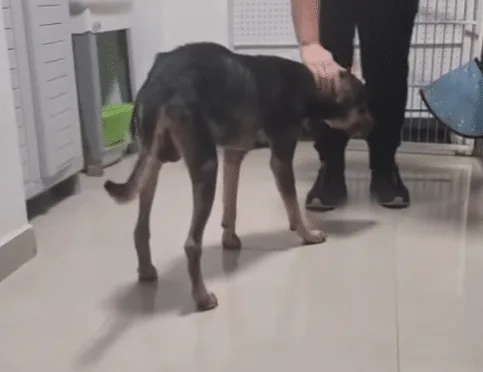
Before long, the change was hard to miss. The heavy growth was gone, and his face looked more natural. He seemed lighter, both physically and emotionally.
The most meaningful signs, though, had little to do with appearance. Curiosity began to replace caution. Rather than avoiding the people around him, Thamos started to seek out quiet company. He lingered near caregivers, watched the daily activity with interest, and slowly joined the life unfolding at the shelter.
He was recovering from more than surgery. He was settling into a life with far less fear in it.
Trust Built From Ordinary Mornings
In the weeks that followed, trust grew through routine rather than drama. A bowl of food waiting each morning. A familiar voice saying hello. Hands that never caused pain.
Nothing happened overnight. The healing came from consistency, and for a dog who had spent so long on the edges of public life, meeting the same kindness day after day carried real weight.
Little by little, he no longer seemed to be preparing to run. The shelter had become a place he could count on.
A Family Chooses Thamos
Eventually, the next chapter of Thamos’s rescue story arrived: a family chose him.
According to the account, they were not interested in the dog others had ignored. They saw a resilient companion who had come through tremendous hardship with quiet courage.
The shelter, once his refuge, became the place that led him toward something more permanent. Ahead lay a home where someone would greet him each day, where comfort would not disappear overnight, and where hiding would never be necessary again.
What Thamos Asks Us To Notice
Thamos’s story is about more than a successful surgery. It shows how easily appearance can shape the way we judge someone we barely know.
For a long time, people noticed only the growth across his face. Few paused long enough to see the gentle dog living underneath. The rescuers did, and because they looked closer, he received the treatment, patience and compassion that reshaped his future.
Today, his life is described as one of safety and belonging rather than isolation and fear, with the promise of many happier days ahead. Sometimes a life changes because someone is willing to look past a first impression.