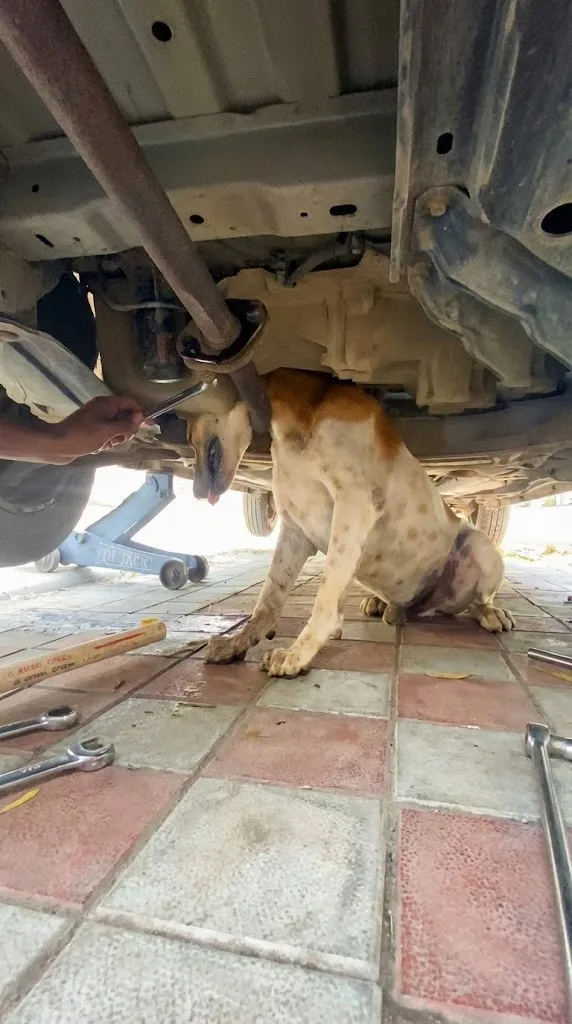
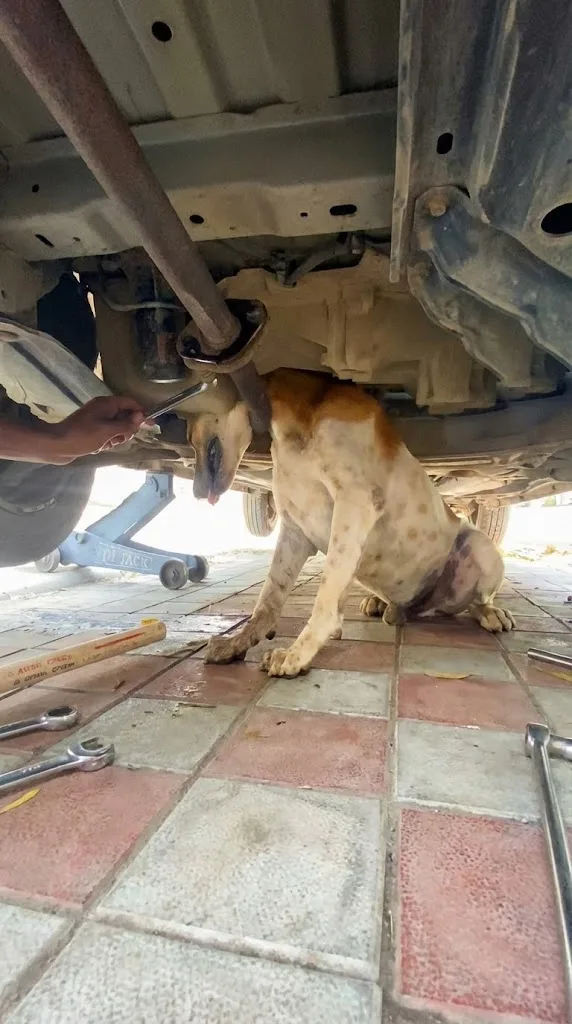
The call sounded almost impossible: a dog with his head lodged inside the exhaust pipe of a parked car. According to the account from the Nirbhay Foundation rescue team, he had been running after a cat when he lunged forward, slipped, and pushed his head into the narrow metal opening.
Once he was inside, struggling only made things worse.
A Chase That Ended Inside a Pipe
By the time the rescuers arrived, the scene was strangely still. The dog was wedged so tightly that even breathing looked like hard work. His body shook, and the trembling seemed to come from fear as much as from exhaustion.
The team understood right away that this would not be a routine rescue. A wrong pull or twist could hurt him badly, so every move had to be deliberate.
They started with their hands. Gently, they tried to draw him back while speaking to him in low voices. The metal stayed where it was, and so did the dog. His panic made each passing minute riskier than the last.
That is when the rescuers changed plans. Instead of freeing the dog from the pipe, they would have to free the pipe from the car.
Taking the Car Apart, One Piece at a Time
The owner of the car stood nearby, visibly worried, and gave the team full permission to dismantle the exhaust system. The rescuers put down their leashes and picked up tools.
Power tools hummed. Bolts came loose. The metal groaned as the exhaust was taken apart section by section. Through all of it, one rescuer kept a steady hand on the dog’s trembling body, speaking softly to keep him as calm as possible.
Then the metal gave way, and the dog was free.
He did not linger. He shook himself hard, and with his tail wagging, he ran across the street and out of sight. The account does not say what happened to him afterward, only that he left the scene on his own, unhurt enough to run.
Another Call Before the Tools Were Packed
The rescuers had barely finished gathering their equipment when a new report reached them: a hit-and-run, and another dog injured on the roadside.
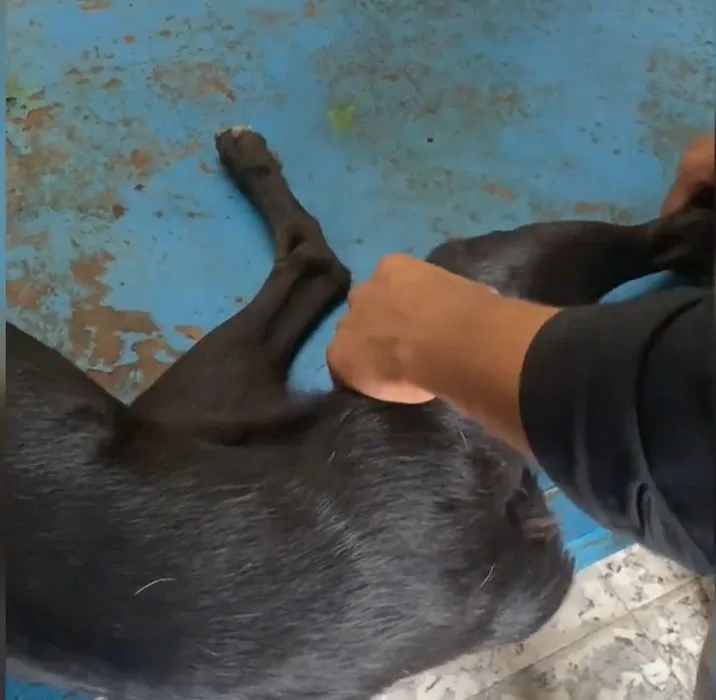
When they found him, he was lying very still. His eyes were wide, and his body trembled without pause. He appeared to be in shock.
At the clinic, the examination brought news that was both painful and encouraging:
- The spine: It was intact, with no paralysis and no permanent damage reported.
- The leg: It was severely fractured and unstable, and it needed treatment.
Through the examination and care, the dog never snapped, growled, or tried to fight the people handling him.
The Small Signs That Came First
The team decided to keep him for long-term care. Recovery did not begin with anything dramatic. It showed in small changes.
He stopped flinching when someone touched him. He began taking food from a human hand. He curled up in blankets instead of pulling away from them.
Then, one morning, he stood. He was shaky and unsteady, but he was on his feet. After that, he took a step.
It was not a strong or confident step, but it was the first toward a life that no longer depended on dodging traffic. The account does not describe how his leg was treated or how long his recovery took, so his full progress remains unknown.
Two Dogs, Two Very Different Emergencies
The two rescues could hardly have looked more different. One dog was held fast by a car part and freed with tools and patience. The other lay injured by the road and needed medical care and time.
The first dog’s ending is simple: he was released from the pipe and ran off. The second dog’s story is still unfolding, with a fractured leg to heal, a spine that escaped damage, and a first wobbly step on record.
Neither rescue was flashy. Both depended on people willing to slow down, take the problem seriously, and do the careful work in front of them, whether that meant unbolting a car or helping a hurt dog stand.