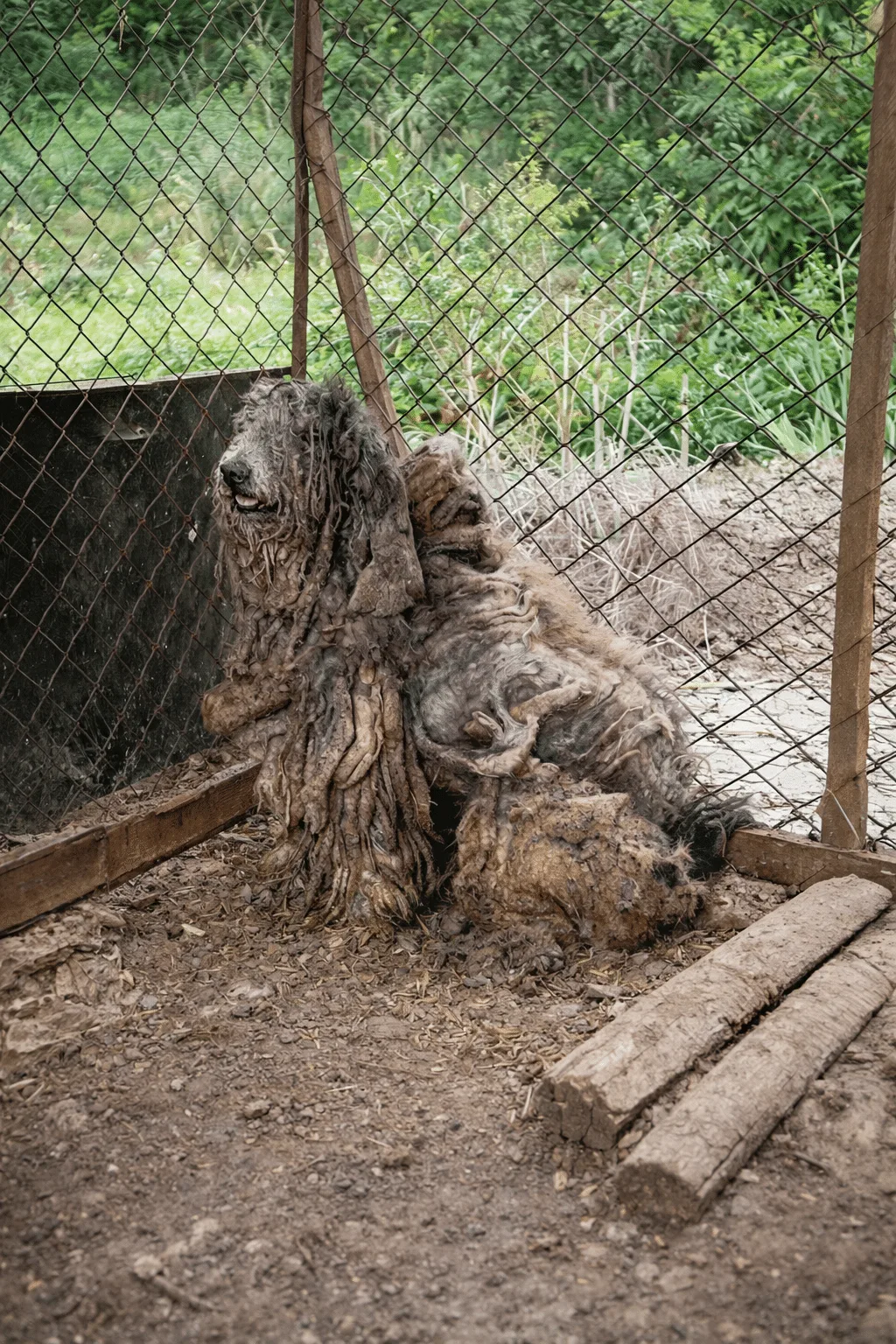
Behind a small house that few people looked at anymore, a large dog lived inside a narrow metal cage. Neighbors had once noticed him. Over time he became part of the scenery, and the noticing stopped.
Under a coat so heavy and knotted that it hid almost everything about him, he was waiting for a change he may have stopped expecting. What the rescuers found was a case of long neglect, and a dog who seemed to have forgotten there was anything beyond the bars.
A Cage That Faded Into the Background
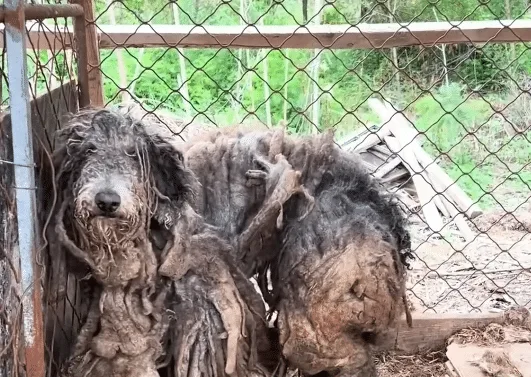
According to the account, the dog had been confined for years. His owner, an elderly man struggling with alcohol, rarely paid attention to him. Meals came irregularly. Clean water was never certain. The floor of the cage had reached a state that nobody wanted to look at closely.
When the rescuers arrived, it took a moment to recognize a living animal at all. His fur had hardened into thick cords that clung to the fragile body beneath, and his eyes were barely visible through the mats. The cage smelled overwhelming, and the dog made almost no sound.
He did not bark or lunge. He showed no anger and no defensiveness, only a dazed, lost look.
Video: From Four Years in a Cage to a New Life — The Giant Poodle’s Second Chance
The Open Door He Did Not Rush Through
When the cage door finally swung open, the dog stayed where he was. He did not dash for freedom. He hesitated, as though the cage, harsh as it was, were the only place he remembered, and stepping out of it was not a simple choice.
The rescuer did not try to force him. He crouched down, spoke softly and waited. Then, slowly, he reached a hand into the cage, not to grab the dog but to reassure him.
It had likely been a long time since a touch had come without harm. This time nothing bad followed, and the dog was gently guided out.
More Than an Hour of Shaving
Getting him out was only the first step. The matted coat had to come off, and the shaving took more than an hour. Each layer of hardened fur that fell away exposed more of what the dog had been living with.
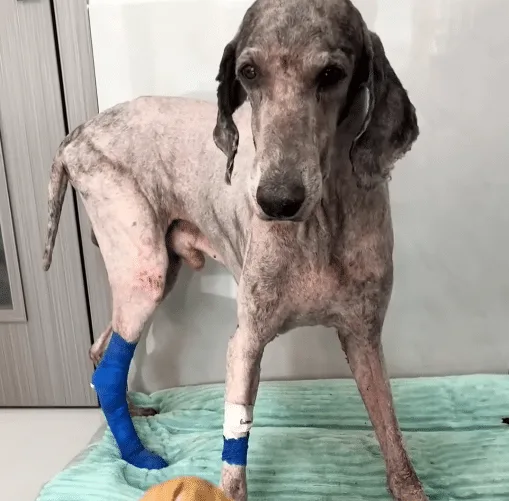
Beneath the mats, his skin was severely damaged. It was infected, covered in parasites and marked by open wounds. The rescuers attributed this to long-term neglect and constant contact with waste and metal.
The rescuer showed no shock, only urgency. The cleaning began right away, one wound at a time, using antiseptics and steady hands. When the work was done, the animal underneath could finally be identified as a Giant Poodle, a breed known for elegance and intelligence, now reduced to a thin, fragile frame.
At the Clinic, a Body Running on Empty
The veterinary examination confirmed how serious his condition was. He was severely underweight and fighting a systemic infection. His fever was high. There were signs of pneumonia and liver inflammation, and he was also experiencing intestinal bleeding.
With his heavy coat gone, he could no longer hold in warmth. He trembled constantly until a small sweater was put on him.
He was exhausted in every way. But he was still alive, and that meant there was still something the team could do.
Learning That Hands Can Be Gentle
At first, kindness seemed to mean nothing to him. He did not respond to affection, did not wag his tail and did not seek comfort. When people came near, he froze, as if bracing for something that never arrived.
What changed things was repetition. Food came at the same time every day. Medicine eased his pain. Hands approached gently and withdrew gently, with no shouting and no harm.
Then, one day, almost unnoticed, there was a small movement at the end of his body. It was a hesitant tail wag, and it stopped almost as soon as it began. But it was there, a sign that his fear was beginning to loosen.
A Body, and Then a Spirit, Begins to Rebuild
Physical recovery came step by step. The infected wounds started to close. His appetite returned, and meals became something he finished eagerly instead of something he struggled through. His ribs, once sharp beneath the skin, slowly softened under new weight.
Strength came back to his legs, and his eyes grew clearer. Before long he was following his rescuer from room to room, as if he did not want to lose the only safety he had known. The crisis phase was over, and his body could finally begin to rebuild.
The deeper healing, though, was emotional. He began leaning into touch. He rested his head on someone’s lap. He was choosing closeness over fear.
Six Months After the Door Opened
Six months after the cage was opened, he was hard to recognize as the same dog. His coat had grown back clean, soft and carefully maintained. His posture was strong again, and his eyes looked bright and alert.
The dog who once did not seem to know how to wag his tail now greeted each morning with energy. He played, explored and trusted the people around him. The cage, the smell and the fear were all behind him.
In their place was a Giant Poodle who had been given a second chance and, by every sign in the account, was making full use of it.
What Comes After the Rescue
His story does not end at the moment the door opened. Much of it happened afterward, in the clinic and in the quiet routines that followed.
Patience, consistency and a slow rebuilding of trust did as much for him as the scissors and the antiseptic. Freeing a body from a cage may be the easier part. Teaching a dog that the world can be safe again takes longer.
For this dog, that lesson arrived through a steady hand, a regular meal and a door that stayed open.