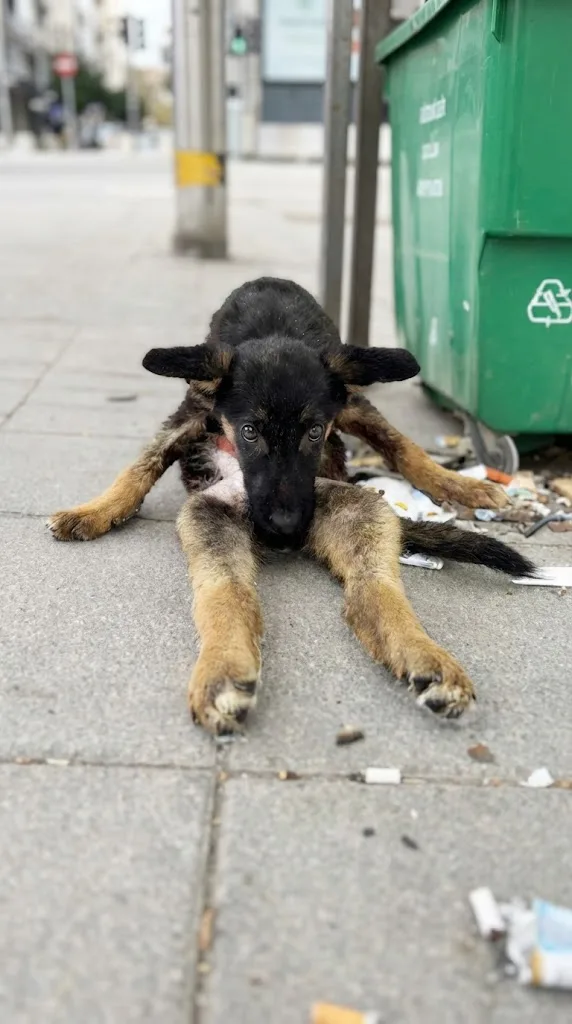
On a bitterly cold night, a woman walking past a dim alley noticed a small shape beside a trash can. At first glance, it looked like a bundle of discarded cloth. Then it shifted slightly, and she realized she was looking at a puppy.
What troubled her was not what he was doing, but what he was not doing. He was not crying out, and he was not trying to get away. Something about the scene felt deeply wrong.
A Puppy Who Made No Sound
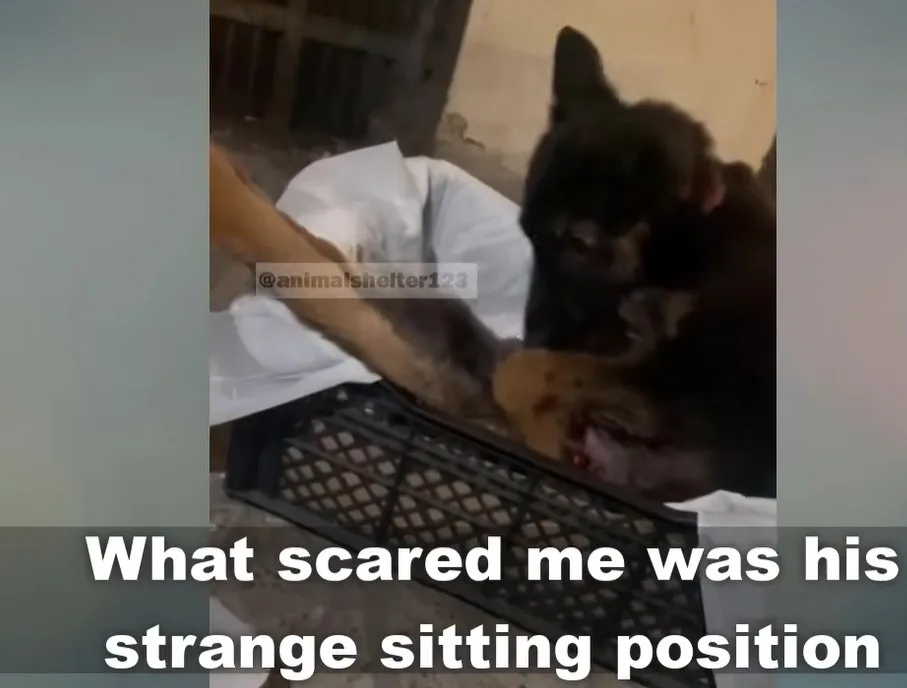
The puppy sat in a stiff, unnatural position, almost perfectly motionless. He did not bark or whimper. His eyes were fixed on nothing in particular, and when the woman stepped closer, there was no sign of curiosity in them.
His stillness did not look like calm. It looked more like the kind of fear that holds an animal in place instead of sending it running. The cold air cut through his thin body, and he trembled faintly. Even so, he made no move to leave the spot beside the trash.
It was the silence that stood out most. A frightened puppy alone in the cold would usually call for help. This one simply waited.
Video: The Night a Motionless Puppy Was Found Beside the Trash
A Name, Then a Diagnosis
At the clinic, the puppy was given a name: Shawn. It was a small act, but it marked the moment he stopped being an anonymous shape in an alley and became an individual patient.
The examination soon explained what the woman had seen. Shawn was suffering from advanced rickets, a condition that leaves the bones soft and weak. His skeleton could not properly support his body. The cause was long-term malnutrition, likely dating back to his earliest days.
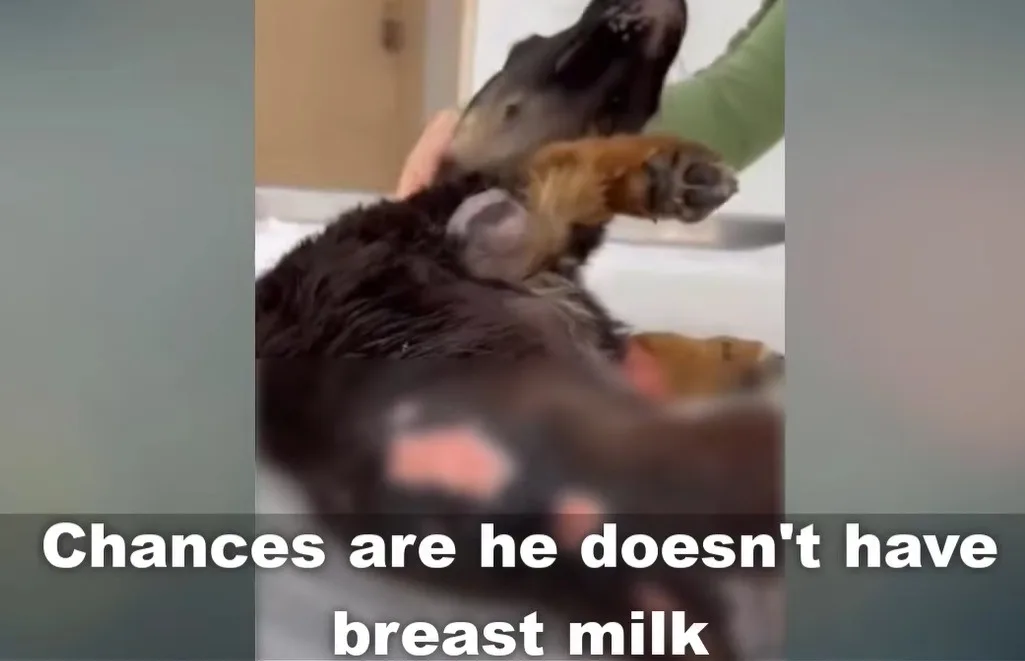
That accounted for his rigid posture, his fragile limbs, and his inability to hold himself up. But the vet found something else as well. Marks across his back led the veterinarian to suspect burns. How they happened was not explained, and the cause remains unknown.
Why Surgery Was Off the Table
Shawn was far too weak for an operation, so his care began with the most basic things: food, warmth, and calm company.
Everything was done slowly. Meals were set down near him, and then the caregivers stepped back so he could eat without anyone hovering. Each movement around him was careful and deliberate. For a puppy who had shown so little response, space was part of the treatment.
Weeks of Quiet, Then a Small Change
For several weeks, Shawn stayed quiet. He was not hostile, but he was not affectionate either. He seemed unsure of the people around him, and no one tried to hurry him.
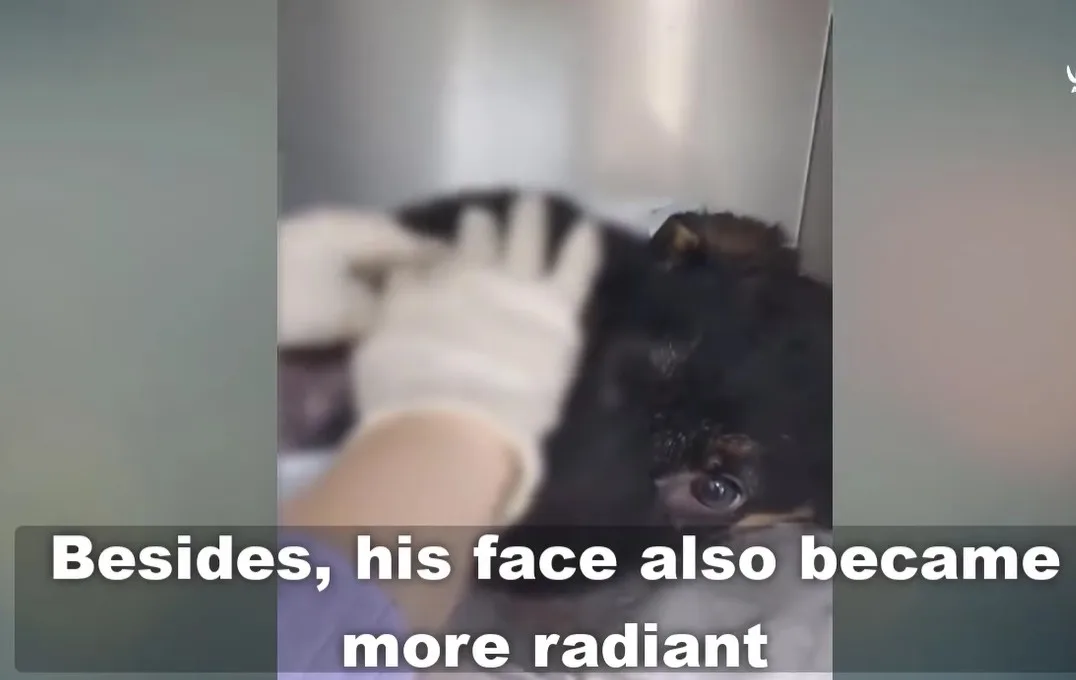
Sometime during the second week, the first signs of progress appeared. The wounds on his back started to heal, and his breathing became easier. Then, one afternoon, he did something simple. When a hand came to rest near him, he did not shrink away. He did not flinch or panic.
It was a tiny moment, easy to overlook. For the people caring for him, it was the first clear sign that he was beginning to tolerate human company.
The Hard News About Walking
Not all of the news was hopeful. Because his condition had gone untreated for so long, Shawn would never walk. His legs would not be able to carry him in the way they are meant to.
After two months of care, he moved to a shelter, where he encountered things that were new to him. There were other dogs nearby, soft places to rest, and toys that belonged only to him.
At first, he simply watched. Then his tail began to move, carefully and with hesitation, as though the gesture itself was still unfamiliar.
Wheels Instead of Limits
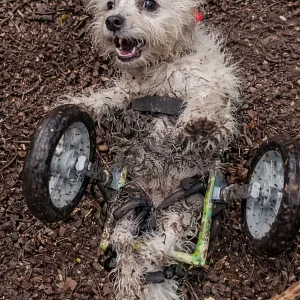
Efforts are now underway to get Shawn a custom wheelchair. The goal is not to change who he is. It is to give him a way to move, to explore, and to experience the world on his own terms.
The effort is still in progress, and the source does not say whether the wheelchair has been delivered yet. What is clear is the direction of the plan: mobility, not limitation.
Where Shawn Is Now
The puppy who once sat rigid beside a trash can, silent in the cold, is no longer there. Shawn is in a place with warmth, other dogs, and people who know how to approach him patiently.
His trust did not return in a single dramatic moment. It came through slow feedings, quiet company, and a hand that stayed gentle. His body will always move differently from other dogs, but his story now points toward a future with kindness in it, rather than a night spent alone in an alley.