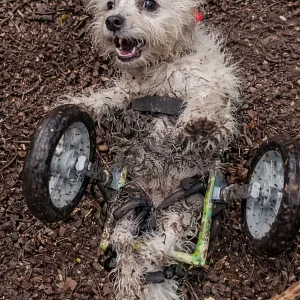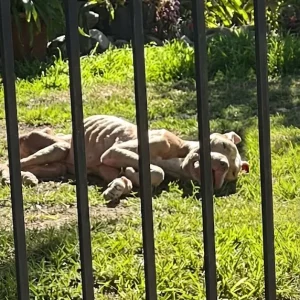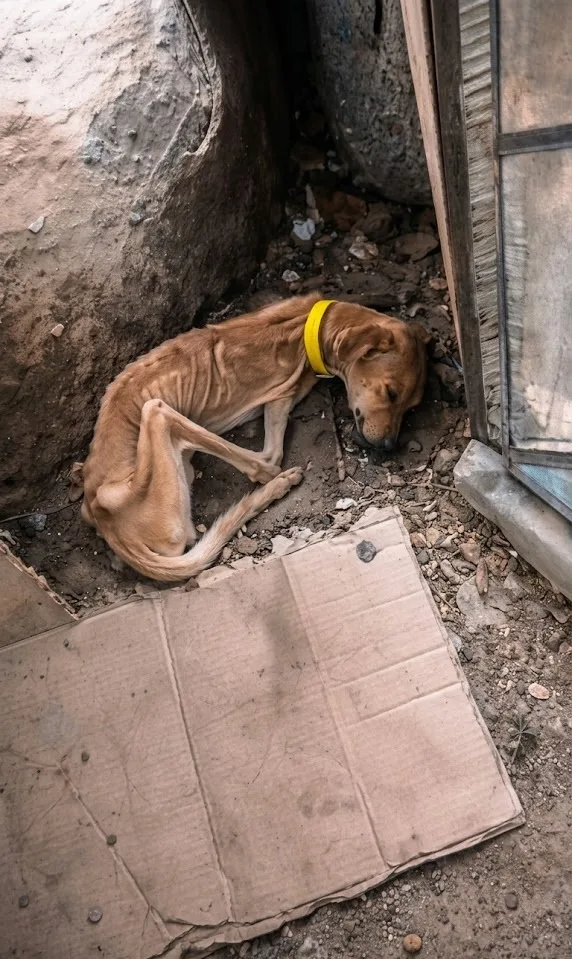
A small dog stood chained outside, exposed to the weather and too thin to look as though he could last much longer. That was the scene behind the distress call that first brought Alan to the attention of rescuers.
The person who reported him described a frail animal barely holding himself up. He looked exhausted, and nothing around him offered comfort. When rescuers arrived, the situation turned out to be worse than they had expected.
Alan’s story is one of neglect. It is also a story about what can happen when someone finally decides to act.
A Distress Call and a Dog Barely Standing
According to the person who made the report, Alan’s owner had abandoned him weeks earlier. He had been left without proper food, shelter, or care. By the time help was called, he was living on the edge of survival.
Volunteers who tried to step in were met with resistance. The owner insisted Alan was still his and refused to surrender him. He also made a troubling admission: Alan had been bought for a low price during a trend-driven surge in demand for the breed, and he was discarded once interest faded.
These details come from the account of the person who reported the case. They describe a dog who was bought while his breed was fashionable and left behind when it no longer was.
Video: Alan’s Rescue and the Start of Emergency Veterinary Care
From the Chain to an Emergency Clinic
Eventually, Alan was taken out of that situation. The account does not spell out how the disagreement with the owner ended. It says only that he was removed and rushed to a veterinary clinic, where emergency treatment could begin.
His condition left little room for delay. Alan weighed just 6.5 kilograms (about 14 pounds) and was suffering from extreme malnutrition. His blood sugar levels were also dangerously unstable. His body was exhausted, yet the medical team still saw a real chance of pulling him back.
From that point on, every hour counted.
Fluids, Medication, and Round-the-Clock Watching
Treatment began immediately, under constant supervision. Alan received fluids and medication, along with carefully managed insulin therapy meant to stabilize his condition.
The clinic was his first real safe space in weeks, and maybe longer. The team’s plan moved in deliberate stages:
- Rapid emergency transfer for critical care
- Medical stabilization under veterinary supervision
- Gradual refeeding with controlled nutritional support
The team aimed for more than survival. With constant monitoring, they wanted to give his body room to recover step by step.
Slow at First, Then a Change
At first, progress was slow and uncertain. Then Alan began to respond.
Day by day, the emptiness in his eyes started to fade. He showed interest in food. Small movements grew stronger. Eventually he was standing again, then walking, and even playing in short bursts.
What stood out to the people around him was not only the physical turnaround. Despite everything he had endured, Alan stayed gentle. He leaned into human touch, and he trusted again.
For the caregivers, it was a quiet reminder that recovery is emotional as well as physical.
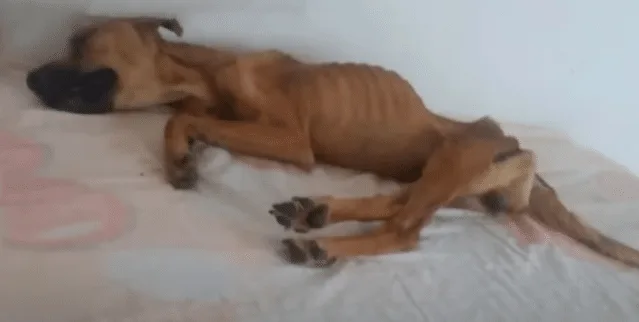
What Caring for Alan Showed the Clinic Staff
Those who looked after Alan often reflected on how fragile his situation had been and how close he came to not surviving. His progress became a daily source of encouragement for the clinic staff. The dog who could once barely stand was now alert and responsive, slowly rediscovering comfort in the world around him.
Seen that way, his case is more than a medical success. It shows what timely intervention can achieve. A few lessons stand out:
- Neglect can destroy a life in a short amount of time
- Fast intervention can completely change an outcome
- Animals can recover remarkably, in body and in spirit, when they are given care
What happened to Alan was preventable. What followed was a chance to rebuild what had been taken from him.

Alan Today
Today, Alan is no longer the fragile dog found chained and fading. He is thriving in safety and surrounded by care, learning what it means to simply be a dog, without fear, without neglect, and without pain.
The account does not say where he will live long term, so his story is best left where it is known. A dog once left at the end of a chain is now getting the care he needed.
His journey shows that rescue does more than save a life in the moment. It can change what comes next. Even a beginning as bleak as Alan’s did not have to decide his ending.