Food was right there, close enough for Sandy to see and smell. Each time he lowered his head to reach it, something hard stopped him short.
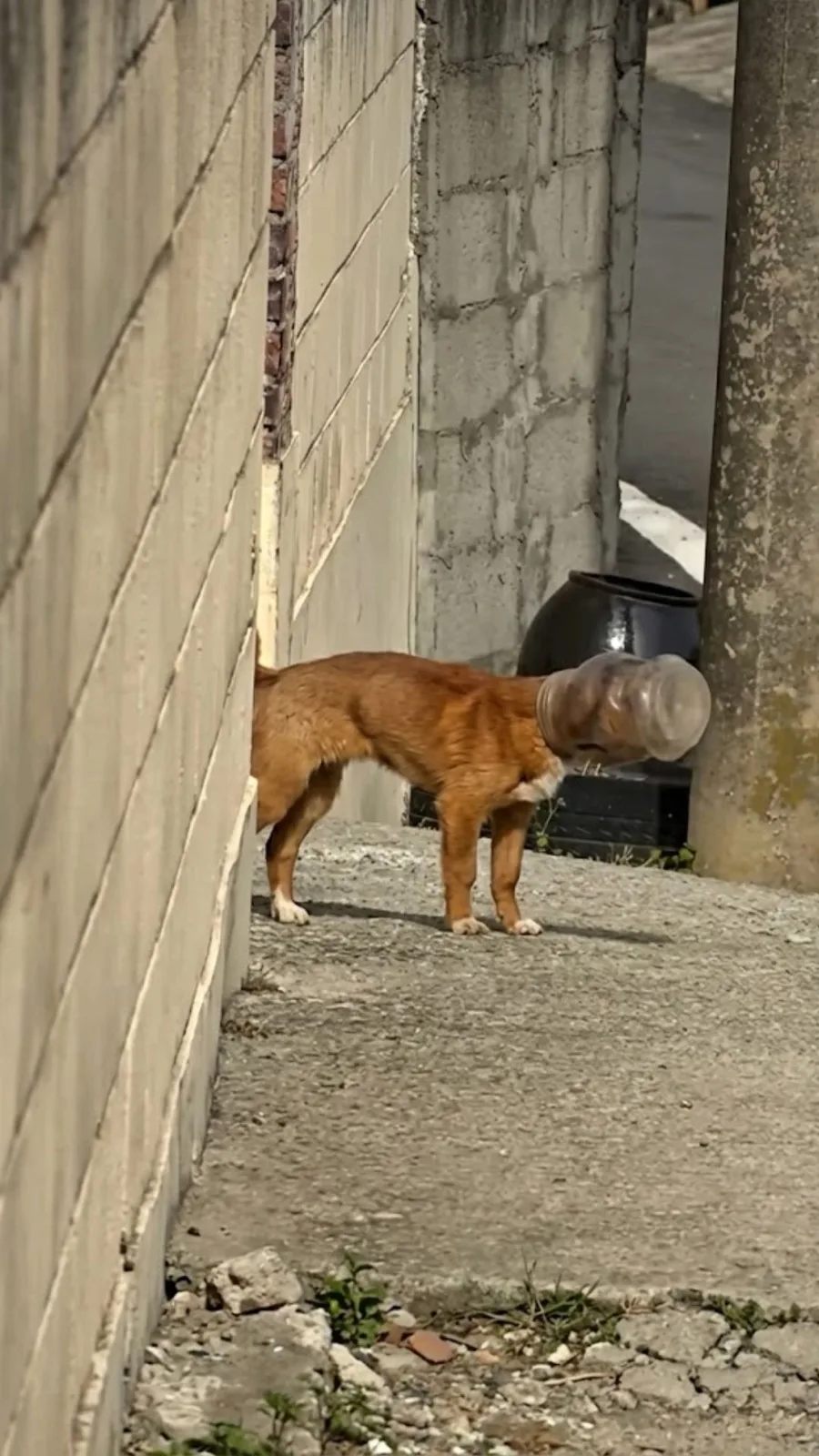
The stray dog was not behind a fence or inside a kennel. His head was sealed inside a clear plastic jar, and according to the rescue account, he lived that way for 21 days.
What followed was a slow decline on the streets, a rescue attempt in the rain, and a quiet moment with a trail of treats that showed how much had changed once the plastic was gone.
Twenty-One Days Behind a Clear Wall
How the jar ended up on his head was not documented. The account suggests it probably began with hunger: a discarded food container, the smell of leftovers, one push of his snout inside. Once his head was in, the rim tightened around his neck, and he could not pull free.
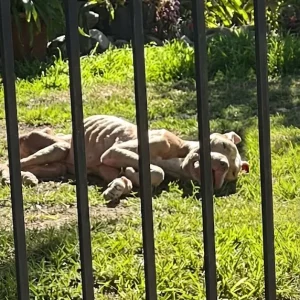
From then on, he wandered with the container still in place. He lost weight first, then muscle, then strength. When he lowered his head toward scraps on the ground, the plastic struck the pavement before his mouth could. The food stayed exactly where it was.
People in the neighborhood saw him and felt helpless. They also noticed something troubling inside the jar: fog. The only moisture Sandy seemed to have was the condensation from his own breath collecting on the plastic walls, and he licked at it to get something to drink.
Video: A Starving Dog With His Head Trapped in Plastic Licks Condensation From the Walls
A Companion Who Stayed Close
Sandy was not entirely alone. Another stray, Boksil, stayed by his side. The two roamed together and rested near one another.
Their days, however, were very different. Boksil could lower her head to drink from puddles and chew on scraps. Sandy could only look out through the transparent walls around his head.
Simple dog behaviors were out of reach. He could not nuzzle properly. He could not play without the jar knocking awkwardly against the pavement, and he could not groom or connect with another dog the way dogs usually do. He was beside his companion, yet separated from her by plastic.
A Trap Set as the Rain Arrived
Rescuers had been tracking him and understood that time was running short. One of them said quietly, “He’s been starving too long. His body has started consuming itself.”
They prepared a humane trap. Dark clouds gathered overhead, and rain began to soak the streets. The account does not say why Sandy chose that moment, though hunger and exhaustion may both have played a part.
He stepped inside, and the door closed behind him. After 21 days, he was off the street and in the hands of people trying to help.
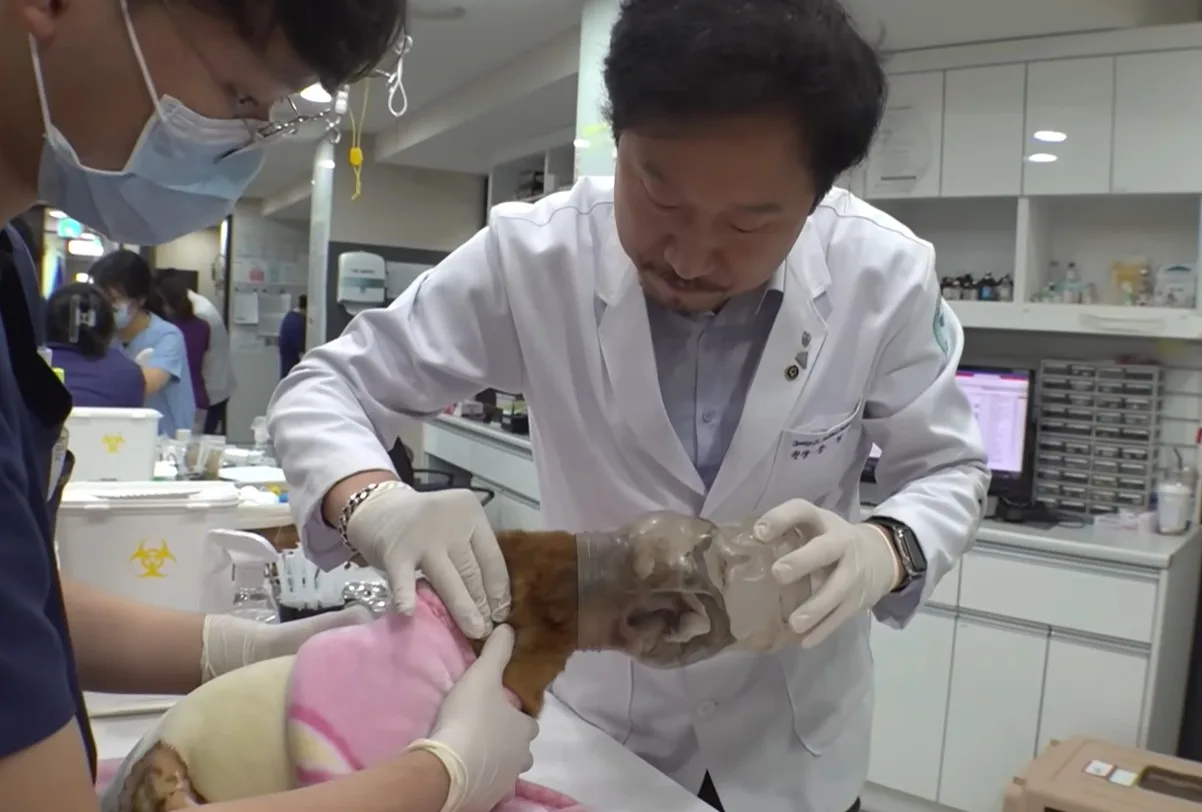
Cutting Away the Jar
At the veterinary clinic, the room went still. Slowly and carefully, the team cut through the plastic that had been on him for nearly a month.
When the jar slipped away, a small, bewildered face looked up at them. From the outside, there were no deep wounds. The more serious problems were internal.
What the Examination Revealed
Severe dehydration had strained Sandy’s organs, and his kidneys were failing. When the veterinarian examined his abdomen, there was almost no fat left. His body had used up its reserves just to keep going.
“Two weeks without food is already rare,” the veterinarian explained softly. “Three weeks… that’s extraordinary.”
Surviving that long without being able to eat was, by the vet’s account, remarkable in itself.
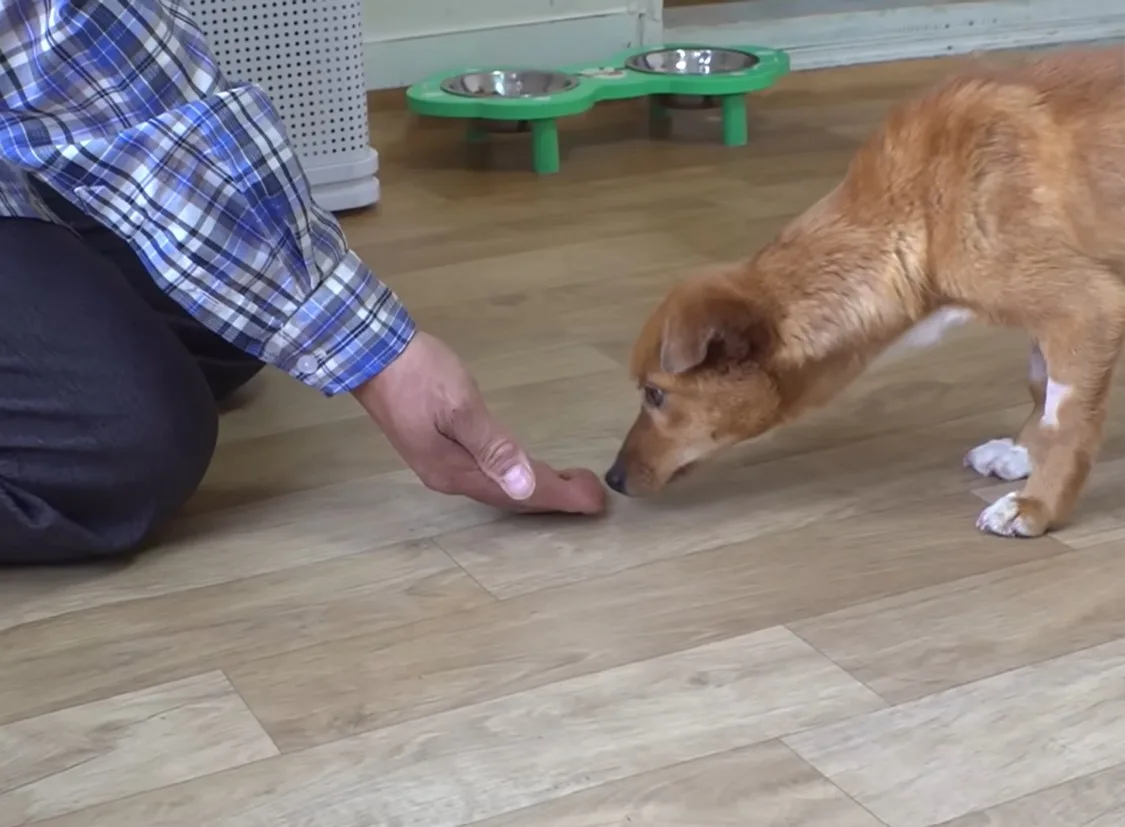
A Line of Treats and a Lowered Head
Even with the plastic gone, fear remained. Sandy curled into a corner of his kennel, shaking.
His new guardian did not rush him or force affection. Instead, she set out a line of treats leading from his cage, one every few inches, as a quiet invitation.
Sandy stared at the trail. Then he stretched his neck and took a step, then another. For the first time in weeks, he lowered his head and nothing blocked him. There was no plastic and no sharp knock against the ground, only food.
He paused for a moment. Then the trembling slowly faded, and he followed the treats all the way to his guardian and sat beside her.
Life Without the Jar
The jar is gone now, and hunger is no longer a constant part of Sandy’s days. The account does not say how his kidneys are doing or what his long-term care looks like, so that part of his story remains unwritten.
What it does show is the contrast with those 21 days. Where there was once a clear wall between Sandy and everything he needed, there is now a guardian beside him, a kennel to rest in, and food he can reach by simply lowering his head.