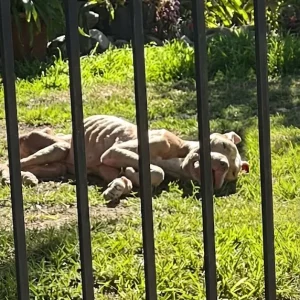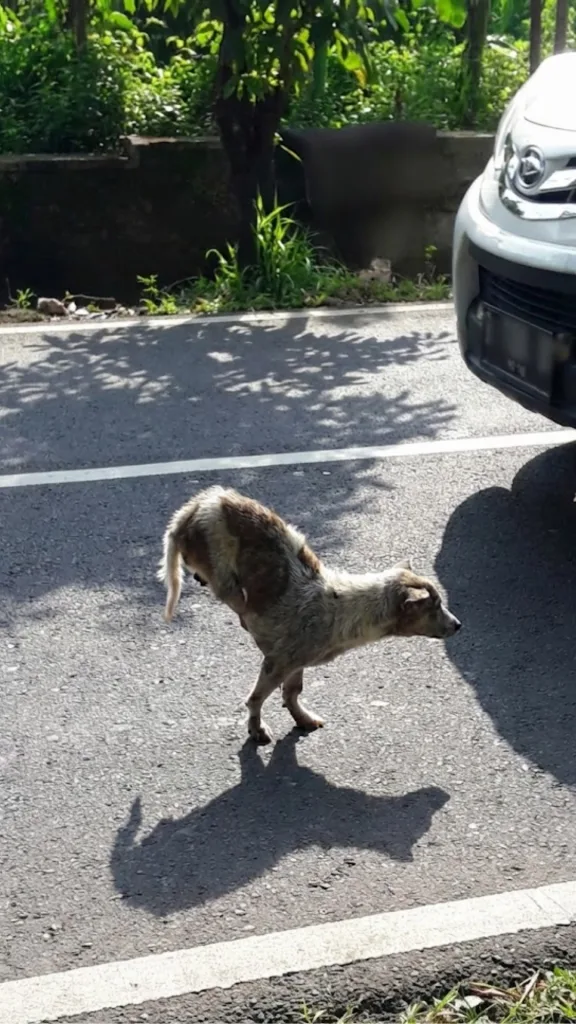
From a distance, he looked like any other stray on a dusty roadside. He was thin and dirty, and he moved forward on back legs that did not work the way a dog’s legs should. Most people who passed him saw no reason to look twice.
What they missed was how steadily he kept going. He rarely rested, and he almost never looked anyone in the eye. It took one person who finally paused to understand why.
The dog would later be called Taro. At first, he had no name at all.
A Dog Known Only as the Broken One
Before anyone gave him a name, the people around him had a label for him: the broken dog. His back legs had been twisted since birth, and every step looked as though it hurt. Running was never an option.
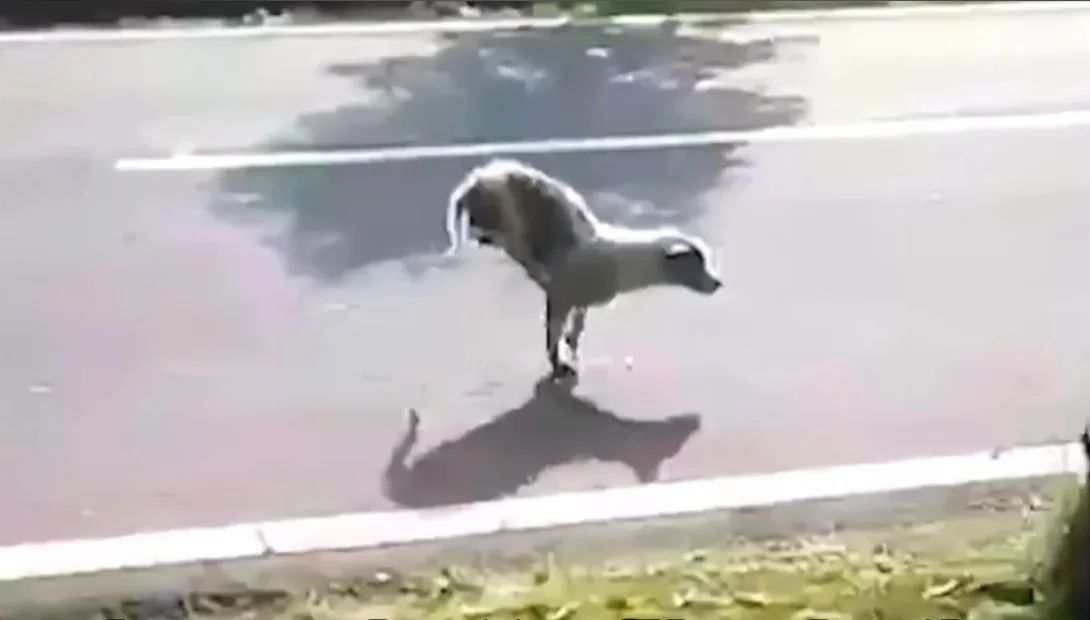
Still, he kept walking. His pace was slow and uneven, but it rarely stopped. Anyone watching could see the effort in each movement, though few seemed to care what that effort meant.
Video: The Moment a Rescuer Noticed Why This Dog Never Stopped Moving
Flinching at Sudden Sounds
Taro’s body was not the only thing that carried the marks of his life on the road. He startled at every sudden noise. Sometimes he cowered at his own shadow. When people came near, he did not meet their eyes.
According to the rescue account, the reactions he got from people were often unkind. Some laughed at him. Some shoved him away. Others mocked the way he struggled just to walk. Over time, he seemed to stop reaching toward people at all, and he no longer appeared to trust them.
Why He Never Stopped Walking
From afar, his constant motion looked like aimless wandering. The story suggests it was something else. He seemed to have learned that staying in one place invited trouble, including thrown rocks, shouting and cruelty. Keeping on the move was the only protection he had.
So he walked on, hungry and worn out. He was easy to overlook, even though he was always in motion.
The Person Who Paused
Then someone noticed him. This person did not stop at the twisted legs, the dirt or the awkward gait. They saw how hard he was working just to survive.
That attention changed his situation. He was taken in and rushed to a veterinarian, probably for the first time in his life.
What the Veterinarian Found
The diagnosis was difficult, but it was clear. Taro had a congenital deformity and underdeveloped muscles. He was severely malnourished, his bones were fragile, and his immune system was compromised.
Yet the story describes his deepest wound as something no examination could fix with a single treatment. That wound was fear.
Healing Without Shortcuts
There was no instant transformation. His recovery began quietly. Gentle hands massaged muscles that had never known comfort, and slow exercises taught his body how to move with support. Regular meals started to restore what starvation had taken.
At first, he flinched when he was touched. Later, he tolerated it. Then one day his tail twitched, only slightly, and soon it moved more. The heaviness in his posture began to lift, and he allowed someone to touch him without fear.
His defenses did not collapse overnight. They softened bit by bit, and the process was slow and sometimes painful.

A Foster Home and a Quiet Test
Taro would never be perfectly straight. His legs would always be a little crooked, and he would never run like other dogs. But he could walk and play. He could even climb into someone’s lap on his own.
When he arrived at his foster home, the room held a quiet tension. People wondered whether he would hide and whether fear would take over again. Instead, he stepped inside and looked around. Then he rested his head on his foster mom’s foot.
The people watching were moved to tears.
A Family That Saw Potential
His forever family did not see a disabled dog. They saw potential, and they gave him toys, a soft bed and two kind dog siblings who showed him how to play.
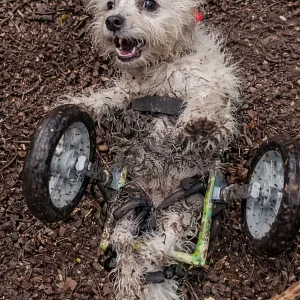
Today, Taro runs across the grass, still a bit uneven but full of life. His ears bounce and his tail waves. He chases butterflies, curls up beside his mom at night and greets strangers with excitement instead of fear.
People once assumed he was simply lost. His story shows that appearances can leave out most of what matters. His limits did not erase his joy, and patient kindness helped him rebuild what cruelty had damaged.