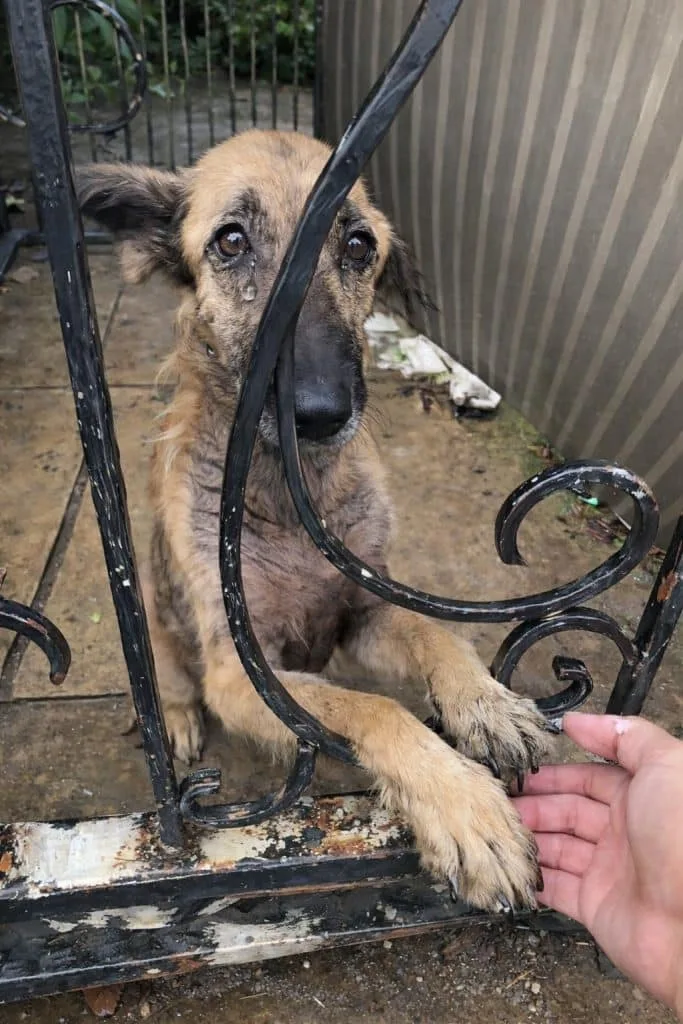
Melda did not growl when the stranger reached the gate. She did not back away or hide. The German Shepherd stood in a yard full of debris, with most of her coat gone and her skin visibly irritated, and she answered his arrival with a slow wag of her tail.
It was a small movement, easy to miss. It also gave a young rescuer a reason to stay.
According to the rescue account, Melda had spent years behind that iron gate, in front of a house that appeared to be empty. What followed was not a sudden miracle. It was a series of patient steps: a report, a visit, daily meals, a veterinary exam, and forty days of treatment. Here is how her story unfolded, from that first look through the fence to the day she left the clinic.
A Report About a Shepherd Alone Behind a Gate
It started when someone shared a report about a German Shepherd living by herself behind a locked gate. A young rescuer decided to see for himself. The account does not say where the property is or who first posted the report, but it is clear about what he found.
Inside the fence stood a frail dog. Most of her fur was missing, her skin looked sore and inflamed, and her thin frame suggested she had gone a long time without steady meals. Trash and debris covered the yard. There was no comfortable place to lie down, no obvious source of clean water, and nothing to show that anyone was looking after her. The house behind the gate looked abandoned.
Then she noticed him. Instead of retreating, she wagged her tail, slowly. Nobody can say exactly what that gesture meant to her. What it showed was an open, unafraid response from a dog living in hard circumstances, and it was the first sign that she might accept help.
Video: Abandoned German Shepherd Transforms After Being Rescued From Years of Neglect
An Empty House and an Owner Who Stepped Away
As the rescuer learned more, the picture became clearer and sadder. The home had been abandoned long before. Its former owner had left after losing everything, and when someone later contacted that person about the dog, the owner refused to take responsibility for her.
That left Melda in an unusual kind of limbo. No one was truly caring for her, yet she was not free to go anywhere. Each day she remained behind the same gate, on a property where nobody lived anymore.
The account says little about the owner’s circumstances beyond that loss, so there is no basis for saying more about why things turned out this way. What it does establish is the result. A dog had been left in a place that no longer had any people in it, and no one was answering for her daily needs. The condition of her coat, her skin and her body matched that long stretch of absence.
Two Companions Gone, and Food Tossed Over the Fence
Neighbors remembered pieces of her past. At one time, Melda had shared the yard with two other dogs, and their company probably made the empty property easier to bear. Both dogs had died years earlier. The account does not explain how. After that, she was entirely alone.
German Shepherds are known as intelligent, social dogs that tend to do best with interaction, companionship and something to do. Melda had very little of any of that. The days behind the gate had no routine except waiting.
She did not go completely without help. A compassionate neighbor occasionally tossed food over the fence, which was enough to keep her alive. It was not a long-term answer, but it mattered.
Still, staying alive and living well are different things. By the time the young rescuer arrived, she needed medical attention, a safe place to be, and regular human contact. Food thrown from the street could not supply those.
A Routine She Could Count On
The rescuer did not walk away after that first meeting. He began visiting regularly. Each day he brought food and fresh water, and he stayed to keep her company, something she had gone without for years.
Over time, she started to recognize him. For a neglected dog, that kind of consistency can matter a great deal. A visit that repeats day after day shows that kindness is not a one-time event and that the person who left will come back.
Trust grew with each visit. But the daily routine also made one thing impossible to ignore. Melda could not stay behind that gate. Her physical condition was too serious, and the yard itself was unsafe. Food and water could keep her going, but they could not treat what was wrong with her.
The account does not say how many days or weeks the visits lasted before the decision was made. It simply makes clear that the daily care had become a bridge to something more.
The Day the Gate Finally Opened
When the time came to bring her out, the rescue was handled with care. After so many years in one place, any sudden change could have frightened her, so the move was made gently rather than in a rush.
Then the barrier that had marked the edge of her world was opened. For the first time in years, Melda stepped beyond the gate. She was weak and fragile as she walked out, but she was no longer confined to that yard.
The account does not describe the practical details, such as who else helped or how she was transported. It does say where she went next: to a veterinary clinic, where her condition could finally be examined properly.
What the Veterinary Exam Showed
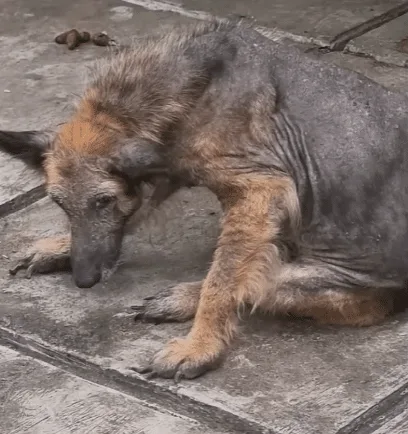
At the clinic, the full extent of her condition became clear. Her eyes were inflamed. Her ears showed signs of a chronic infection. Her skin needed extensive care. She was underweight and exhausted.
None of these problems had appeared overnight. They were the result of long-term neglect, and several were the kind of issues that can often be treated early if someone notices them. For years, no one had.
The account does not name specific diagnoses or lab findings, so the list stays at that level: sore eyes, long-standing ear trouble, damaged skin and low body weight. What matters is the change in her situation. After years without treatment, each of those problems was being looked at by people trained to address them.
A Treatment Plan Built on Patience
The veterinary team put together a careful plan. Melda received medicated baths for her skin. She was given nutritious meals to rebuild her strength, and staff monitored her regularly to see how she responded.
Patience was part of the plan too. There would be no instant transformation. Real recovery rarely works that way, and a body worn down over years does not repair itself in a few days.
Trust also had to be rebuilt at its own pace. A dog who had known mostly an empty yard now had to get used to a clinic, new routines and unfamiliar people. Around her were staff members committed to seeing her through each stage of that process. After years of being overlooked, she was now the focus of daily attention.
Forty Days, One Change at a Time
The improvements arrived gradually. Melda began standing with more confidence. Her appetite improved, and her body started to respond to proper food and medical care. Every finished meal counted as a step forward.
Her skin slowly began to heal. The irritation eased, and the discomfort that had gone with her for years began to fade. Then came one of the most visible changes: her fur started to grow back. At first only small patches appeared. Week by week, more followed, and her coat looked better each time someone compared it with the week before.
Her eyes became brighter, and she grew stronger. Her behavior changed as well. The shy dog who had stood quietly behind a gate began to show curiosity. She became more playful, more relaxed and more engaged with the people around her.
By day forty, she barely resembled the dog the rescuer had first met. Her recovery was not described as complete, but the contrast with the yard was striking.
A Safe Place Among Other Rescued Dogs
After reaching an important milestone in her recovery, Melda left the clinic. This time her destination was safe. There was no locked gate, no abandoned yard and no long days spent watching the street from behind a fence.
She arrived at a place shared by other rescued dogs. According to the account, their welcome was gentle, curious and peaceful. For a dog who had spent so long alone, being accepted by other dogs was a significant change. The account ties her name to this fresh start, as a sign that she is more than the circumstances in which she was found.
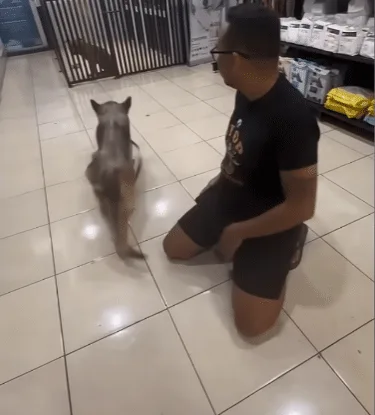
What is known today is simple. Melda has safety, medical care and companionship. The account does not say that she has been adopted into a permanent home, and it does not promise anything about her future beyond what has already happened.
It does show how much depended on small acts. One person shared a report. Another decided to go and look. He kept coming back with food and water until it was clear she needed more than he could give at the gate. And the dog who greeted him with a gentle wag of her tail is now living somewhere she no longer has to wait to be noticed.