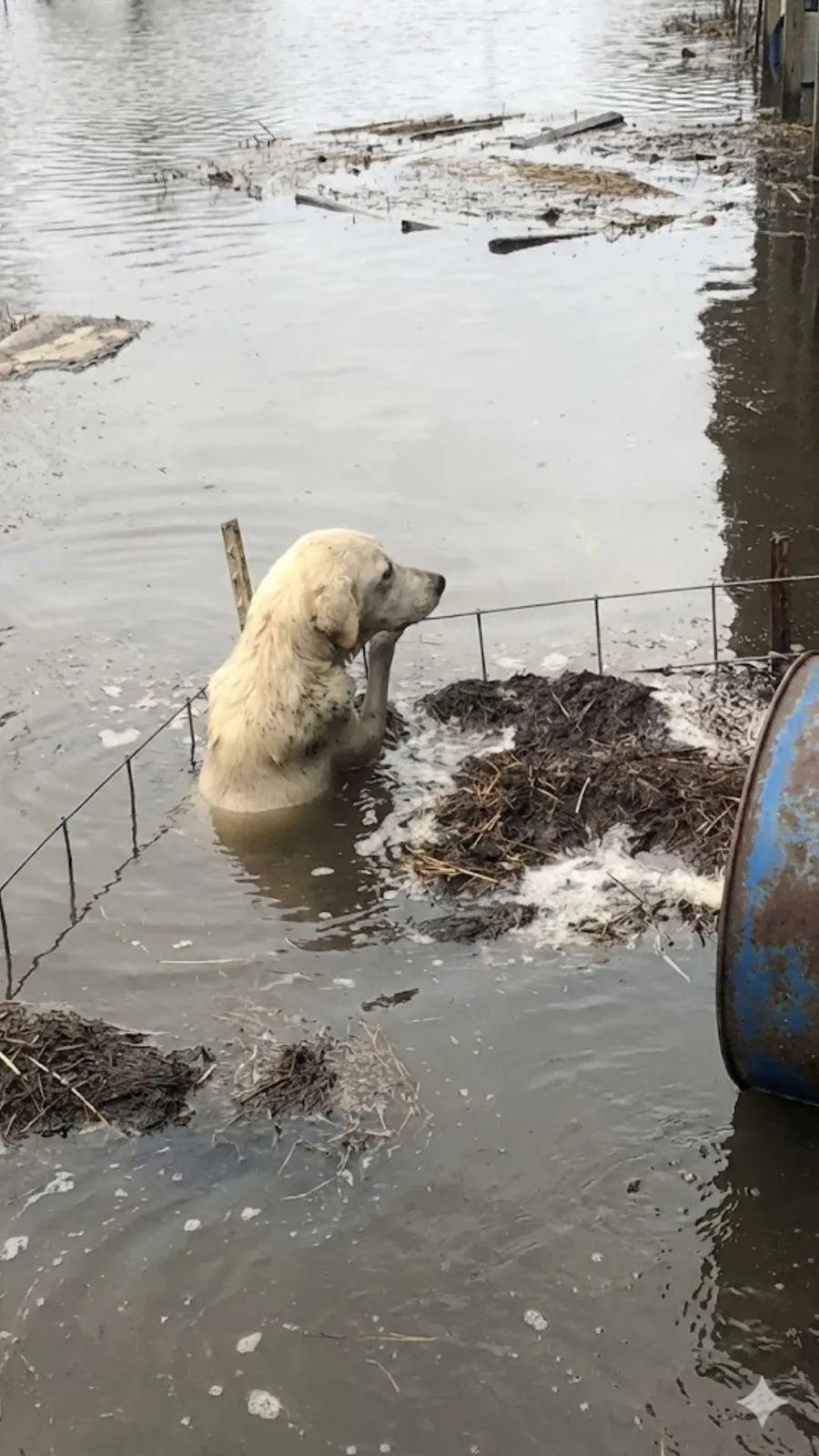
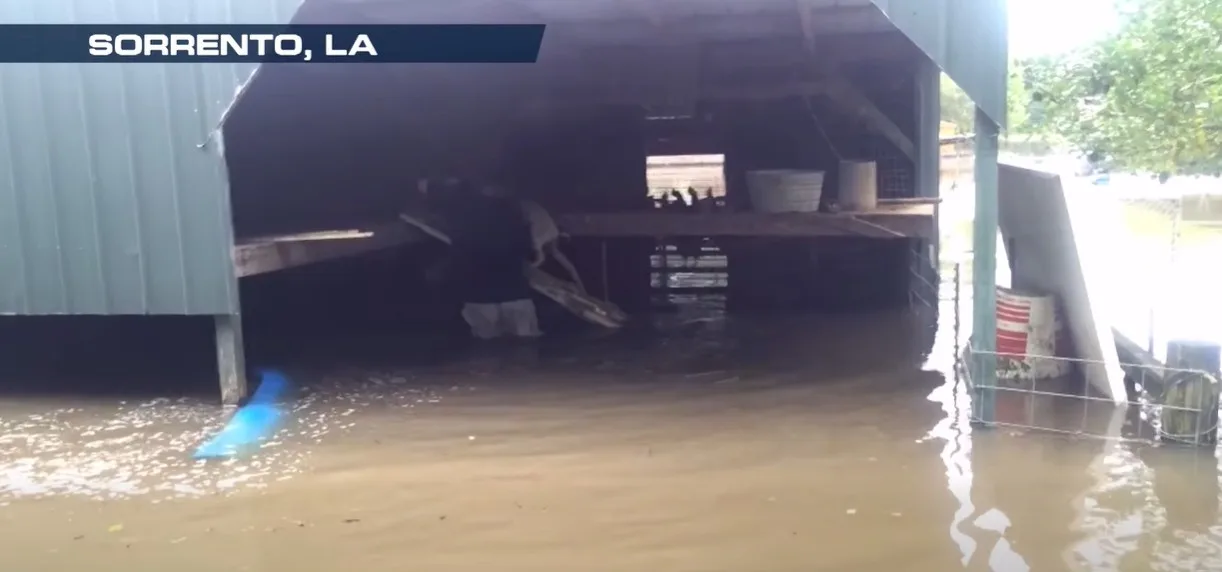
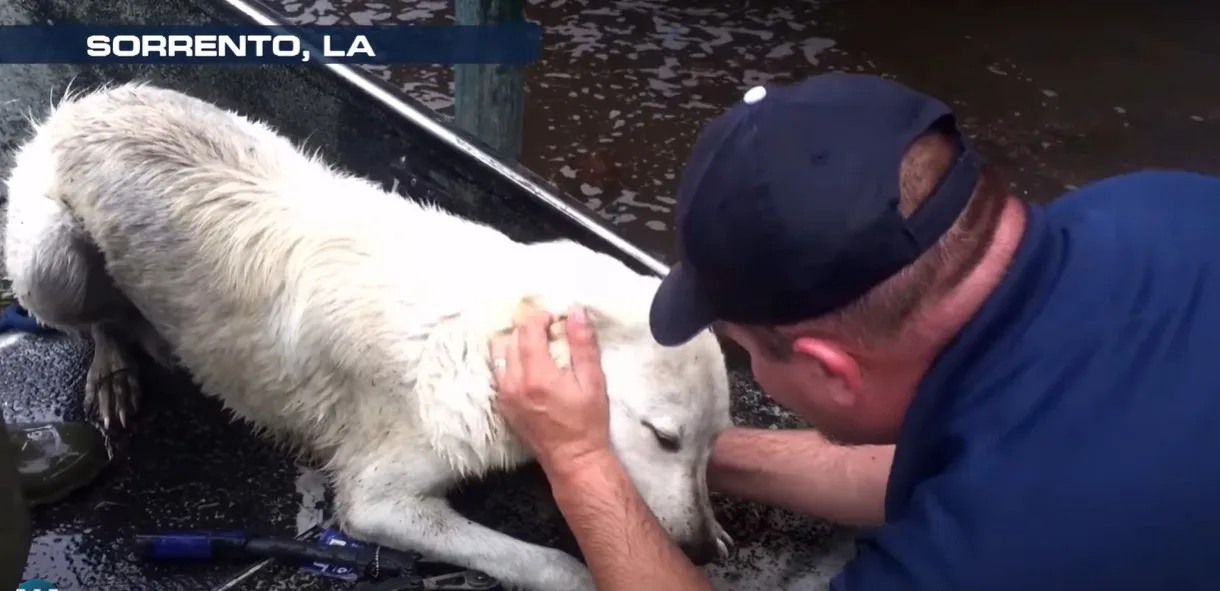
Floodwater was only part of the emergency in Louisiana. As the rain kept falling and rivers spilled over their banks, families left their homes, and animal shelters began filling with pets displaced by the storm.
Inside those shelters, a quieter problem was growing. Dogs that had already been waiting a long time for adoption were now sharing limited space with a surge of new arrivals. Nobody was searching for them. Nobody was phoning to ask whether they were safe.
Help came from more than 1,000 miles away, and it began with a single phone call from Pennsylvania.
Rain That Would Not Let Up
When the storms first moved across Louisiana, many families expected the worst to pass within hours. It did not. The rain continued day after day, rivers rose past their banks, and streets disappeared under water. Cars drifted through flooded neighborhoods, and whole communities were forced to evacuate.
While thousands of people searched for safety, the pressure on animal shelters kept building. Pets separated from their families by the disaster arrived in growing numbers, and kennel space ran short.
That put the longest-term residents in a difficult spot. With no owners looking for them, these dogs risked being overlooked completely as the crisis took up everyone’s attention.
https://www.facebook.com/WeatherNation/videos/10154478216724874/
The Volunteer Who Saw a Way to Make Room
In Pennsylvania’s Lehigh Valley, rescue volunteer Liz Jones was following the floods on television. She saw exhausted rescue workers, crowded shelters, and families wading through chest-high water with soaked pets in their arms.
She also saw a possible solution. If some of the long-term shelter dogs could be moved north, dozens of kennels in Louisiana would open up at once for pets who had been separated from their families by the storm.
So she made a call with a short, direct message: “Send the dogs here.”
The idea worked in two directions. Dogs that had been waiting would get a chance elsewhere, and Louisiana shelters would get space for the animals the flood had displaced.
Video: Louisiana Shelter Dogs Begin the Journey North
Twenty-Five Hours on the Road
Making the plan real fell to Louisiana rescuer Greta Jones. She loaded 22 crates into a transport van, each holding a dog that had been abandoned well before the floods arrived. Some had spent months in shelters. Others, by the account, had never known a real home.
Then she began to drive. The trip lasted about 25 hours and crossed several states, running through the night and across long stretches of highway.
Asked why she would take on such a grueling trip, Greta kept her answer brief. “For the babies,” she said. “For the fur babies.”
One detail in the account is worth noting. It describes 22 crates in the van but refers to 26 dogs in the group overall, and it does not explain how the other four dogs traveled.
A Welcome Waiting at the Sanctuary
Late on a Friday night, headlights finally swung into the Sanctuary of Haafsville in Pennsylvania. The van had arrived, and a crowd was waiting.
Volunteers had come, along with foster families and neighbors carrying blankets and leashes. Many had never met these dogs. They had turned out in the middle of the night simply to welcome them.
Among them were Eric Dams and his wife, who had a personal reason for coming. “We have friends and family down in Baton Rouge,” Eric explained. “We wanted to do something — anything — to help.”
They could not stop the flooding or rebuild anyone’s home from Pennsylvania. But they could be there when the dogs stepped out of the van, and they chose to be.
Out of the Crates and Into Foster Cars
Once the van doors opened, volunteers carried the crates inside one at a time. The dogs reacted differently. Some stepped out cautiously, taking in unfamiliar surroundings. Others wagged their tails right away.
For many of them, the night marked an end to cold shelter floors and long waits. Liz Jones stood by as foster families led dogs toward warm cars.
“For some of these dogs,” she said, “this will be the first home they’ve ever had.”
Things moved quickly. Before the night was over, three of the dogs had been adopted. The rest went home with foster families, where soft beds and full food bowls were waiting.
What One Call Made Possible
The Louisiana floods brought heavy losses. Families lost homes, communities lost belongings and memories, and neighborhoods were changed in ways that will not be quickly undone.
Against that backdrop, this rescue was a small but concrete piece of good news. Twenty-six shelter dogs, animals who had few options left, were given the chance at a different future. The source does not say what happened to the foster placements after that first night, so the full outcome for each dog remains unknown. What is documented is the start: three adoptions and a long line of foster homes ready to take the rest.
The chain of events was simple. One volunteer saw empty kennels as a solution. One driver spent a day and night behind the wheel. A group of strangers waited in the dark with blankets in their hands.
Together, they left the storm’s shelters a little less crowded and sent dozens of long-waiting dogs toward people who were ready for them.